

What safety measures should be implemented during the wrought iron sandblasting process?
During wrought iron sandblasting, implement a documented risk assessment, isolate the work area, inspect the blast equipment, control dust and abrasive rebound, and use suitable PPE including respiratory, eye, hearing, hand and body protection. Trained operators should follow equipment procedures, maintain effective ventilation and housekeeping, and safely contain and dispose of used abrasive and removed coatings.
Safe wrought iron sandblasting depends on controlling the less visible risks as well as the blast stream itself. In practice, this means confirming what is on the metal before work begins, restricting operation to competent personnel, preventing uncontrolled release of energy or debris, and having clear procedures for handling, emergencies and post-blast inspection.
Identify the existing coating and contamination. Older wrought iron may carry lead-containing paint, chromates, rust inhibitors, oil, grease or other residues. The coating should be assessed before abrasive preparation, with appropriate testing where its composition is uncertain. The findings determine the required controls for exposure, collection and waste handling. If there is evidence of chemical contamination, the item should not be blasted until the substance has been identified and suitable control measures have been agreed.
Control access and communication. Everyone involved should understand when blasting is taking place, which items are being processed and how to signal a stop. Warning notices, controlled entry points and a reliable communication method help prevent people entering a hazardous operation unexpectedly. Operators should also be able to stop the process immediately if a hose, coupling, workpiece or protective enclosure behaves abnormally.
Use suitable equipment safeguards. Abrasive blasting equipment should have correctly rated hoses, couplings, valves and deadman controls. Connections need to be secured against separation, and hoses should be routed to reduce trip, crushing and snagging hazards. The blast pot and associated components must be operated within their specified limits. Any modification, damaged component or improvised connection creates an avoidable risk and should be dealt with before use.
Manage stored energy. Before clearing a blockage, changing a nozzle, disconnecting a hose or entering an enclosure, the system should be shut down, isolated and fully depressurised. A written isolation procedure is particularly important where more than one person is involved. Operators should never assume that releasing the trigger alone has removed pressure from the entire system.
Provide training that reflects the actual work. Training should cover the abrasive equipment, the media being used, the type and condition of the wrought iron, emergency actions and the hazards of existing coatings. New or inexperienced workers should be supervised until they can demonstrate safe operation. Refresher training is appropriate when equipment, abrasive media, coating hazards or the work method changes.
Reduce manual-handling and impact risks. Wrought iron gates, railings and fabricated components can be awkward, unstable or heavier than they appear. Use suitable lifting aids and stable supports, and confirm that the item cannot tip, roll or shift when struck by the abrasive stream. Lifting points and supports should be checked for integrity, while hands and feet should be kept clear during positioning and repositioning.
Address noise and vibration. Blasting can create significant noise, particularly in enclosed areas or when the workpiece resonates. Noise should be assessed and controlled through equipment selection, enclosure design, separation from other workers and suitable hearing protection. Exposure should be managed rather than relying only on an operator’s ability to tolerate the noise. Vibration from associated tools and prolonged gripping should also be considered when planning the task.
Prevent fire and explosion hazards. Remove or control ignition sources where combustible residues, flammable liquids or dusts may be present. Oil, grease and other contaminants should be dealt with before blasting, and electrical equipment used in the area should be suitable for the conditions. The work area should have an appropriate means of raising an alarm and dealing with a fire, with emergency arrangements understood before the operation starts.
Plan emergencies before work begins. Procedures should cover hose failure, loss of control, injury, power failure, fire, suspected exposure to hazardous coating and a person becoming trapped or unable to communicate. First-aid arrangements, access for assistance and contact details should be known to the team. An incident should be recorded and the cause reviewed before blasting resumes.
Keep records and verify the controls. Useful records include the coating assessment, training, equipment checks, maintenance, abrasive information, waste documentation and any exposure or incident findings. Supervisors should verify that the planned method is being followed and stop the work if conditions change. For UK operations, the relevant duties under health and safety, hazardous-substance and work-equipment legislation should be considered as part of the site’s control system.
After blasting, the component should be checked for sharp edges, loose scale, embedded abrasive, distortion and areas that were not adequately prepared. Safe handling should continue until the part has been inspected and transferred to the next controlled stage. This prevents a correctly managed blasting operation from creating a secondary injury or contamination hazard during movement or coating preparation.
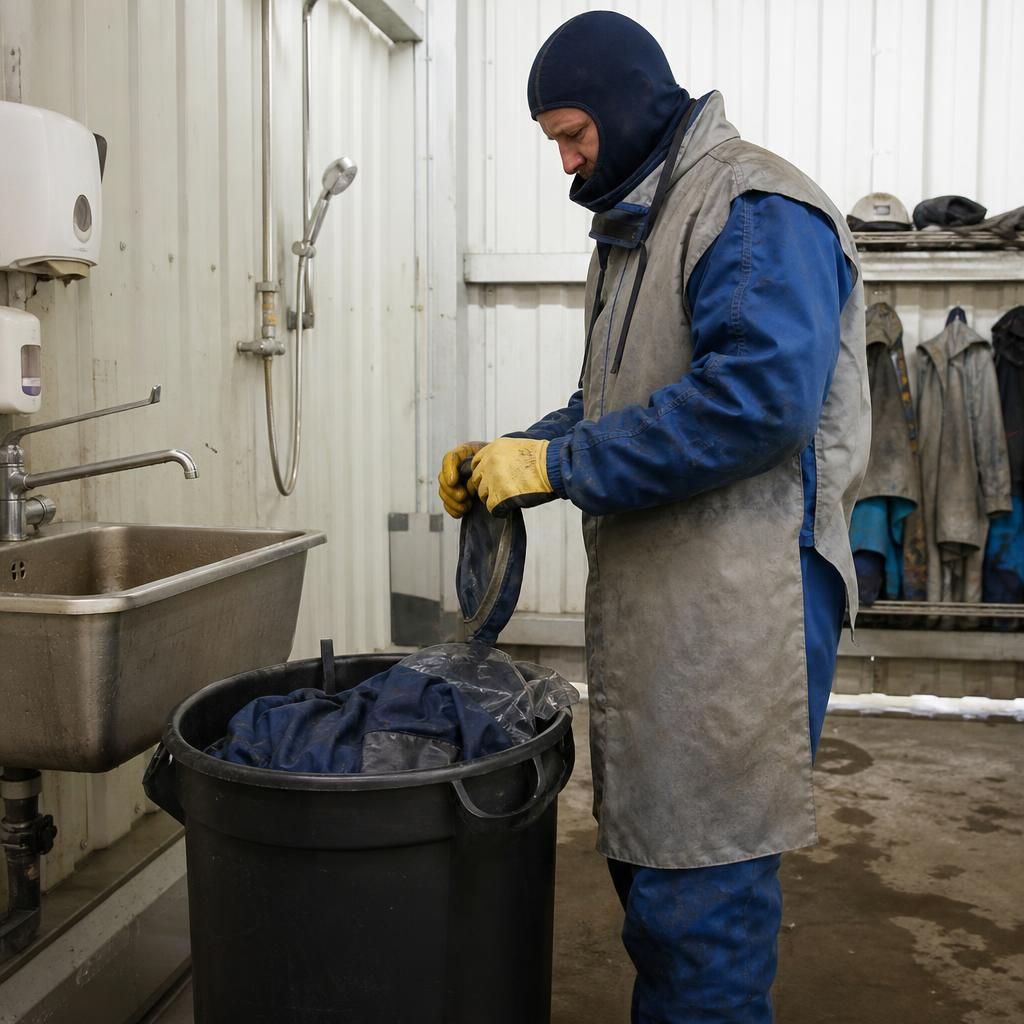
Decontamination after wrought iron sandblasting is an important safety measure, particularly where the original coating may contain lead, chromates or other hazardous residues. Used protective clothing and disposable items should be removed in a controlled area, kept separate from clean clothing and handled according to the site’s waste procedure. Workers should wash exposed skin before eating, drinking or leaving the work area.
Dust should not be removed from clothing or surfaces by shaking or using compressed air, as this can spread fine particles. Use suitable damp-cleaning or extraction methods, with equipment appropriate for the contaminant, and prevent contaminated dust from being carried into offices, vehicles or other work areas. The work zone should only be released once residue has been controlled and the component is safe to handle.