

How long does the sandblasting process typically take for wrought iron components?
Sandblasting wrought iron components typically takes a few hours, although the exact duration depends on the component’s size, condition, surface contamination and design complexity. Heavily rusted, painted or intricate items generally require more preparation time than clean, accessible sections.
The abrasive blasting stage is normally measured in hours rather than days, but the total preparation period also includes handling, inspection, cleaning and any masking or protection required. A quoted duration should therefore distinguish between the time the component is under the blast nozzle and the elapsed time before it is ready for the next finishing stage.
Several practical factors influence the working time:
- Surface access: Open faces can be treated efficiently, while narrow gaps, corners, scrolls, joints and enclosed sections need the operator to change the nozzle angle and work more carefully.
- Coating removal: Multiple paint layers, hard residues and tightly adhered corrosion may require repeated passes or a change in blasting approach. Loose material must be removed without leaving embedded contamination.
- Component construction: Wrought iron gates, railings and decorative panels often contain welds, overlapping details and delicate ornamentation. These features can extend preparation time because each area needs consistent coverage without damaging the substrate.
- Preparation requirements: Degreasing, removal of fittings, plugging openings and masking areas that must not be blasted add to the overall job, even though they are not part of the blasting operation itself.
- Batch arrangement: Several similar components can often be handled in a planned sequence. Mixed batches with different shapes, previous finishes or handling requirements may need more individual assessment and repositioning.
Before blasting starts, the component is usually checked for loose parts, oil, grease, trapped moisture and areas that should be protected. It is then positioned so the operator can reach the relevant faces safely. Blasting is carried out progressively, with visual checks to confirm that the old finish and corrosion have been removed to the required standard. The item is subsequently cleared of spent abrasive and dust and inspected for missed areas or newly exposed defects.
The condition revealed after stripping can affect the next decision. Blasting may expose pitting, thin sections, previous repairs or cracks that were hidden beneath paint and rust. Those findings do not necessarily extend the blasting itself, but they can require a further assessment before coating or fabrication work proceeds.
For an accurate estimate, provide photographs or arrange an assessment showing the component’s dimensions, construction, number of items, existing finish and any areas that need masking. It is also useful to confirm whether the quotation is for blasting only or includes collection, delivery, handling and preparation for powder coating. Collection and delivery can alter the overall elapsed time without changing the number of hours spent blasting.
Wrought iron should generally move to its next protective treatment after suitable preparation, because freshly exposed ferrous metal can begin to oxidise if left unprotected in damp conditions. The planned sequence between blasting, inspection and coating is therefore as important as the blasting duration itself.
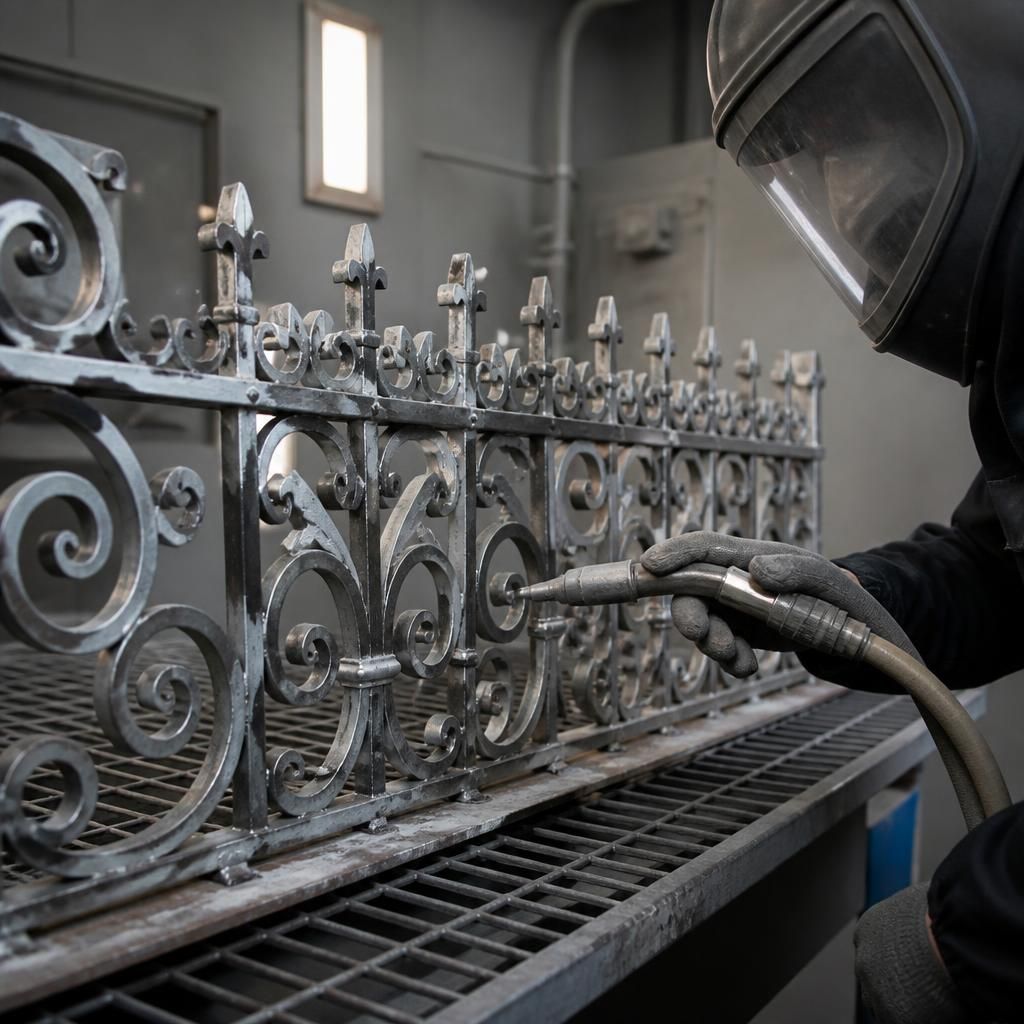
The required finish standard can affect the duration as much as the component itself. Sandblasting for a straightforward clean-up may be completed sooner than preparation requiring the complete removal of visible rust, old coating and embedded residue before a new finish is applied. The operator should work to the agreed preparation specification rather than stop after a predetermined number of minutes.
For this reason, a reliable estimate should identify how the finished surface will be assessed. Inspection under suitable lighting can reveal remaining coating in welds, recesses or decorative details that may not be obvious during blasting. Where the required standard is particularly consistent across a batch, individual pieces may need additional checking before they are accepted as ready for coating.