

What are the key safety considerations when performing abrasive blast cleaning?
Abrasive blast cleaning must be controlled through a task-specific risk assessment, trained operators, suitable respiratory and protective equipment, effective ventilation and contained work areas. Equipment should be inspected before use, abrasive media and debris handled safely, and procedures followed for noise, dust, compressed air, fire risks and relevant health and safety requirements.
Safe abrasive blast cleaning depends on controlling the whole work system, not simply wearing protective clothing. The main considerations are identifying hazardous substances, preventing unauthorised access, protecting nearby workers, controlling stored energy, and having clear procedures for normal and emergency conditions.
Assess the coating and substrate first. Existing paint, rust, plating and previous industrial treatments can contain hazardous substances, including lead compounds, chromates or other toxic residues. Before work begins, establish what the component has been exposed to and whether testing or supplier information is needed. The risk assessment and COSHH assessment should reflect the actual coating, abrasive and contamination present, rather than treating every job as ordinary rust removal.
Use the hierarchy of controls. Consider whether blasting can be reduced or avoided through a less hazardous preparation method, or whether the component can be prepared in a dedicated enclosure away from other activities. Engineering controls and physical separation should be used before relying solely on individual behaviour. The selected process should also limit the amount of dust and contaminated waste generated.
Restrict access to the work area. A blast area should be clearly identified and separated from walkways, offices, production areas and other workstations. Barriers, warning notices and controlled entry prevent people from being exposed unexpectedly to abrasive rebound, dust, noise or pressurised equipment. Doors, screens and access arrangements should be designed so that operators do not have to leave openings unsecured during blasting.
Protect other workers and members of the public. Dust or noise must not be allowed to migrate into adjacent areas. Work should be coordinated with other activities so that nobody is working underneath, beside or inside the affected zone without suitable controls. If components are collected from a customer’s premises or prepared at an external site, the host employer’s site rules, traffic controls and permit arrangements also need to be followed.
Control hazardous energy. Abrasive blast systems use compressed air and may contain stored pressure after the trigger is released. Hoses, couplings and blast lines should be secured against movement, and the system should be isolated and depressurised before clearing blockages, changing connections or carrying out maintenance. Operators should never point a nozzle at a person, use compressed air to clean clothing or skin, or assume that a stopped machine is safe to approach.
Manage electrical and ignition risks. Dust, moisture and static discharge can create additional hazards, particularly where solvents, flammable coatings or other combustible materials are present. The work area should be kept free from unnecessary ignition sources, and bonding and earthing arrangements should be suitable for the equipment and process. Electrical leads, lighting and control equipment must be appropriate for the environment and positioned to avoid damage from abrasion or traffic.
Consider confined spaces separately. Blasting inside tanks, vessels, ducts or other restricted areas introduces risks that are not present in open work. A confined-space assessment may require atmospheric testing, a formal entry permit, continuous communication, a trained standby person and a planned rescue method. A worker must not enter simply because the opening appears large enough or because dust extraction is in use.
Control exposure to noise and vibration. Blast nozzles, compressors and impact from abrasive media can produce damaging noise. Noise assessments should identify who may be exposed and whether the duration or layout of the work needs changing. Hearing protection and designated hearing-protection zones may be necessary, but they should support—rather than replace—practical noise reduction and separation measures. Hand-arm vibration may also need consideration where workers use associated powered tools for removal or finishing.
Provide suitable welfare and hygiene arrangements. Contaminated dust must not be carried into eating areas, vehicles or clean parts of the workplace. Workers should have a defined method for removing contaminated clothing, washing before eating or drinking, and storing personal items away from the process. Where hazardous coatings are involved, health surveillance may be appropriate and should be determined by the relevant COSHH assessment and occupational-health advice.
Plan waste handling from the start. Used abrasive, removed coating and collected dust may require classification as hazardous waste, depending on their composition. Waste should be contained in suitable, labelled receptacles and kept from drains, soil and watercourses. Do not sweep contaminated material into general waste or use uncontrolled air blowing to move it. Disposal arrangements should be based on the substance assessment and applicable environmental requirements.
Use a controlled operating procedure. The procedure should cover preparation, start-up, communication signals, nozzle handling, pauses, access to the area, media replenishment, shutdown, cleaning and fault reporting. Operators need training that is specific to the equipment and abrasive process being used, including recognition of damaged hoses, abnormal pressure, poor visibility, loss of extraction or other conditions requiring work to stop.
Include emergency arrangements. The site should have practical instructions for injury, loss of containment, equipment failure, fire, suspected exposure and accidental release of contaminated dust. Emergency equipment must be accessible without requiring someone to pass through the blast zone. First-aid provisions, reporting routes and rescue arrangements should be checked before work starts, particularly where the job is carried out at a customer’s premises.
Review the controls after the job. A safe process includes inspection of the work area, confirmation that contaminated residues have been removed or contained, and a handover that identifies any remaining hazards. Near misses, hose failures, exposure concerns and unexpected coating materials should be recorded and used to improve the risk assessment and method statement for future batches.
For industrial powder-coating preparation, these controls should be considered alongside the required surface profile and cleanliness. The safest method is one that achieves the specified preparation without exposing operators, nearby workers, customers or the environment to unnecessary abrasive, coating residue or compressed-air hazards.
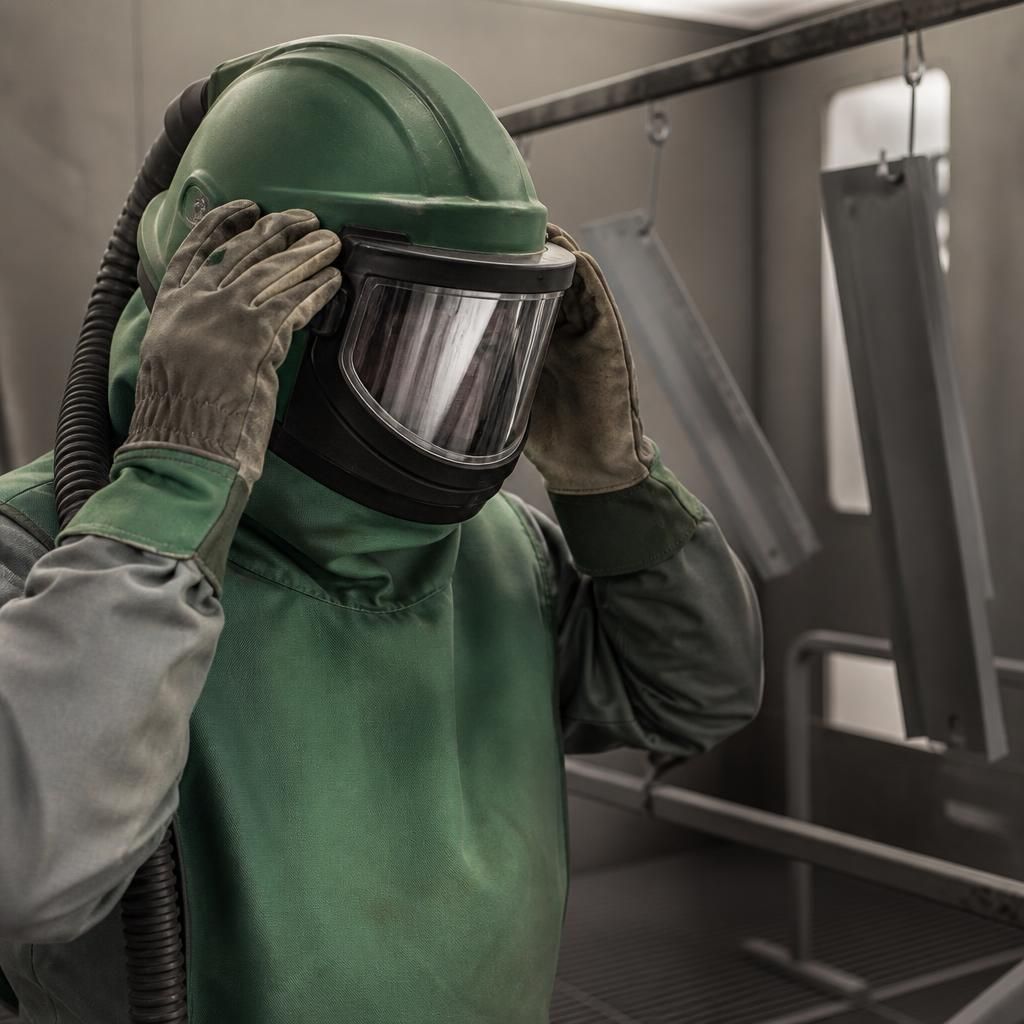
Respiratory protection for abrasive blast cleaning must be selected for the specific dust, coating residue and abrasive involved. A basic disposable dust mask is not automatically suitable for blasting, particularly where old coatings may contain hazardous substances. Operators may require a properly selected blasting helmet or supplied-air respirator, with the breathing-air supply maintained to the required standard.
RPE must be compatible with the rest of the protective equipment and used by people who have been trained in its limitations. Tight-fitting equipment needs face-fit testing, while seals, lenses, air lines and connections should be checked before each use. Filters and other consumable components must be changed in accordance with the assessment and manufacturer’s instructions, rather than only when breathing becomes difficult. Facial hair, damaged seals or poor adjustment can prevent a tight-fitting respirator from providing its intended protection.
Discuss safe abrasive blast cleaning for your project
Discuss your abrasive blast cleaning requirements with our team, including the substrate, existing coating and intended powder coating finish. We can help identify the appropriate preparation approach and practical safety considerations for your project.