

What measures does Hamilton Industrial Powder Coating implement to ensure environmental compliance during surface preparation and blasting?
Hamilton Industrial Powder Coating supports environmental compliance during surface preparation and blasting through controlled processes for abrasive use, dust management and waste handling. These measures help ensure that preparation work is carried out responsibly and in line with applicable UK environmental requirements.
Hamilton Industrial Powder Coating supports environmental compliance during surface preparation and blasting by managing the complete process, from assessing the incoming metalwork through to checking the prepared surface and recording relevant process information. Compliance depends not only on the final coating, but also on controlling the preparation method, equipment, materials and site conditions in accordance with applicable UK requirements.
Before work begins, the substrate and existing finish can be assessed to identify potential contaminants, such as oil, grease, corrosion products, old coatings or residues from previous use. This assessment is important because certain contaminants may require additional controls or specialist handling. It also helps determine whether the selected preparation method is appropriate for the component, avoiding unnecessary treatment and reducing the risk of damaging the metal.
Environmental controls are supported by using suitable, well-maintained blasting equipment and a contained working arrangement. Equipment condition affects pressure stability, abrasive consumption and the effectiveness of recovery systems. Routine inspection of blast cabinets, extraction equipment, seals, ducting and collection points helps identify defects that could lead to uncontrolled releases or inefficient operation. Maintenance records also provide evidence that controls are being checked rather than assumed to be effective.
Hamilton Industrial Powder Coating can further support compliance by keeping preparation activities separate from areas used for other coating operations. This reduces the risk of cross-contamination between blasting residues, pre-treatment chemicals and powder-coating materials. Where substances are used during preparation, they should be clearly identified, stored securely and handled in line with their safety information and the conditions applicable to the site.
Monitoring and documentation are important parts of an effective environmental compliance system. Relevant records may include:
- the type of preparation process and abrasive selected for the component;
- equipment inspection and maintenance checks;
- observations from housekeeping and containment inspections;
- details of unusual contamination, spills, equipment faults or corrective action; and
- records needed to demonstrate that controlled materials and residues have been managed through the appropriate route.
These records help trace how a job was prepared and make it easier to investigate any deviation from the intended process. They also support consistent procedures when batches contain different metals, existing coatings or contamination levels.
Spill prevention is another relevant consideration, particularly where preparation involves oils, cleaning agents or other liquid products. Containers should be kept closed when not in use, stored in suitable locations and checked for damage. Work areas should be maintained so that leaks can be identified and dealt with before they enter drains or contaminate surrounding surfaces. Any incident should be contained, reported through the appropriate internal process and followed by corrective action.
Environmental compliance also involves reviewing the process when circumstances change. A different substrate, coating history, abrasive, piece size or equipment setting may alter the environmental controls required. By assessing these changes before preparation starts and checking the process afterwards, Hamilton Industrial Powder Coating can maintain controlled working practices while producing a clean, suitably profiled surface for powder coating.
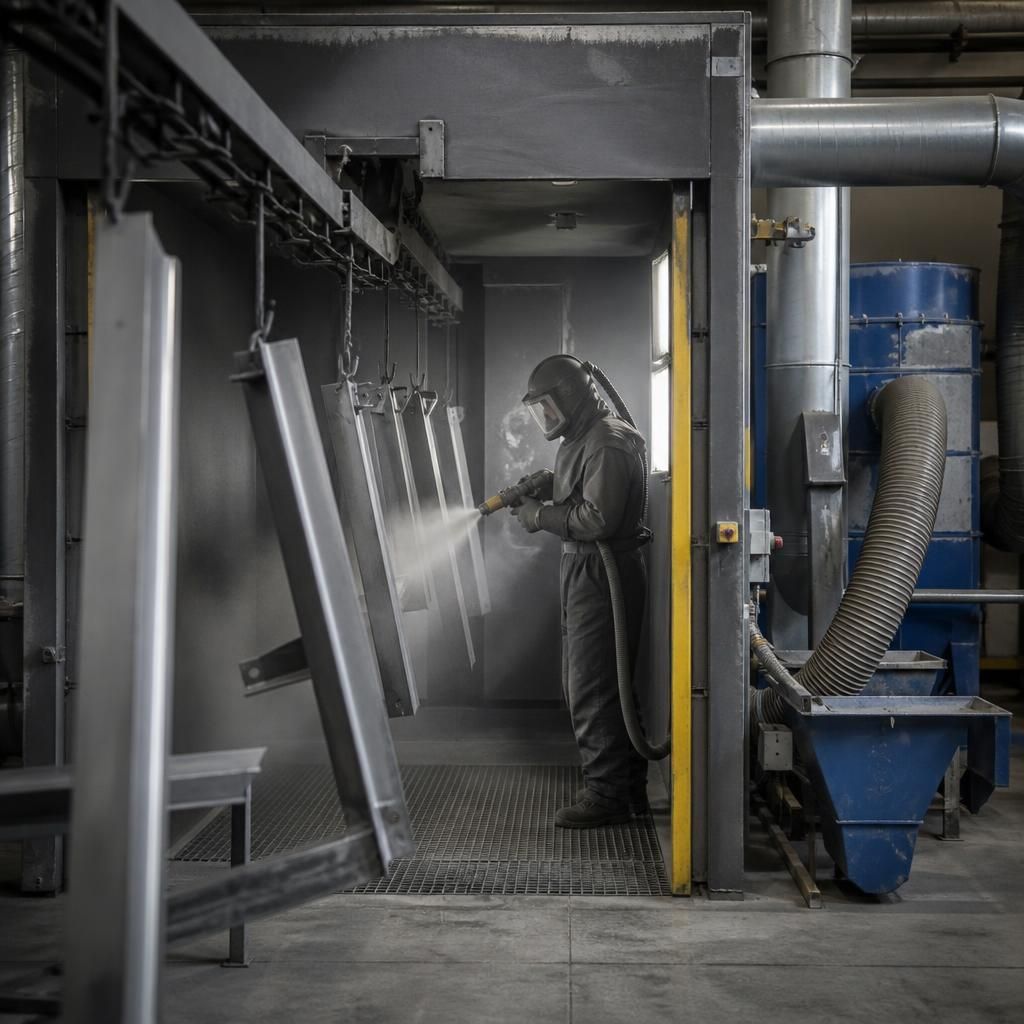
Dust control is a key environmental consideration during abrasive blasting because fine particulate can escape from the work area and affect air quality. Hamilton Industrial Powder Coating uses contained blasting arrangements with extraction and collection points positioned to capture airborne dust at source, rather than allowing it to disperse into surrounding areas. The enclosure, seals and extraction path should be checked as part of the working process so that visible escape, damaged components or reduced extraction performance can be identified and addressed.
Collected blasting dust and spent abrasive also need to remain separate from general site waste until their contents and contamination have been considered. Residues may contain removed paint, corrosion products or other substances from the incoming metalwork. Keeping these materials contained and directing them through the appropriate waste-management route helps support the duty to prevent pollution and provides a clearer basis for demonstrating environmental control during surface preparation.
Discuss Your Environmental Compliance Requirements
Discuss your environmental compliance requirements with Hamilton Industrial Powder Coating before surface preparation begins. Share details of the substrate, existing coatings and any relevant site or waste-handling constraints so the appropriate controls can be considered.