

How does surface preparation affect the longevity of powder-coated finishes?
Surface preparation directly affects the longevity of a powder-coated finish by removing contaminants and creating a suitable profile for strong, consistent adhesion. Effective preparation reduces the risk of peeling, blistering and corrosion developing beneath the coating, helping the finish remain protective and visually sound for longer.
Surface preparation affects powder-coated finish longevity by controlling the condition of the metal before powder is applied and cured. A coating can only perform consistently when the substrate is clean, suitably textured, chemically compatible with the treatment system and free from defects that could develop beneath the finished film.
Preparation influences durability in several connected ways:
- It establishes a sound coating interface. Oils, grease, cutting fluids, marking residues, dust and handling deposits can prevent the powder from making uniform contact with the metal. Even small areas of residue may create weak points, pinholes or localised discolouration.
- It controls the condition of the substrate. Mill scale, rust, old coatings, weld spatter and embedded abrasive can interfere with the coating system. If these remain, the powder may follow the defect rather than forming a stable, even film over the part.
- It supports consistent film formation. Variations in surface condition can affect how the powder melts, flows and covers edges, recesses and exposed faces. A more uniform starting surface makes it easier to achieve consistent coverage during application and curing.
- It reduces conditions that allow underfilm deterioration. Moisture, soluble salts and trapped residues can remain active beneath a coating. Over time, they may contribute to localised corrosion or loss of coating integrity, particularly where the component is exposed to water, chemicals, road contaminants or changing temperatures.
The preparation method must be selected for the metal and the condition of the component. Abrasive blasting is commonly used to remove unwanted surface material and produce a controlled texture. The abrasive type, operating pressure, nozzle distance and angle all affect the result. Excessive blasting can distort thin sections, round sharp details or produce a profile that is too aggressive for the specified coating. Insufficient treatment may leave scale, corrosion products or previous coatings in place.
Different substrates also require different controls. Steel may need treatment for rust and mill scale, while galvanised steel and aluminium require care to avoid damaging the surface or creating an unsuitable texture. Castings can contain porosity that retains oils or moisture, and fabricated parts may include weld residues, sharp edges and areas that are difficult to reach. These features should be considered before preparation begins rather than treated as application-stage problems.
A typical preparation sequence may include:
- Inspecting the component for corrosion, previous finishes, weld contamination, sharp edges, dents, porosity and areas where moisture or chemicals could collect.
- Removing grease, oil and other process residues using a method appropriate to the substrate and contaminant.
- Carrying out abrasive treatment or another specified mechanical process to remove unsuitable surface material and create the required texture.
- Removing dust and loose particles without re-contaminating the prepared surface through poor handling or unsuitable storage.
- Applying any required chemical pre-treatment or conversion layer that is compatible with the metal and powder system.
- Checking the prepared surface before powder application, including its cleanliness, visual condition, texture and dryness.
Timing between preparation and coating is also important. Prepared metal should be protected from rain, condensation, airborne contamination and unnecessary handling. If surface oxidation begins before application, the preparation may no longer represent the condition that was originally approved. This is particularly relevant for components moved between preparation, storage and coating areas.
Part geometry affects long-term performance as well. Sharp corners can receive less coating coverage than broad faces, while recesses may retain water or cleaning chemicals. Welded joints, folded edges and drilled holes should be reviewed for burrs, residues and drainage issues. Where the design permits, improving drainage and access can support the coating system by reducing areas in which moisture remains in contact with the metal.
Surface preparation cannot compensate for every underlying problem. Poor material selection, trapped moisture, inadequate drainage, incorrect powder specification or incomplete curing can also shorten service life. Preparation therefore needs to be considered alongside the intended environment, component design, handling requirements and the powder manufacturer’s curing instructions.
For B2B projects, useful preparation records can include the substrate type, observed defects, preparation method, abrasive or treatment used, inspection findings and any areas requiring clarification before coating. This information helps maintain consistency across batches and makes it easier to identify whether a later issue originated in the metal, the preparation stage, application or curing.
In practical terms, the most durable results come from treating preparation as a controlled part of the coating system rather than a preliminary cleaning exercise. Careful inspection, substrate-specific treatment, controlled handling and verification before application give the powder coating a stable foundation and reduce avoidable causes of premature finish failure.
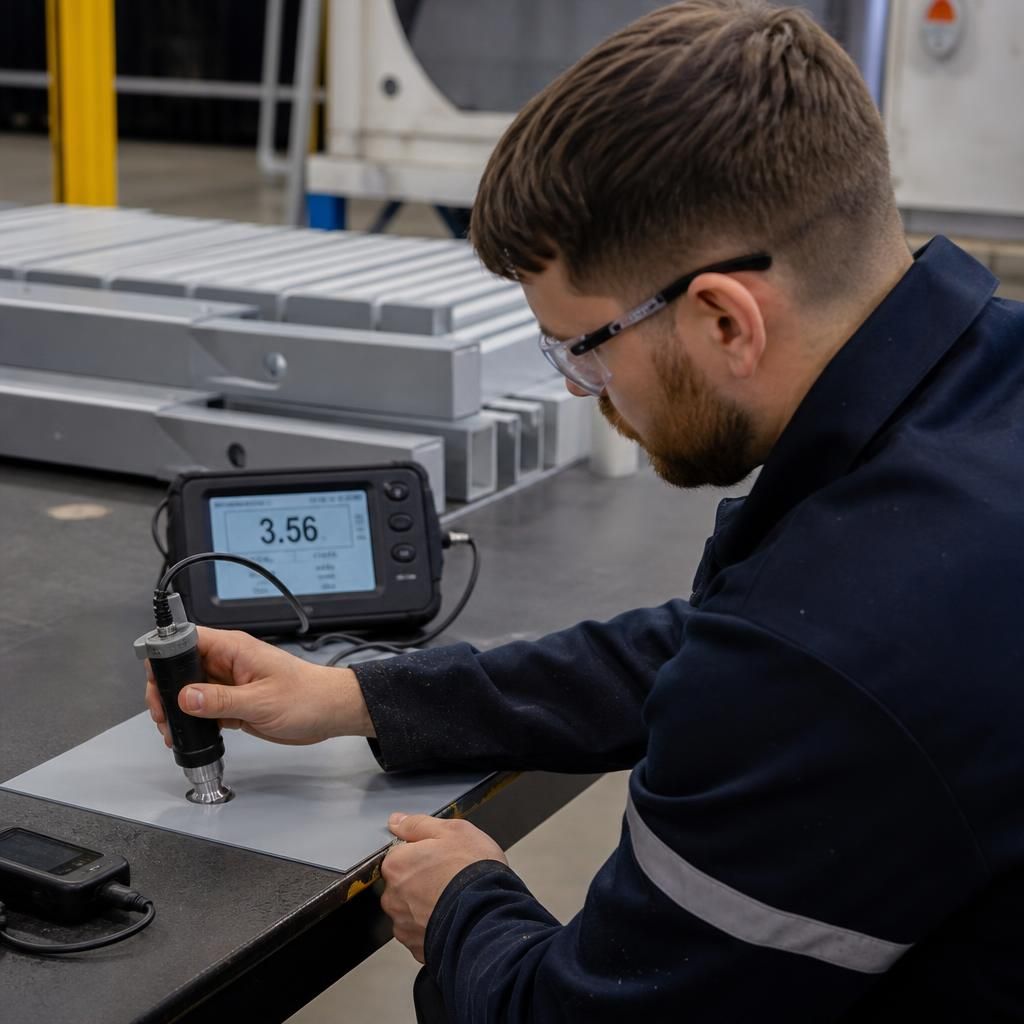
Surface preparation supports long-term performance when its effectiveness is verified rather than judged by appearance alone. A clean, evenly prepared surface may look suitable while still having weak adhesion caused by residual contamination, incompatible treatment or an unsuitable profile.
Where the specification requires it, checks such as surface-profile assessment and adhesion testing can provide evidence that the prepared substrate and coating system are working together correctly. Reviewing these results before production coating helps identify preparation issues at an early stage, reducing the risk of premature lifting, flaking or corrosion developing beneath the finish.