

How does Hamilton Industrial Powder Coating minimise downtime and ensure efficient turnaround during the surface preparation and blasting process?
Hamilton Industrial Powder Coating minimises downtime by planning surface preparation around the component batch, substrate and required finish, using appropriate blasting methods before powder coating. Collection and delivery options also support an organised process for manufacturers, fabricators, construction firms and automotive businesses across the Midlands.
Hamilton Industrial Powder Coating minimises downtime during surface preparation and blasting by controlling the process before, during and after blasting. The main focus is to prevent avoidable waiting, inconsistent surface preparation and rework, all of which can delay the move from bare metal to powder coating.
Initial inspection identifies potential delays. Components are assessed for their material, condition, existing coatings, rust, oil, grease, weld residues and other contaminants. This helps establish whether additional cleaning, masking or preparation is needed before blasting begins. Identifying these issues at the outset is more efficient than discovering them after blasting, when the batch may need to be handled again.
Suitable preparation reduces repeat work. Blasting must remove unwanted surface material without causing unnecessary damage to the component. The method and abrasive are selected with the substrate and required finish in mind. Correct selection helps produce a consistent surface for powder coating while reducing the risk of excessive blasting, uneven preparation or a profile that requires corrective work.
Components are organised to support an orderly workflow. Parts need to be presented so that accessible faces, edges, recesses and joints can be treated effectively. Appropriate racking, handling and positioning allow the operator to work methodically and reduce the need to stop and reposition items repeatedly. Small or intricate components may require particular attention because trapped contamination or untreated areas can affect the later coating stage.
Equipment and blasting conditions are kept consistent. Air pressure, abrasive flow, nozzle movement, working distance and coverage all influence the result. Consistent operating conditions help prevent variations between components in the same batch. Abrasive condition also matters: contaminated, degraded or unsuitable media can slow the process and produce an inconsistent surface.
Efficient turnaround also depends on checks at key stages rather than relying solely on a final inspection. These checks can include examining whether contaminants and previous coatings have been removed, confirming that the surface is evenly prepared, and checking for areas that remain inaccessible or inadequately treated. Finding an issue immediately allows it to be corrected before the component progresses to cleaning, powder application or curing.
Careful handling after blasting prevents newly prepared metal from being compromised. Blasted surfaces are more receptive to contamination and should be protected from unnecessary contact, moisture, dust and oils. Keeping prepared components organised and handling them correctly reduces the risk of having to repeat preparation before coating.
Where defects, heavy contamination or unusual component conditions could affect the process, these should be identified and discussed before work proceeds. This avoids assumptions about the required preparation and helps determine whether a component needs further treatment or clarification before entering the main batch. It also makes the overall sequence more predictable for businesses coordinating their own fabrication or production schedules.
In practical terms, minimising downtime is not simply a matter of blasting faster. It depends on accurate assessment, appropriate abrasive selection, controlled equipment settings, efficient component handling and inspection between stages. These controls help Hamilton Industrial Powder Coating move prepared metal through blasting with fewer interruptions and reduce the likelihood of delays caused by contamination, incomplete preparation or rework.
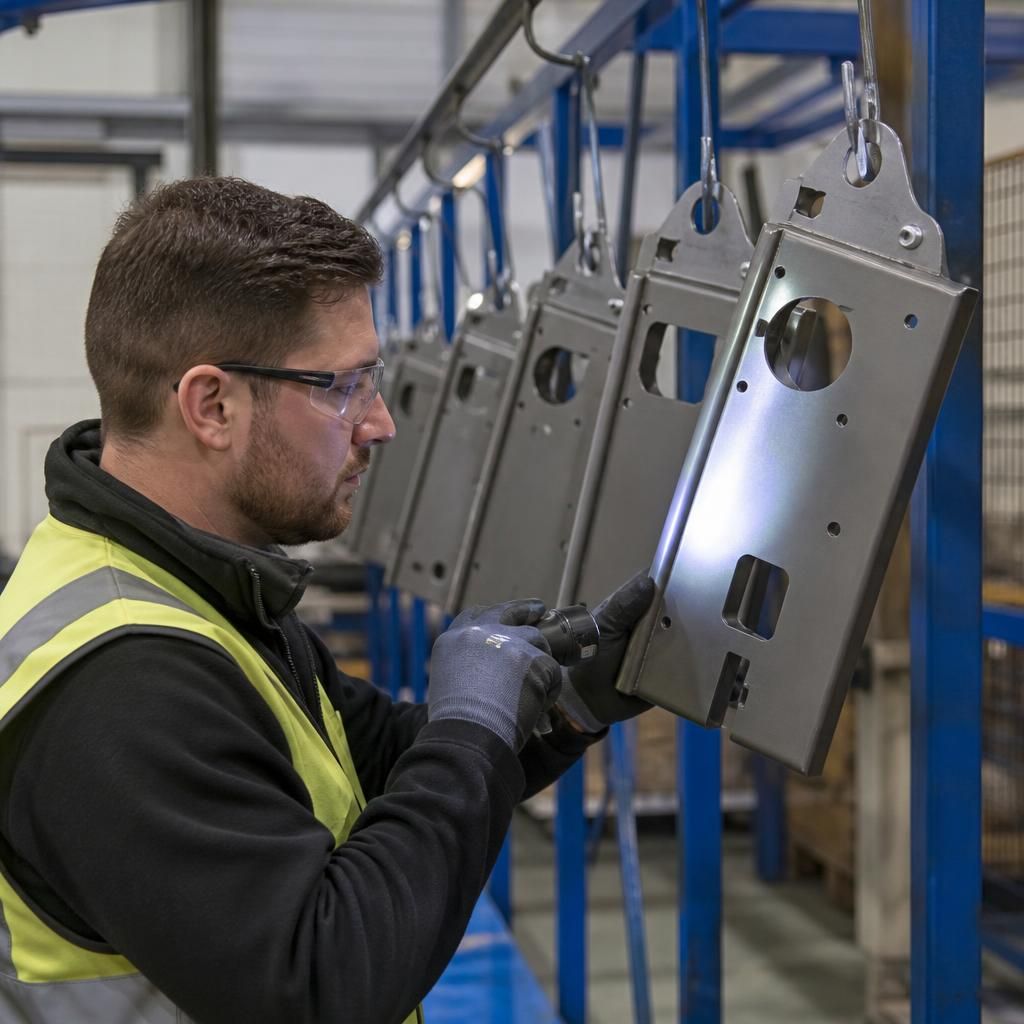
A defined handover point between blasting and powder coating helps prevent prepared components from entering the next stage with unresolved issues. The surface should be checked against the agreed preparation requirement, with any remaining residue, damage or inaccessible area identified before the batch is released. This avoids uncertainty during coating and reduces the risk of sending work back for further preparation.
Clear handover information also helps keep the sequence efficient. Recording the batch identity, substrate and preparation status allows the next stage to be matched to the correct components, particularly where several jobs are being processed. For Hamilton Industrial Powder Coating, this form of process control supports a predictable transition from blasting to coating without relying on assumptions about whether preparation is complete.