

What are the environmental and cost benefits of using sandblasting solutions for powder coating preparation?
Sandblasting solutions prepare metal surfaces mechanically, which can reduce reliance on chemical stripping products and support controlled abrasive use and waste handling. By removing corrosion, old coatings and contaminants before powder coating, effective preparation can improve coating adhesion, reduce rework and help control material and maintenance costs.
The environmental and cost benefits of sandblasting solutions come from using a controlled mechanical preparation process rather than treating blasting as a one-size-fits-all operation. Correctly selected equipment and abrasive media can reduce the use of chemical stripping products, limit avoidable waste, and make labour, cleanup, disposal and downstream processing easier to manage. The result depends on matching the process to the metal, existing coating and required surface profile.
Environmental benefits
- Reduced chemical use: Abrasive blasting can remove oxidation, scale and existing finishes without relying solely on paint strippers or other chemical treatments. This can reduce the handling of chemical products and the associated packaging and disposal requirements.
- More efficient media use: The correct abrasive achieves the required surface condition with less unnecessary processing. In suitable installations, some media can be collected, screened and reused. Reuse is not appropriate for every abrasive or application, so it must be assessed against contamination, breakdown and the finish required.
- Lower waste volumes: A properly specified process separates removed coating and corrosion from the component in a controlled area. This is easier to manage than uncontrolled flaking or repeated manual preparation, although spent abrasive and removed material still require responsible collection and disposal.
- Reduced water consumption in suitable applications: Dry blasting does not create a wash-water stream. Wet blasting may be useful where dust suppression or a particular finish is required, but it creates a slurry that must be contained and handled correctly. The most environmentally suitable method therefore depends on the component and site controls, not simply on whether blasting is used.
- Longer service life for treated components: Effective preparation supports a consistent powder-coating system, helping finished metalwork remain serviceable for longer. Extending the usable life of a component can reduce the environmental burden associated with replacement materials, manufacturing and transport.
- Better control of airborne contamination: Enclosed equipment, extraction and appropriate filtration help prevent abrasive dust and removed coating particles from spreading into the surrounding workplace. This is an environmental and occupational-control issue, particularly where old coatings may contain hazardous substances.
Cost benefits
- Lower preparation labour: Mechanical blasting can process corrosion and old finishes more consistently than relying on manual scraping or sanding alone. The cost comparison should include loading, masking, blasting, inspection, cleaning and any required touch-up work rather than looking only at the hourly blasting charge.
- More predictable production planning: A defined blasting specification gives the operator clear requirements for cleanliness, surface roughness, pressure, nozzle distance and media selection. This reduces the risk of inconsistent preparation between batches and makes labour and consumable requirements easier to estimate.
- Less avoidable handling: A process that removes unwanted material and leaves the component ready for the next stage can reduce repeated movement, storage and inspection. For large or heavy fabrications, minimising handling can be particularly important because lifting and transport add both cost and operational risk.
- Reduced disposal and cleanup costs: Contained blasting allows spent abrasive, coating debris and dust to be collected through an organised process. This can make waste streams easier to identify and prevent cleanup from becoming an unplanned part of the job. The waste classification should still be checked, especially when removing unknown or older coatings.
- Protection of the underlying metal: Excessive pressure, unsuitable media or prolonged blasting can damage edges, thin sections and machined areas. Selecting the least aggressive method that achieves the specification helps avoid rectification, rejected parts and unnecessary replacement of components.
- Improved whole-life value: The lowest initial preparation price is not necessarily the lowest overall cost. A useful comparison includes abrasive consumption, energy, extraction, waste handling, inspection, transport, coating compatibility and the expected maintenance requirements of the finished part.
How to compare the options
For a meaningful assessment, record the condition and dimensions of the components, the type and thickness of the existing coating, the required finish and whether the abrasive can be recovered. Ask how dust is contained, how spent media is collected, how waste is classified and whether the process is suitable for delicate sections or mixed batches. These details show whether an apparent saving is genuine or simply transfers cost to disposal, rework or additional handling.
Environmental performance should also be considered alongside worker safety. Some materials that appear inexpensive can create significant dust or disposal issues, while harder or reusable media may require different equipment and extraction controls. A responsible sandblasting specification therefore balances surface preparation, resource consumption, waste management and total cost rather than selecting media on purchase price alone.
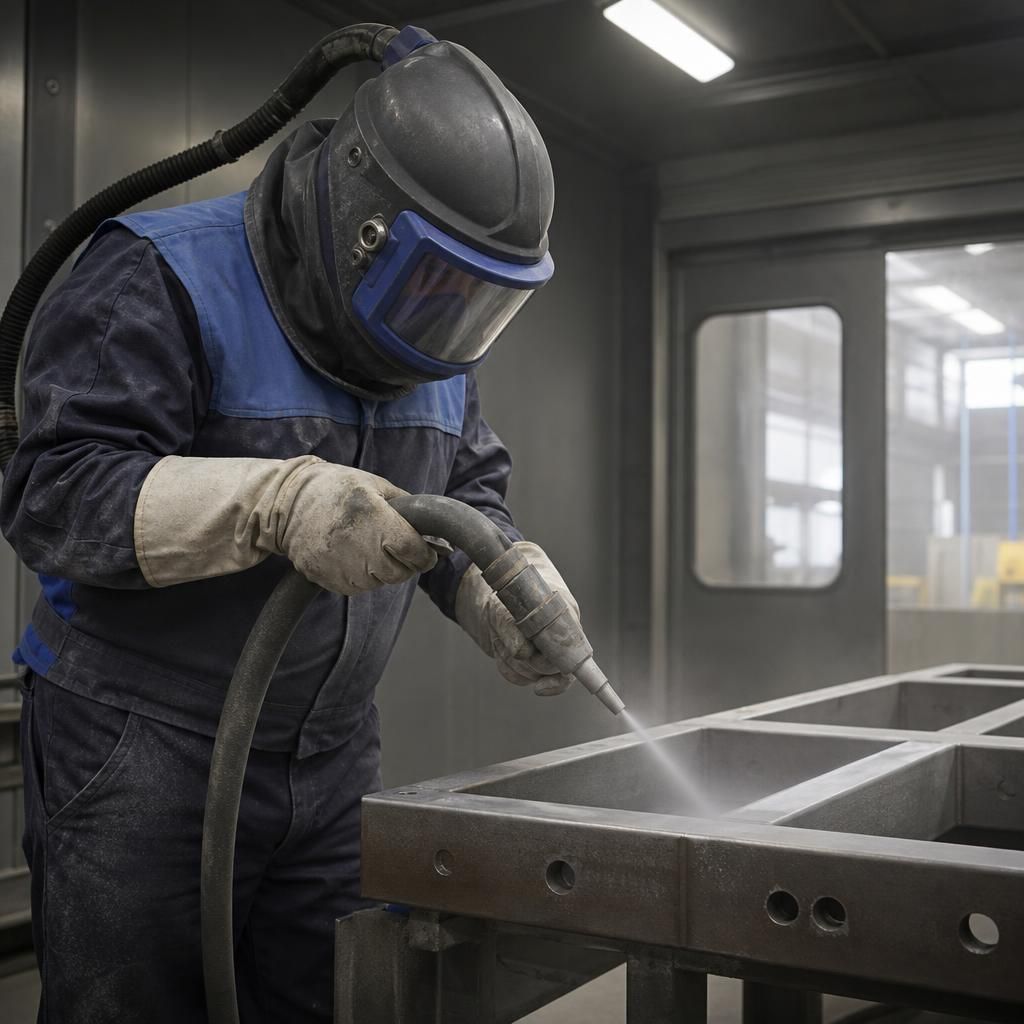
Matching the blast profile to the powder-coating system can reduce unnecessary material use. An overly aggressive process may create a deeper or sharper profile than the coating requires, increasing the amount of powder needed to cover the surface and potentially affecting edge coverage. A profile that is too shallow may provide insufficient mechanical keying and increase the risk of rework.
Setting an appropriate cleanliness and roughness requirement helps prevent over-processing. This can reduce abrasive consumption, extraction demand and powder use while preserving edges, threads and other dimensional details. The specification should therefore identify the required surface profile, not simply state that the component is to be blasted.
Discuss Your Sandblasting Preparation Requirements
Discuss your component dimensions, existing coating, metal type and required surface finish to assess whether sandblasting is suitable for your powder-coating preparation. This information can help establish an appropriate process and identify the likely environmental and cost considerations before work begins.