

How does sandblasting enhance the adhesion and longevity of powder coatings?
Sandblasting enhances powder coating by removing rust, scale, old coatings and other contaminants while creating a controlled surface profile for the powder to grip. This stronger mechanical bond helps reduce coating failure, such as peeling or premature corrosion, supporting a longer-lasting finish when the surface is correctly prepared and the coating is properly applied.
Sandblasting improves powder coating performance by producing a clean, suitably textured and chemically stable substrate that allows the complete coating system to bond and cure consistently. Its effect on longevity depends not only on the blasting itself, but also on the metal type, the condition of the component, the powder specification and the controls used before and after application.
Why preparation affects adhesion
Powder coating is applied as a dry film and then heated so the particles flow and cure into a continuous finish. Any residue between the metal and the coating can interfere with this process. Oil, grease, soluble salts, loose oxidation, transport residue and remnants of previous finishes may create weak areas, even where the component looks visually clean.
Sandblasting provides a more consistent foundation than relying on visual cleaning alone. It exposes sound substrate, removes loosely attached material and gives the coating applicator a predictable surface on which to work. The result is particularly important on fabricated parts with weld zones, heat-affected areas, corners or varied levels of oxidation, where untreated surfaces may behave differently from the surrounding metal.
How the surface profile is controlled
The blasting process must be matched to the substrate and the coating system. A profile that is too shallow may provide insufficient anchoring, while an overly aggressive treatment can waste material, distort thin sections, round sharp details or leave peaks that are difficult for the powder film to cover. The objective is therefore a uniform, appropriate texture rather than the roughest possible surface.
- Blast pressure, nozzle distance and angle influence the consistency of the prepared surface.
- Media selection affects the character of the profile and the risk of embedding unwanted particles.
- Thin sheet, machined faces and detailed fabrications may require more controlled treatment than robust structural components.
- Edges, recesses and welds need particular attention because inconsistent preparation can create localised coating weakness.
For critical work, the prepared surface can be assessed against the required specification using visual checks and, where appropriate, profile or cleanliness testing. This helps identify variation before powder is applied rather than after a coating defect has developed.
How sandblasting contributes to longer service life
A well-prepared interface reduces the likelihood of moisture and corrosive substances reaching vulnerable areas beneath the coating. This matters because corrosion can spread under a coating from a small defect, weld imperfection or exposed edge. Strong, continuous adhesion helps the finish remain attached when the component experiences handling, vibration, weathering, temperature changes or ordinary service abrasion.
Sandblasting can also remove unstable layers that would otherwise continue to deteriorate below the new finish. Applying powder over such material may produce an initially acceptable appearance but leaves a weak boundary within the system. Preparing back to a sound substrate gives the coating a more reliable base and makes the final performance less dependent on the condition of the old surface.
Preparation must continue after blasting
Blasting is one stage in a controlled coating process, not a substitute for all other preparation. Components normally need to be free from grease and other residues before blasting, because contamination can be spread across the surface rather than removed effectively. After blasting, parts should be handled carefully to prevent fingerprints, workshop dust or other contamination from being introduced.
Bare steel can also begin to oxidise if it is exposed to moisture after preparation. The interval between blasting and coating should therefore be controlled according to the material, environment and coating specification. If flash rust or new contamination appears, the surface may need further preparation before powder application.
The importance of application and curing
Even an expertly blasted surface will not compensate for an unsuitable powder, incorrect film thickness or incomplete curing. The powder must be compatible with the substrate and the intended service conditions. Application equipment must provide even coverage, including on edges, corners and recessed areas, while the curing cycle must be suitable for the component and the powder system.
These stages affect longevity in different ways:
- Surface preparation determines whether the coating has a stable foundation.
- Powder selection determines resistance characteristics such as weathering, chemicals or abrasion.
- Application control determines whether the film is continuous and sufficiently even.
- Curing determines whether the powder develops its intended physical and chemical properties.
For this reason, adhesion should be considered as part of the complete coating system rather than as an isolated result of blasting. A specification should identify the substrate, required preparation, powder type, film requirements and curing conditions before work begins.
Considerations for different metals
Steel often requires preparation that addresses mill scale, corrosion products and weld-related residues. Galvanised or zinc-coated components need a method that prepares the surface without unnecessarily damaging the protective zinc layer. Aluminium is relatively softer and may require carefully controlled media and pressure to avoid distortion or an unsuitable profile. Stainless steel also needs appropriate media control to avoid introducing contamination from other metals.
Existing coatings, cast surfaces and mixed-metal assemblies can require additional assessment. The condition, thickness and adhesion of an old coating determine whether it should be removed completely or treated as part of a compatible preparation system. Where a component contains different substrates, the process must achieve suitable preparation across all areas without compromising the most sensitive material.
In practice, the best results come from defining the required finish and service conditions first, then selecting the blasting method and powder system to suit them. Examination of the component before processing is important because corrosion, oil contamination, inaccessible areas and previous repairs can all influence the preparation route.
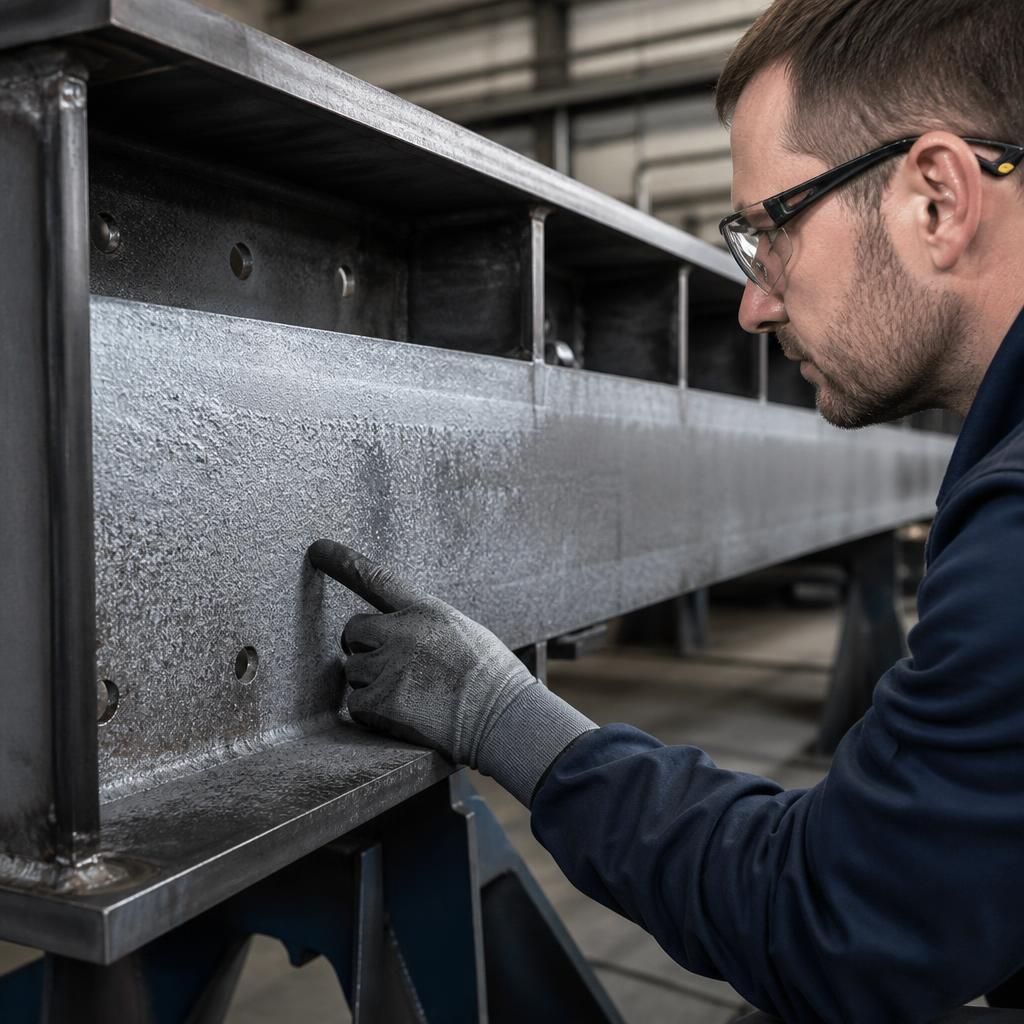
Sandblasting also helps reveal defects that could otherwise remain hidden beneath a powder coating. Once loose corrosion, scale and old finish have been removed, pitting, surface cavities, weld irregularities and areas of metal loss can be assessed before coating begins. This distinction matters because blasting cleans and prepares the substrate, but it does not restore damaged metal or correct poor fabrication.
Identifying these conditions at the preparation stage allows the component to be reviewed for repair, filling or an appropriate coating specification. Without that assessment, powder may bridge a cavity or leave a locally thin film over an uneven area, creating a vulnerable point in service. Surface inspection after blasting therefore supports longevity by ensuring that the coating is applied to a suitable substrate rather than being used to conceal defects.