

What specific surface preparation techniques best complement phosphate steel treatment in powder coating for industrial applications?
The most effective preparation combines thorough alkaline cleaning and degreasing, controlled abrasive or mechanical treatment to remove scale and create a suitable profile, followed by rinsing, phosphate application, clean-water rinsing and complete drying. Final inspection should confirm that the steel is free from oil, residue, flash rust and loose material before powder is applied, helping the phosphate layer support consistent adhesion and corrosion resistance.
The techniques that best complement phosphate steel treatment are those that control the condition of the steel immediately before, during and after conversion coating. In industrial work, this means managing bath chemistry, rinse purity, surface activation, treatment time and handling, rather than treating phosphate as a standalone step. These controls determine whether the conversion layer forms evenly and remains suitable for subsequent powder coating.
Control the phosphate process, not just the cleaning stage. Phosphate solutions require the correct operating range for concentration, acidity, temperature and contact time. If the bath is weak or too cold, the coating may be incomplete; if it is excessively aggressive or poorly controlled, excessive sludge or an uneven crystalline layer can result. Regular chemical checks and documented process controls help keep treatment consistent across batches. The selected phosphate chemistry should also match the substrate and the required level of corrosion protection.
Use an activation stage where the process requires it. Surface activators can encourage a finer, more uniform phosphate structure, particularly where the steel has a variable history or where appearance and powder adhesion need to be consistent. Activation is not a substitute for removing oil, scale or oxides. It is a conditioning step used after the surface is suitably clean and before the phosphate conversion stage, with its own concentration and contact-time controls.
Give extra attention to welds, edges and fabricated joints. These areas commonly behave differently from flat sheet. Weld heat tint, spatter, grinding residue and embedded abrasive can interrupt conversion coating formation. Sharp edges can also receive less uniform treatment and provide less powder coverage after application. Suitable weld finishing, edge treatment and close inspection of joints should therefore be included in the preparation specification, especially for fabricated frames, brackets and assemblies with crevices.
Select mechanical treatment according to the existing oxide layer. Light surface contamination may need only chemical conditioning, whereas heavy mill scale, corrosion products or heat-affected oxide may require a controlled mechanical method before phosphate treatment. The abrasive or tooling must remove the unwanted layer without embedding contaminants or creating a profile that is unsuitable for the intended powder finish. Excessively aggressive treatment can leave sharp peaks, fractured edges or residual media that interfere with conversion coating and coating coverage.
Prevent recontamination after treatment. Clean gloves, suitable handling equipment and protected staging areas reduce the risk of fingerprints, oil and workshop dust reaching the prepared steel. Components should be arranged so that solution can drain from recesses and so that joined or enclosed sections do not retain contaminated liquid. Particular care is needed with box sections, folded parts, threaded holes and overlapping joints, where trapped chemistry can later cause staining or under-film corrosion.
Manage rinse quality as a separate process variable. A rinse can become contaminated even when the treatment bath is operating correctly. Overflow or staged rinsing helps reduce carry-over, while monitoring rinse conductivity or other agreed indicators can identify contamination before it affects the parts. The final rinse should leave minimal dissolved residue. Water quality is especially important on large batches, where a small amount of carry-over can progressively affect downstream components.
Use practical checks to verify the preparation sequence. A water-break observation can indicate whether a surface is uniformly wettable after cleaning; beading or separated water may point to residual oil. Other checks may include visual assessment under suitable lighting, examination of representative parts, coating-weight checks for the conversion layer and adhesion testing after powder coating. The appropriate test depends on the steel, phosphate system, component geometry and performance specification.
Design the preparation method around the component. Flat panels, small batch parts, long fabrications and complex assemblies may require different racking, drainage and process handling. Racking should provide reliable electrical contact where it is needed later for powder application, while avoiding contact marks on critical faces. Parts should also be spaced to allow treatment solutions and rinse water to reach all required surfaces rather than creating shielded areas.
For industrial powder coating, the most reliable specification combines substrate assessment, suitable mechanical conditioning, controlled phosphate chemistry, verified rinse quality, careful handling and documented checks. This approach makes the phosphate layer more uniform and gives the powder coating a more consistent foundation, particularly on fabricated steel where welds, recesses and mixed surface conditions create the greatest preparation risks.
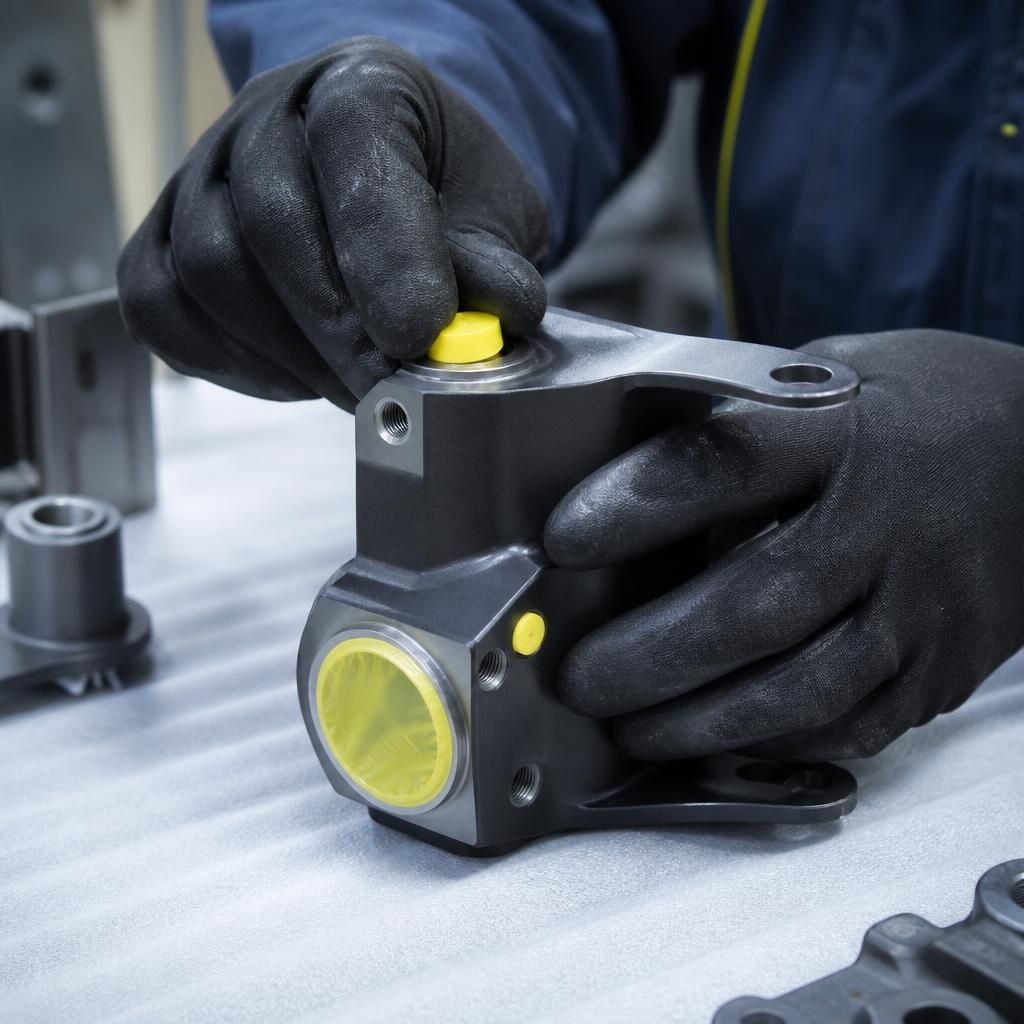
Masking is an important complementary technique where powder coating must not cover threads, earth points, bearing seats, machined faces or other functional surfaces. These areas should be identified before treatment, but masking materials must be selected carefully: applying them too early can shield the steel from cleaning or phosphate conversion, while unsuitable materials may soften, leave residue or fail during rinsing. A practical sequence is to complete cleaning, phosphate treatment, rinsing and drying first, then apply chemically compatible plugs, caps or tapes immediately before powder coating. This preserves the treated surface while maintaining the dimensional and electrical requirements of the finished component.
Discuss Surface Preparation for Phosphate Steel Treatment
Discuss your steel components and required powder coating finish with a preparation specialist to identify the most suitable phosphate treatment sequence. Share details of the substrate, component geometry and intended use so the process can be assessed before coating.