

What is the role of phosphate steel treatment in powder coating surface preparation?
Phosphate steel treatment creates a thin conversion layer on the metal surface before powder coating, helping the coating bond consistently to the steel. It also supports corrosion resistance and finish quality by providing a cleaner, more stable surface for powder application.
Phosphate steel treatment is a chemical conversion stage that conditions a cleaned steel surface before powder coating. Rather than acting as a conventional paint or primer, it changes the outer surface of the steel to create a controlled, chemically receptive layer. Its role is to make the substrate more consistent for the subsequent coating system and to provide additional protection if moisture reaches the metal beneath the powder film.
The treatment is applied after initial cleaning has removed oil, grease, dirt, mill scale and other contaminants. A phosphate solution then reacts with the prepared steel. The resulting conversion layer is bonded to the substrate and has a different surface chemistry from untreated steel. This gives the powder coating a more suitable foundation than bare, contaminated or lightly oxidised metal.
Phosphate treatment also helps manage the interface between steel and powder coating. Powder does not simply rely on mechanical contact with the metal; the condition and chemistry of the surface affect how consistently the coating wets and forms a continuous film during curing. A properly formed conversion layer can reduce variation caused by minor differences in the steel surface, provided the earlier cleaning stages have been effective.
There are two commonly used phosphate approaches for steel:
- Iron phosphate: generally forms a relatively light conversion coating and is often used where a straightforward preparation process is appropriate.
- Zinc phosphate: normally produces a more substantial crystalline layer and may be selected where a more robust pretreatment system is required, particularly for demanding industrial applications.
The correct option depends on the steel grade, component geometry, expected service conditions, powder coating system and the equipment used by the coater. Phosphate chemistry should not be selected in isolation. A treatment designed for one substrate or application may be unsuitable for another, so the full preparation and coating process must be considered together.
A typical phosphate preparation sequence includes the following stages:
- Pre-cleaning: oils, grease and general contamination are removed so the treatment can contact the steel evenly.
- Rinsing: residues from the cleaning stage are washed away. Inadequate rinsing can dilute or contaminate later chemical stages.
- Surface conditioning: where necessary, oxidation, scale or other tightly attached material is treated or removed before phosphating.
- Phosphating: the cleaned steel is exposed to the selected phosphate solution for the required process conditions.
- Post-treatment rinsing: excess chemical residues are removed to limit contamination of the powder coating process.
- Drying: the component is dried thoroughly before powder application. Moisture trapped in joints, folds, cavities or threaded areas can create defects or interfere with subsequent coating.
Process control is important because the conversion layer is formed by a chemical reaction, not simply by applying a fixed material thickness. Bath concentration, temperature, acidity, contact time, contamination and rinsing quality can all affect the result. If the treatment is too weak or uneven, parts of the steel may remain inadequately conditioned. If the process is poorly controlled or residues are left behind, the powder coating may show inconsistent appearance or reduced performance.
Component design also affects the treatment. Welds, sharp edges, overlaps, blind holes and enclosed sections can retain cleaning chemicals or rinse water. These areas need particular attention during handling, draining and drying. Weld contamination and heat-affected areas may also require additional preparation because their surface condition can differ from the surrounding steel.
Phosphating is not a substitute for removing contamination or correcting defective steel. Oil, rust, scale, weld spatter and embedded particles must be dealt with before the conversion stage. Nor can phosphate treatment compensate for incorrect powder selection, inadequate curing or damage introduced after coating. It is one part of a controlled preparation system, and its effectiveness depends on each preceding and following stage being suitable.
Assessment may include visual checks for even coverage, inspection of difficult-to-reach areas and review of process records. Where a specification requires it, the pretreatment may also be verified through recognised tests for coating weight, surface condition or resistance to environmental exposure. The appropriate checks depend on the component, the powder system and the performance requirements of the finished part.
For manufacturers and fabricators, the practical value of phosphate steel treatment is therefore process consistency. It provides a defined chemical transition between cleaned steel and the powder coating, reduces reliance on the untreated metal surface and supports a more controlled route to a durable industrial finish. The best results come from matching the phosphate system to the substrate and service conditions, maintaining the chemical stages correctly, and ensuring that treated parts are clean and completely dry before powder is applied.
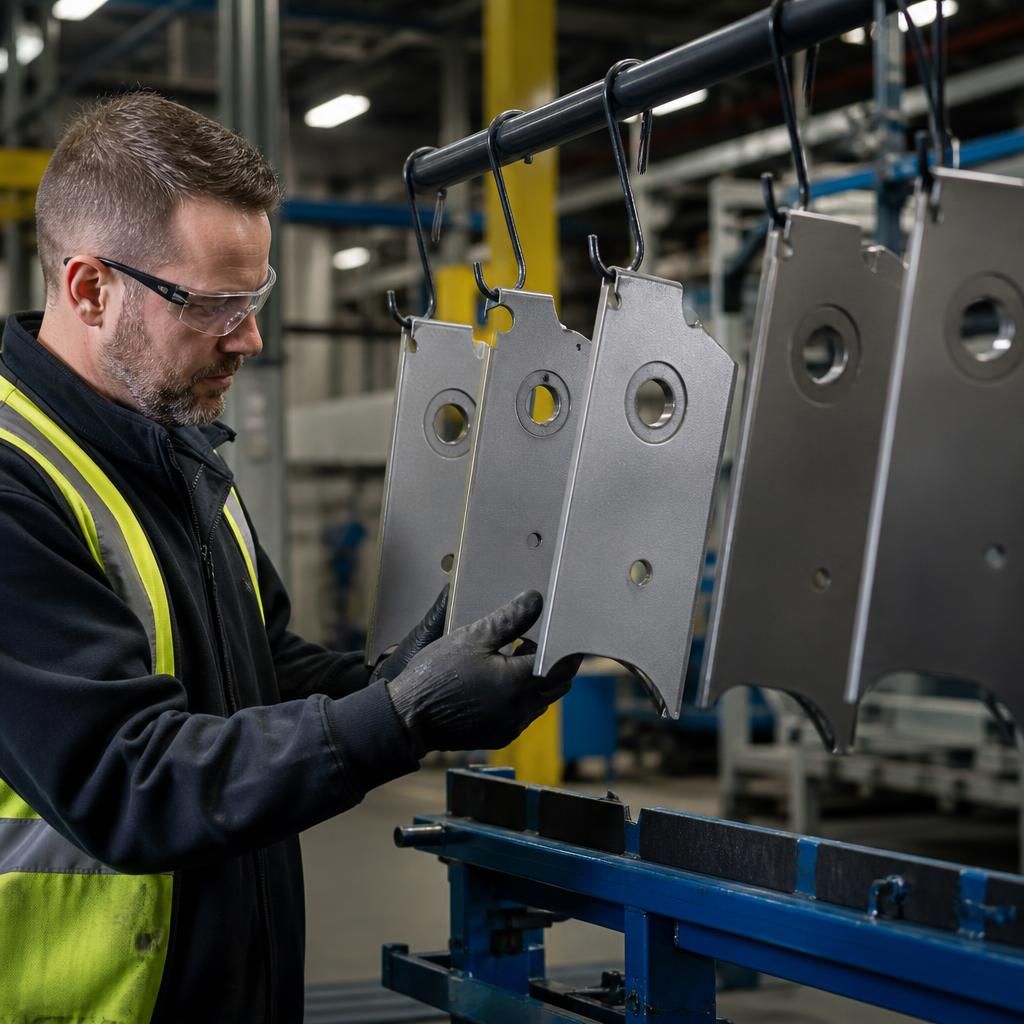
Phosphate steel treatment remains effective only if the conversion layer is protected between pretreatment and powder application. Handling treated components with contaminated gloves, placing them on dirty supports or allowing them to rub against abrasive surfaces can reintroduce oils, salts or bare areas that affect coating consistency.
After treatment, components should therefore be moved using clean handling methods and kept away from moisture, dust and other sources of contamination. Particular care is needed with edges, contact points and recessed sections, where the layer may be disturbed or where residual moisture can remain. A pre-coating inspection can identify visible marks, flash rust or contamination so that the affected area is corrected before powder is applied.
Discuss phosphate steel treatment for powder coating preparation
If you are assessing phosphate steel treatment for a powder coating project, discuss the steel grade, component design and service conditions with the powder coating team. This helps identify a suitable pretreatment process before production begins.