

What are the key benefits of using professional services for powder coating surface preparation?
Professional powder coating surface preparation removes contaminants and conditions the metal to create a clean, consistent surface for coating adhesion. This helps reduce defects, improve finish uniformity and support the long-term durability and protective performance of the coated component.
Professional powder coating surface preparation provides a controlled, repeatable process for getting metal components ready for coating. Its main benefits are better process consistency, more appropriate treatment of different substrates, fewer avoidable rework issues and clearer quality control throughout production.
More consistent preparation across batches
Industrial components can vary in size, geometry, material and condition. Professional operators assess these differences and apply a preparation method suited to the part rather than relying on one treatment for every job. This helps maintain more consistent results across repeat batches, including components with recesses, joints, edges or difficult-to-reach areas.
Controlled preparation also reduces variation caused by uneven manual treatment. Factors such as cleaning strength, treatment time, rinsing, drying and surface handling can all affect the condition of the metal before coating. Managing these stages systematically makes the finished process more predictable.
Correct treatment for the substrate and end use
Steel, galvanised steel, aluminium and previously treated metal may require different preparation methods. A professional service can identify the substrate and consider the component’s intended environment before selecting suitable cleaning, abrasion or chemical pretreatment. This is important where the part will be exposed to moisture, handling, industrial contamination or changing temperatures.
Preparation can also be adjusted for the type of powder coating and the performance requirements of the component. The aim is not simply to make the surface look clean; it is to create a suitable foundation for the specified coating system without causing unnecessary damage to the metal.
Better control of difficult components
Large fabrications, fabricated assemblies and parts with complex profiles can be difficult to prepare evenly using basic workshop methods. Professional equipment and established procedures help operators work more effectively around corners, apertures, welds and enclosed sections. Particular care is needed because residues or untreated areas in these locations may not be obvious during a quick visual inspection.
Experienced preparation also helps identify issues such as weld spatter, sharp edges, corrosion, mill scale or incompatible previous finishes before coating begins. Some defects need to be removed or corrected before the component can proceed, while others may require the customer to review the design or specification.
Lower risk of avoidable rework
When preparation is incomplete or unsuitable, the problem may only become apparent after coating. Removing and recoating a component can involve additional handling, transport, preparation and inspection. It may also disrupt a manufacturer’s or fabricator’s production schedule.
Using a defined preparation process helps identify condition and specification issues earlier. Professional operators can inspect incoming parts, clarify requirements and separate preparation concerns from coating concerns. This does not remove every possible coating risk, but it reduces the likelihood that basic surface-condition problems will pass unnoticed into the next stage.
More effective inspection and process records
Professional services normally place greater emphasis on inspection at defined points in the preparation process. Depending on the project, checks may include the condition of the incoming metal, the removal of visible contamination, the uniformity of treatment and the dryness or cleanliness of the surface before powder application.
Clear specifications and records are particularly useful for B2B work involving repeat orders or components supplied into a wider manufacturing process. They provide a reference for discussing variations between batches and for confirming that preparation requirements have been understood before production continues.
Improved production planning
Outsourcing preparation to a specialist can give manufacturers and fabricators access to suitable equipment and trained operators without having to develop every process internally. This can be useful where the required treatment is occasional, involves large components or needs dedicated handling and cleaning facilities.
It can also simplify production planning when preparation and powder coating are managed as connected stages. Parts can be assessed against the agreed specification, prepared in suitable batches and transferred through the coating process with less duplication of handling.
Safer and more controlled working practices
Surface preparation may involve chemical products, dust, compressed air, mechanical abrasion, wastewater and contaminated residues. Professional facilities are equipped to manage these activities through defined procedures, appropriate protective measures and controlled waste-handling arrangements. This helps separate preparation work from general fabrication activities and reduces the risk of unsuitable treatment being carried out in an uncontrolled area.
For businesses comparing suppliers, useful questions include which preparation methods are available, how different substrates are assessed, how parts are inspected before coating and how repeat batches are controlled. The right service should be selected according to the metal, component design, coating specification and conditions the finished part will encounter.
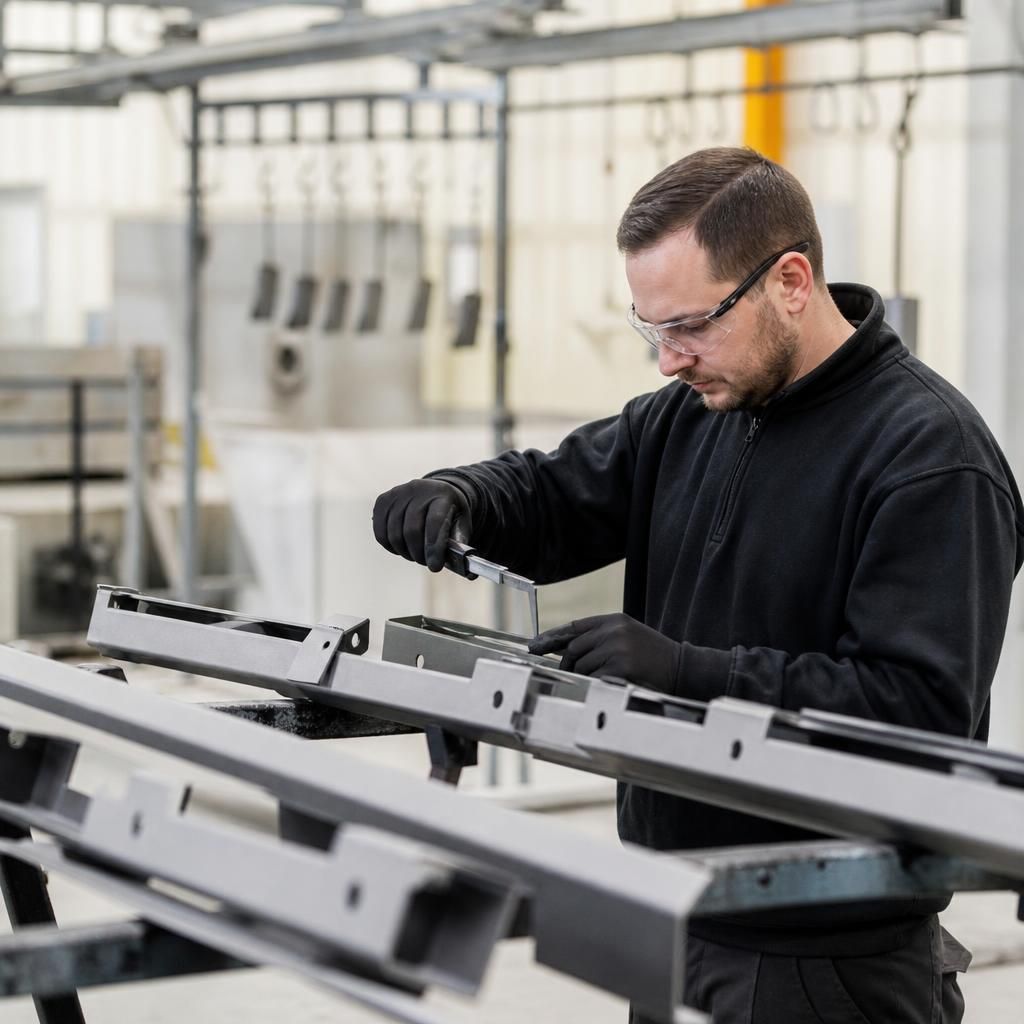
Professional surface preparation helps preserve the functional dimensions and features of metal components before powder coating. Controlled cleaning and abrasion can remove contamination without unnecessarily altering edges, mating faces, threaded areas or close-fitting sections that must remain accurate after finishing.
This is particularly important for fabricated parts that form part of an assembly. Excessive abrasion, retained residue or poorly controlled masking can affect fit, movement or electrical contact. A specialist preparation process considers these requirements before treatment and identifies areas that need protection, masking or additional inspection.
Preserving these features reduces the risk that a coated component will require adjustment before installation. It also supports a more reliable handover between coating and the next manufacturing or assembly stage, especially where the finished part must meet an existing design specification.
Discuss Your Powder Coating Surface Preparation Requirements
Discuss your powder coating surface preparation requirements with the team, including the metal type, component design, finish specification and intended use. This information helps establish a suitable preparation approach before work is arranged.