

How does surface cleaning and degreasing impact powder coating effectiveness?
Surface cleaning and degreasing remove oils, grease, dirt and other contaminants that can prevent powder coating from bonding properly to metal. A thoroughly prepared surface supports consistent adhesion, reduces defects such as blistering or peeling, and helps the finished coating deliver its intended durability and appearance.
Surface cleaning and degreasing affect powder coating primarily by controlling the chemistry at the metal–coating interface. The powder must melt and flow over a surface with the right level of cleanliness and surface energy; an invisible film of machining fluid, handling residue or cleaning product can interfere with that process even when the component looks clean.
Cleaning and degreasing perform different functions. Cleaning removes loose particles, shop dirt, salts and other deposits. Degreasing targets organic contamination such as cutting oils, lubricants, waxes, fingerprints and forming compounds. These substances can act as a barrier between the pre-treatment and the steel or aluminium, preventing the coating system from forming a consistent bond with the substrate.
The effect is not limited to adhesion. Residual contamination can alter how the powder wets the metal during curing, causing uneven flow, cratering, pinholes, fisheyes or local variations in gloss. It can also affect the consistency of a phosphate or other conversion treatment by leaving parts of the surface chemically inactive. Where residues remain in joints, folds, holes or rough sections, they may emerge during the oven stage and create localised finish defects.
The cleaning method must match the contamination. Aqueous alkaline cleaners are commonly suited to oils and general workshop soils, while more specialised formulations may be needed for waxes, heavy lubricants or particular forming compounds. Solvent-based methods can dissolve some residues effectively, but the solvent itself must evaporate cleanly and must be compatible with the substrate, plant controls and environmental requirements. Abrasive cleaning can remove adherent deposits and corrosion products, but it is not a substitute for removing oil: it may spread contamination across the surface or drive it into a roughened profile.
Temperature, concentration, contact time and agitation all influence the result. A cleaner that is too weak, too cold or in contact with the part for too little time may leave a thin residue. Excessive concentration or poor rinsing can create its own problem by depositing alkaline salts or surfactants. For this reason, process control is more reliable than judging cleanliness by appearance alone.
Rinsing and drying are part of effective degreasing. After the contaminant has been loosened, the component needs adequate rinsing to remove dissolved soil and cleaning chemistry. Water quality can matter, particularly where dissolved salts may remain after drying. Components should then be dried thoroughly, including internal corners, threaded holes and overlaps. Trapped moisture can interfere with subsequent preparation and may contribute to early corrosion beneath the coating system.
Inspection should consider areas that are easily missed rather than concentrating only on broad, accessible faces. Particular attention is useful around:
- welds and heat-affected areas;
- folded edges, seams and enclosed sections;
- recesses, drilled holes and threaded features;
- handling points and areas previously exposed to lubricants;
- rough or profiled surfaces where residue can be retained.
Practical checks may include visual inspection under suitable lighting, water-break observation, wipe testing and checks for cleaner residue. A continuous water film generally indicates a more uniformly wettable surface than isolated beading, although such checks do not replace a defined process specification. Where contamination is suspected, the appropriate response is to identify its source and adjust the cleaning stage rather than rely on additional powder or a heavier coating film.
Degreasing also has limits. It will not necessarily remove mill scale, weld oxide, rust, embedded abrasive, silicone contamination or all forms of conversion coating residue. These conditions require the appropriate preparation step for the substrate and the intended coating system. Applying a powder coating over a chemically clean but poorly prepared oxide layer can still produce an unreliable result.
For production work, consistency depends on controlling the complete sequence: identify likely contaminants, select a compatible cleaner, maintain the operating conditions, rinse effectively, dry the parts and verify the result before coating. The condition of incoming metal, the way parts are handled and the cleanliness of racks, hooks and conveying equipment should also be considered. Cleaned components can be re-contaminated by dirty gloves, oily fixtures or contact with unprotected workshop surfaces.
In practice, effective cleaning and degreasing provide a stable starting point for the rest of the powder coating process. They allow subsequent pre-treatment and powder application to work on the intended metal surface rather than on an inconsistent film of workshop residue, making the final finish more predictable across individual parts and production batches.
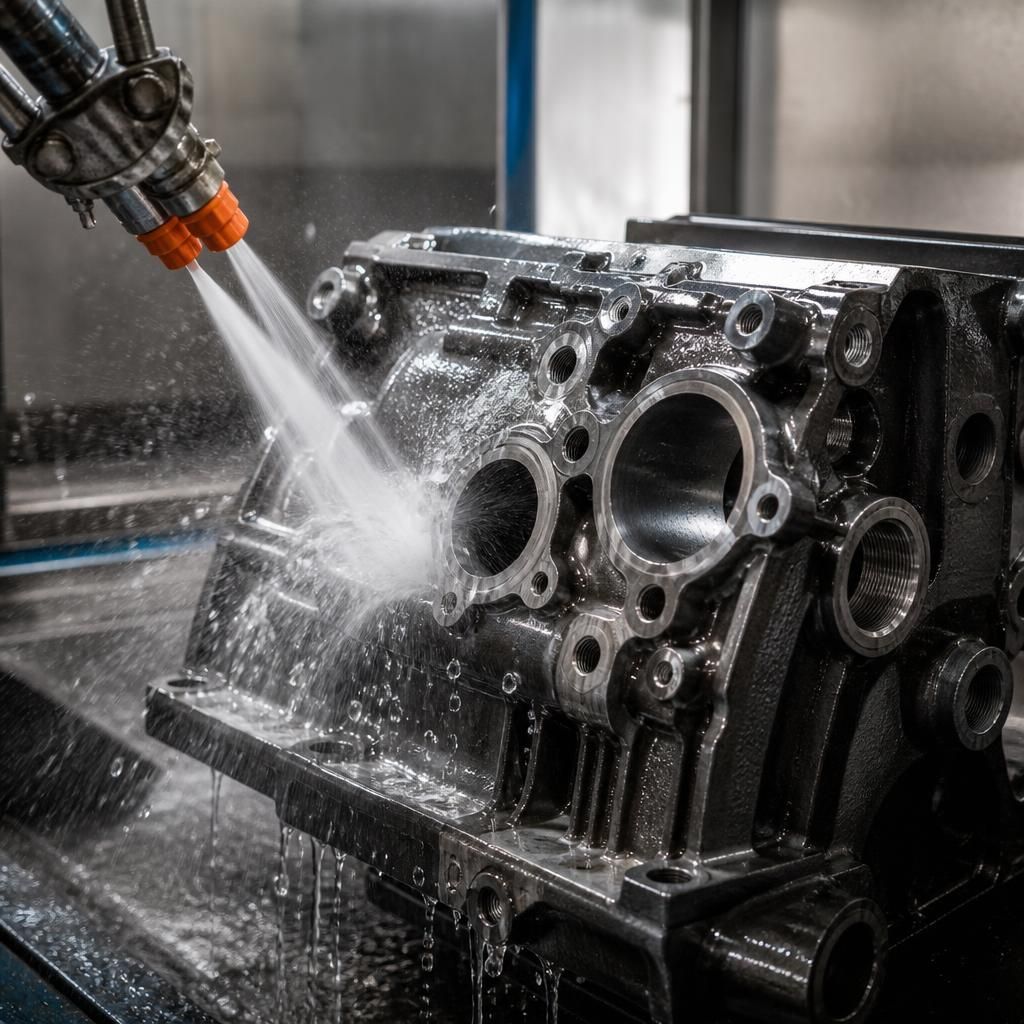
Part geometry and cleaning equipment can determine whether degreasing is effective. Complex metal components need sufficient solution contact across recesses, seams and enclosed features, while spray systems also depend on nozzle access and impact. A surface may therefore receive adequate treatment on exposed faces but remain contaminated in areas shielded from the cleaning action.
Production loading and component orientation should allow cleaning chemistry and rinse water to reach the full surface and drain away freely. Blind holes, overlapping sections and downward-facing pockets can retain contaminated solution or leave cleaner residue behind. Reviewing these features during process setup helps ensure that the cleaning stage supports a uniform powder coating finish rather than treating only the most accessible areas.
Discuss surface cleaning and degreasing for your powder coating project
Discuss your component requirements with powder coating specialists to establish the appropriate cleaning, degreasing and preparation process before coating. Provide details of the metal, contaminants and component geometry so the process can be assessed accurately.