

What types of metals and materials are best suited for metal shot blasting?
Metal shot blasting is best suited to robust metal components made from steel, cast iron and other ferrous alloys, including fabricated parts and castings that need scale, rust, old coatings or production residue removed. Aluminium, stainless steel and other non-ferrous metals can also be treated, but they require appropriately selected shot, controlled pressure and a suitable blasting process to avoid surface damage or distortion.
The most suitable materials for metal shot blasting are rigid metal components that can withstand repeated abrasive impact without bending, deforming or losing critical dimensions. Suitability depends not only on the alloy, but also on the component’s thickness, hardness, geometry, existing surface condition and the finish required afterwards.
Non-ferrous metals
Copper-based alloys such as brass and bronze can be processed, particularly where the aim is to remove tarnish, light oxidation, casting residue or a firmly attached coating. However, these materials are generally softer than ferrous substrates. Excessive impact can mark the surface, soften sharp detail or cause shot to become lodged in recesses. Lower-impact settings and careful media selection are therefore important where the component has a decorative, machined or close-tolerance surface.
Nickel alloys and other hard, heat-resistant metals may also be suitable for shot blasting when they require cleaning or preparation before a subsequent coating. Their hardness can make them resistant to mechanical cleaning, but the correct treatment still depends on the condition of the surface and the specification of the finished part. A trial on a representative area can help establish whether the process produces the required cleanliness without creating an unwanted profile.
Coated, oxidised and contaminated surfaces
Metal shot is often considered for components carrying old paint, powder coating, mill scale, light rust, welding residue or general production contamination. The existing layer must be assessed before processing. A brittle, poorly bonded coating may detach readily, whereas a strongly bonded or unusually thick coating may require a different preparation stage. Oil, grease and heavy deposits should also be dealt with appropriately, because abrasive impact alone does not reliably remove all contaminants and may spread them across the surface.
Where a zinc or other sacrificial coating is intended to remain in service, shot blasting is usually unsuitable because it can remove or thin that protective layer. If the purpose is to strip the coating before applying a new system, the process may be appropriate, but the exposed substrate then needs inspection and subsequent protection.
Component design matters as much as material
Open, accessible surfaces are straightforward to treat because the shot can reach them consistently. Complex fabrications, castings with internal cavities and parts containing deep recesses need closer assessment. Abrasive can collect in pockets, behind brackets or inside hollow sections, making thorough removal important before painting or powder coating.
Thin sheet, fine fins, narrow sections and lightly supported panels are less suitable than solid or well-braced parts. Repeated impact can cause distortion or visible peening, particularly where the component has low stiffness. Threads, precision bores, sealing faces, bearing seats and other machined areas may need masking or exclusion from direct blasting. The same applies to edges where loss of sharpness would affect assembly or function.
Materials that need an alternative approach
Metal shot is generally not the first choice for soft non-metallic materials such as plastics, rubber, foam, timber or composite materials. Their surfaces may suffer tearing, indentation, heat build-up or embedded abrasive. Glass and ceramics can also fracture or chip under unsuitable impact conditions. These materials may sometimes be cleaned with a different, less aggressive medium, but that is a separate process from metal shot blasting.
Very thin, flexible or highly finished metal parts may also be poor candidates, even when the underlying alloy is technically blastable. A component intended to retain a precise appearance or surface texture may need chemical cleaning, a gentler abrasive or another preparation method instead.
How suitability is confirmed
- Identify the base material and any existing coating, plating or treatment.
- Check thickness, hardness, tolerances and areas that must not be altered.
- Review welds, cast features, corners, cavities, threads and enclosed sections.
- Define the required cleanliness and the surface profile needed by the next coating.
- Use a controlled test area or sample component where the material, finish or geometry presents a risk.
- Inspect the blasted surface for distortion, embedded shot, residual contamination and adequate coverage.
In practical terms, the best candidate is a sound, sufficiently rigid metal component with a surface that needs mechanical cleaning or preparation and with no delicate features exposed to uncontrolled impact. For less common alloys, thin sections, retained protective coatings or precision-machined parts, material identification and a process assessment should come before production blasting.
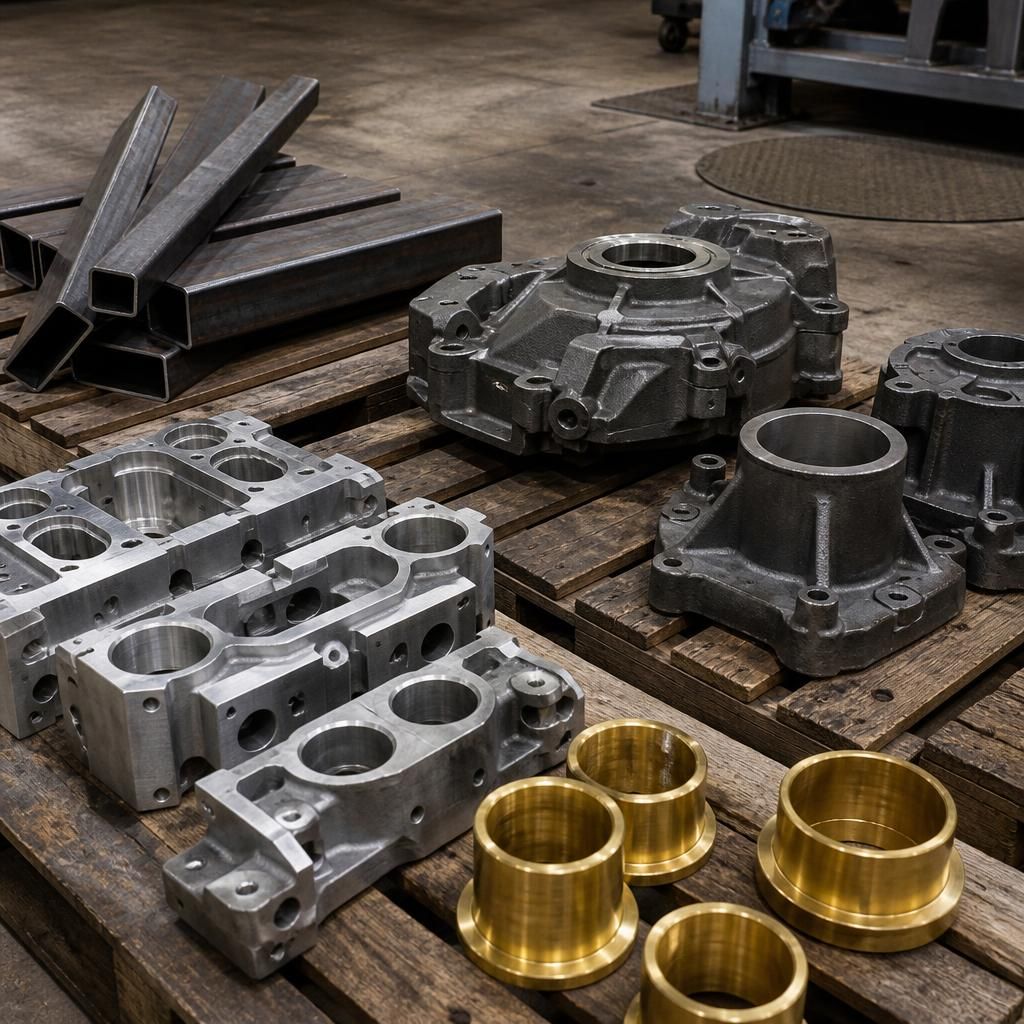
Material hardness affects how effectively a component can be shot blasted. Steel and cast iron are generally well suited because their rigid surfaces can tolerate the impact needed to remove mill scale, corrosion and firmly attached residue. Harder alloys may also be suitable where mechanical preparation is required before coating.
Softer metals need a more carefully controlled process. Aluminium, brass, bronze and similar alloys can be marked, peened or dimensionally affected if the impact is excessive. Their suitability should therefore be judged alongside the required appearance, tolerances and coating specification, rather than by material name alone.