

What preparatory steps are required before undertaking metal shot blasting?
Before metal shot blasting, components should be inspected, cleaned of oil, grease, dirt and loose contamination, and assessed for damage or areas that must not be blasted. Any sensitive surfaces, threaded sections, openings or accurately machined areas should then be masked or protected before the parts are prepared for safe, consistent processing.
Effective preparation for metal shot blasting involves defining the required finish, confirming the component is suitable for the process, recording critical dimensions and arranging secure handling. These steps allow the blasting operation to be selected and controlled around the part’s material, geometry and end use, rather than treating every component in the same way.
1. Confirm the required surface condition
Before work begins, establish what the blasted surface must achieve. The requirement may be removal of mill scale, preparation for a subsequent coating, a uniform mechanical key, or a particular visual appearance. These objectives can require different blasting approaches. A surface intended for coating normally needs consistent roughness and complete removal of loosely bonded material, whereas a component being refurbished may have additional requirements relating to appearance or the retention of existing features.
Provide the processor with relevant drawings, photographs, coating specifications and end-use information where available. Details such as the proposed coating system, required profile, acceptable cosmetic variation and areas that must retain their existing finish help determine suitable process settings. If there is no formal specification, agree how the finished surface will be assessed before production work takes place.
2. Check the material and construction
Identify the metal, grade and any treatments already applied. Steel, stainless steel, aluminium and other alloys can respond differently to abrasive impact, so the substrate should be considered when selecting the blasting method and intensity. The presence of heat treatment, plating, galvanising, welds, brazed joints or repairs should also be declared.
Review the component’s construction for features that could be affected by abrasive impact or trapped debris. Thin sections, unsupported panels, sharp edges, delicate projections and heat-sensitive assemblies may require a controlled approach. Welds should be sound, with spatter and temporary attachments dealt with before blasting. Cracks, distortion, loose joints or poor repairs are not corrected by surface preparation and may become more apparent during processing.
3. Record dimensions and functional tolerances
Measure or identify any dimensions that are important to assembly or performance. Shot blasting removes surface contamination and may alter the appearance of edges, but it should not be used without considering close-fitting faces, bearing seats, sealing surfaces, precision bores or other functional areas. Where a part has tight tolerances, provide the relevant limits and identify datum faces so that the preparation method can be planned accordingly.
Photographs and marked-up drawings are useful for recording vulnerable features and distinguishing cosmetic surfaces from working surfaces. This information also helps with inspection after blasting, particularly where the component will proceed to powder coating or another protective finish.
4. Make the component suitable for handling
Parts should arrive in a condition that allows them to be safely lifted, positioned and rotated. Remove temporary transport items, loose labels and detachable fittings that are not intended to go through the process. Assemblies may need to be dismantled where separate treatment is required or where one part could obstruct another.
Consider how the component will be supported during blasting. Contact points, hanging positions and lifting features can affect access and may leave small areas that need a secondary operation. Components should therefore be presented in a way that exposes the required surfaces without creating an unsafe or unstable load. Long, awkward or irregularly shaped items may need agreed handling arrangements before delivery.
5. Deal with cavities, joints and enclosed sections
Hollow sections, folded metal, box fabrications and overlapping joints need particular attention. Abrasive and loosened residue can collect in enclosed areas, while small openings may allow material to enter spaces that are difficult to inspect. Determine whether cavities should remain accessible, be temporarily closed, or be excluded from the process.
Drainage and ventilation are also important where a component has previously held liquids, has been exposed to condensation, or contains inaccessible pockets. Any retained material can interfere with blasting, handling or subsequent coating. Components should be configured so that enclosed areas can be checked and cleared as part of the agreed process.
6. Establish masking and protection details in advance
Protection requirements should be shown clearly on a drawing or discussed before processing, rather than identified after blasting has started. Define the boundary of any no-blast area, the level of edge protection required and whether a feature needs complete exclusion or only reduced exposure. This is particularly important for accurate interfaces, electrical contact points and surfaces that must mate with another component.
Not all masking materials or methods are suitable for every blasting condition. The planned protection must withstand abrasive impact and be removable without leaving contamination that could affect a later coating. Where masking is extensive or complex, allow for the additional preparation and removal work when planning the job.
7. Agree inspection and post-blast requirements
Decide how the prepared part will be checked before it leaves the process. Inspection may include visual uniformity, coverage of specified areas, the condition of edges and interfaces, dimensional checks or assessment of the surface profile where a coating specification requires it. The inspection method should match the purpose of the preparation; a visual check alone may not be sufficient for a precision or coating-critical component.
Also confirm what must happen immediately after blasting. A prepared steel surface should not be left exposed unnecessarily where corrosion could develop before coating. Agree the next operation, the required handling method and the packaging or protection needed during transfer. If components are moving to powder coating, the timing, orientation and presentation should support clean handling and avoid recontamination.
For repeat batches, retain the agreed drawings, photographs, masking details and inspection criteria as a job record. Consistent information makes it easier to reproduce the required preparation on later batches and to identify any change in material, design or finish that needs a fresh assessment.
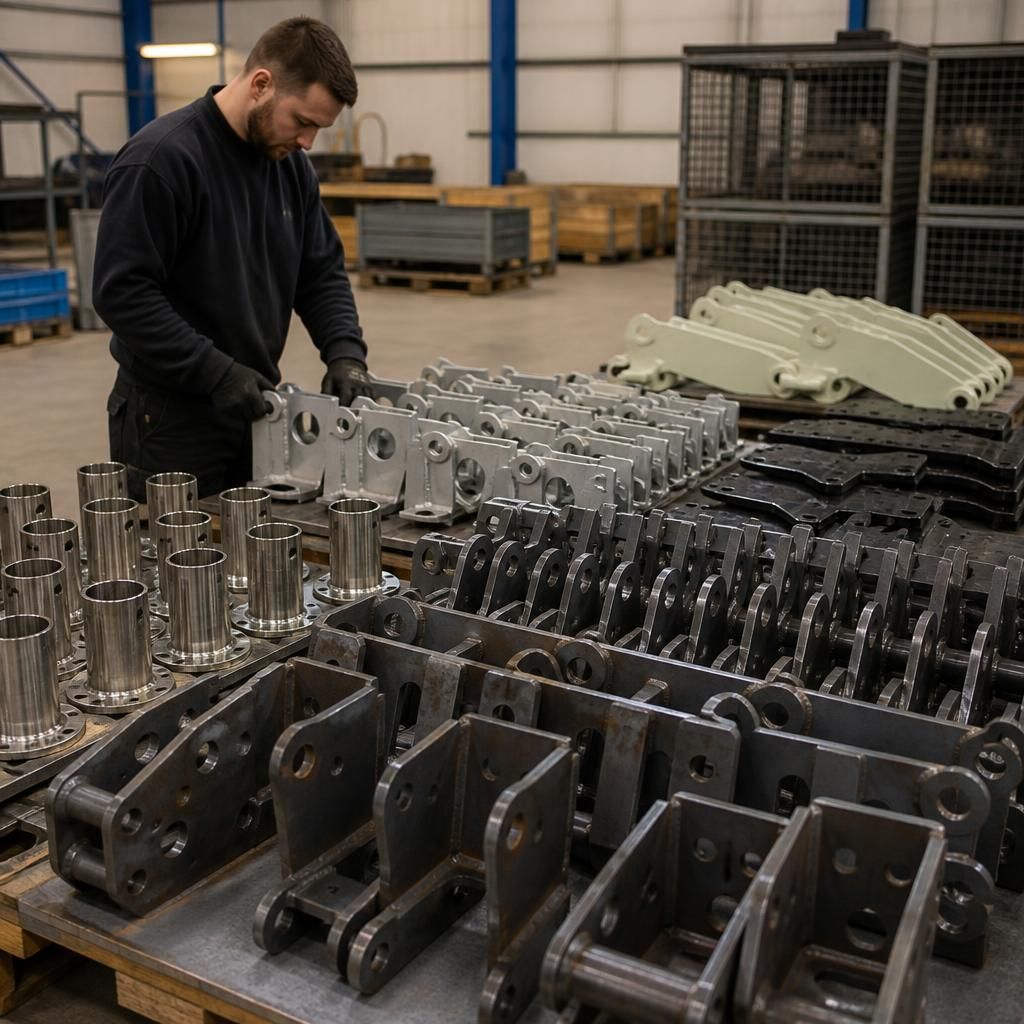
Before metal shot blasting, separate components by material, grade and required finish. Keeping carbon steel, stainless steel, aluminium and previously coated parts apart helps prevent unsuitable abrasive transfer or residue affecting the substrate and its later appearance or corrosion performance.
- Identify mixed-material batches clearly before they are processed.
- Tell the processor if a surface must remain free from contamination associated with another metal.
- Use separate preparation and handling arrangements where the specification requires a controlled surface condition.
This step is particularly important when parts will receive a light-coloured, specialist or protective coating, because residual contamination may become visible or interfere with adhesion.