

What is the role of blasting media in achieving a high-quality finish for powder coating projects?
Blasting media prepares metal for powder coating by removing rust, old coatings and surface contaminants while creating a controlled texture for the powder to grip. The right media and blasting process help produce a cleaner, more uniform finish by matching the surface profile to the metal component and coating system.
Blasting media is a controllable process variable that determines how a metal surface is prepared for the stages that follow. Its composition, shape, hardness and size influence the surface condition, profile, edge definition and cleanliness that a powder coating system must work with. Selecting media solely because it removes visible corrosion can therefore produce inconsistent results; it must also be suitable for the substrate, component geometry and specified coating system.
Media characteristics affect the surface profile. Angular materials such as aluminium oxide and steel grit cut into the surface, making them suitable where a more pronounced mechanical key is required or where firmly adhered scale and previous coatings must be broken down. Spherical materials such as glass beads peen and clean the surface with a less aggressive cutting action. They can be appropriate for components where preserving the underlying shape and appearance is important, although the resulting profile may not be suitable for every powder coating specification.
Hardness and particle size also matter. A harder or coarser abrasive can remove difficult material more efficiently, but may create a profile that is unnecessarily deep for a thin coating or a relatively soft metal. Finer media generally provide more control on smaller details, but may be less effective against heavy scale or multiple coating layers. The correct choice is the one that achieves the required surface condition without deforming edges, closing fine features or excessively roughening the component.
The substrate must guide the selection. Steel, cast iron, aluminium and galvanised components do not respond to blasting in the same way. A process suitable for robust steelwork may distort thin sheet, mark aluminium or remove too much of a protective metallic layer. Castings may require attention to recesses and retained abrasive, while fabricated parts can present welds, heat-affected areas and sharp edges that react differently from the surrounding steel. The media and operating parameters should therefore be assessed against the least robust part of the component, not just its largest surface.
Component design is equally important. Recesses, holes, folded returns and internal corners can shield contamination from the blast stream or collect abrasive. Sharp edges receive concentrated treatment and can become over-blasted, while broad flat faces may need a consistent pass pattern to avoid visible variation. Masking or plugging may be necessary where abrasive must not enter a bearing seat, threaded hole or precision interface. These details help prevent problems that may only become apparent during assembly or final inspection.
Process control determines whether the media performs consistently. Pressure, nozzle distance, angle, traverse speed and the number of passes all influence the result. Excessive force or prolonged blasting can deepen the profile, round edges or damage thin sections. Insufficient coverage can leave embedded corrosion, old coating or an uneven surface. A controlled, repeatable technique is more important than using the most aggressive media available.
Media condition must also be managed. Reusable abrasive gradually breaks down and becomes mixed with removed coating, corrosion products and other debris. This can reduce cutting performance and introduce contamination to later work. In a production environment, reclaim systems, screening and separation help maintain a consistent abrasive mix. Separate media streams may be needed for different metals or coating requirements so that one material does not contaminate another.
Cleanliness after blasting is essential. Loose dust and spent abrasive should be removed using a method that does not add moisture, oil or other residue. Components should be handled with clean gloves or suitable equipment after preparation, because fingerprints and workshop contamination can affect subsequent pretreatment and coating adhesion. If prepared metal is left exposed for too long in damp conditions, flash rust or surface contamination may develop and require further treatment.
Inspection should consider more than appearance. A quality check may include:
- checking that corrosion, mill scale, old coating and visible residue have been removed consistently;
- examining welds, edges, recesses, holes and other difficult areas for missed contamination;
- confirming that the surface profile is appropriate for the coating thickness and specification;
- looking for embedded abrasive, dust, oil, moisture or signs of flash rust; and
- recording the selected media and key process settings so repeat batches can be treated consistently.
The relationship between profile and powder thickness is particularly important. A profile that is too shallow may provide inadequate mechanical support, while one that is too deep can leave peaks insufficiently covered by the powder film. Excessive roughness may also affect appearance, increase powder consumption and create points where corrosion protection is less uniform. The target should be agreed with the coating specification rather than judged only by touch or visual texture.
Blasting media is one part of the complete powder coating process, not a substitute for suitable pretreatment, correct powder application or proper curing. Its role is to provide a controlled and repeatable starting surface. When the media, equipment settings, substrate and inspection method are matched, the powder coating stage has a more predictable foundation and the finished component is less likely to show defects linked to uneven preparation.
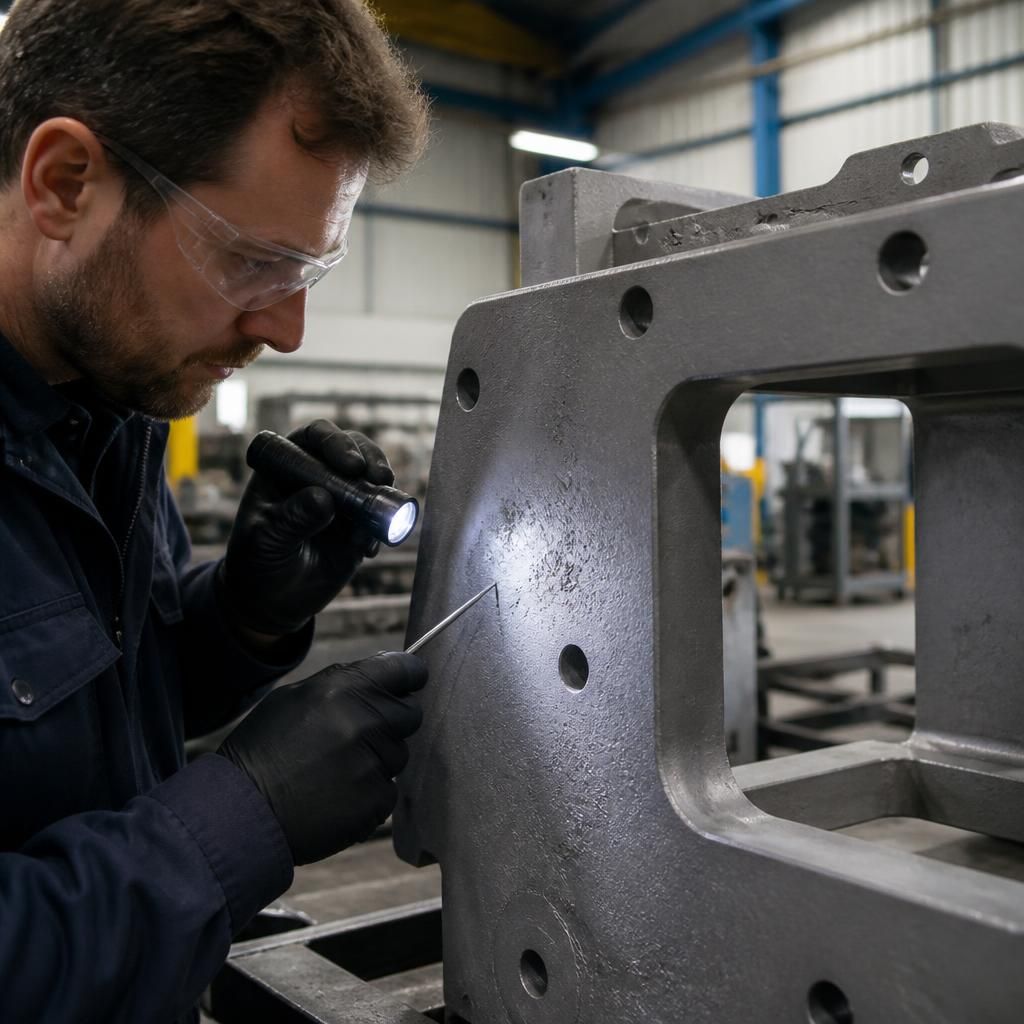
Blasting media also helps reveal defects in the metal that a powder coating will not conceal. Pitting, weld spatter, burrs, porosity and remnants of fabrication can become visible through the finished coating or create local weaknesses if they are not identified before application. Removing corrosion and loose material exposes the true condition of the substrate, allowing repairs, dressing or further preparation to be completed before powder is applied.
This makes blasting an important inspection stage as well as a cleaning operation. A consistent finish depends on preparing the metal itself, rather than using the coating to mask surface faults. Where blasting exposes deep pits or damaged areas, the appropriate response may be substrate repair or a revised preparation specification rather than more aggressive blasting.