

What are the advantages of using aluminium oxide for rust removal?
Aluminium oxide is a hard, angular abrasive that removes rust, mill scale and old coatings efficiently while creating a consistent surface profile. This mechanical key helps powder coating adhere securely to prepared metal, supporting a durable, uniform finish.
Aluminium oxide is advantageous for rust removal because it combines high abrasive durability with controlled cutting action. Its angular particles fracture and expose fresh edges as they work, allowing them to remove corrosion and other firmly bonded contaminants without the rapid breakdown associated with softer media.
Key advantages include:
- Effective removal of firmly bonded corrosion: Aluminium oxide can cut through rust, mill scale, oxidation and remnants of previous coatings where a gentler abrasive may be too slow or ineffective. This makes it suitable for metal components with established surface contamination.
- Consistent preparation: The abrasive is available in different grades, allowing the blasting process to be matched to the condition of the metal and the required surface texture. Choosing an appropriate particle size helps produce a more even result across batches of components.
- Long working life: Aluminium oxide is a relatively hard and durable blasting medium. It can withstand repeated impact better than many softer abrasives, which helps maintain its cutting performance during a blasting operation. The media still needs to be monitored and replaced when its particles become rounded or contaminated.
- Useful for coating removal: Alongside rust, it can remove old paint, powder coating residue and other adherent finishes. This is useful when a component needs to be taken back to a sound metal surface before further preparation or recoating.
- Suitable for controlled surface preparation: Blasting pressure, nozzle distance, travel speed and abrasive grade can be adjusted to control how aggressively the material acts. This gives the operator scope to balance cleaning speed with the need to protect edges, corners and finer features.
- Low risk of introducing ferrous contamination: Unlike steel-based blasting media, aluminium oxide does not add iron particles to the surface. This is an important consideration when preparing stainless steel, aluminium or other non-ferrous parts, although the equipment and recovery system must also be clean and suitable for the material being blasted.
- Good compatibility with subsequent coating work: Properly controlled blasting removes contamination and creates a mechanically prepared surface. Before powder coating, the component must still be thoroughly cleaned to remove dust and abrasive residue, inspected for remaining corrosion and handled in a way that prevents new contamination.
Its angular form is both a benefit and a consideration. The sharp particles provide strong cutting action, but excessive pressure or an unsuitable grade can roughen thin sections, soften visible edges or alter the profile of a softer metal. Aluminium oxide is therefore not automatically the best choice for every component. Delicate parts, thin sheet and surfaces where a decorative appearance must be preserved may require a less aggressive medium and tighter process control.
The correct grade should be selected according to the metal, the depth of corrosion, the existing coating and the finish required afterwards. Larger or coarser particles generally provide more forceful cleaning, while finer grades allow closer control over the prepared surface. Parts should be assessed for distortion risk, threaded areas, machined faces and features that may need masking before blasting.
After rust removal, the surface should be checked for hidden corrosion, pitting and residues. Aluminium oxide can remove surface rust effectively, but blasting cannot restore metal already lost through deep corrosion. Any remaining defects may need separate treatment before the component proceeds to powder coating or another protective finish.
Overall, aluminium oxide is most beneficial where the work requires dependable removal of stubborn rust and coatings, a controllable preparation process and minimal risk of ferrous contamination. Its performance depends on selecting the right abrasive grade and operating parameters for the specific metal rather than treating every part in the same way.
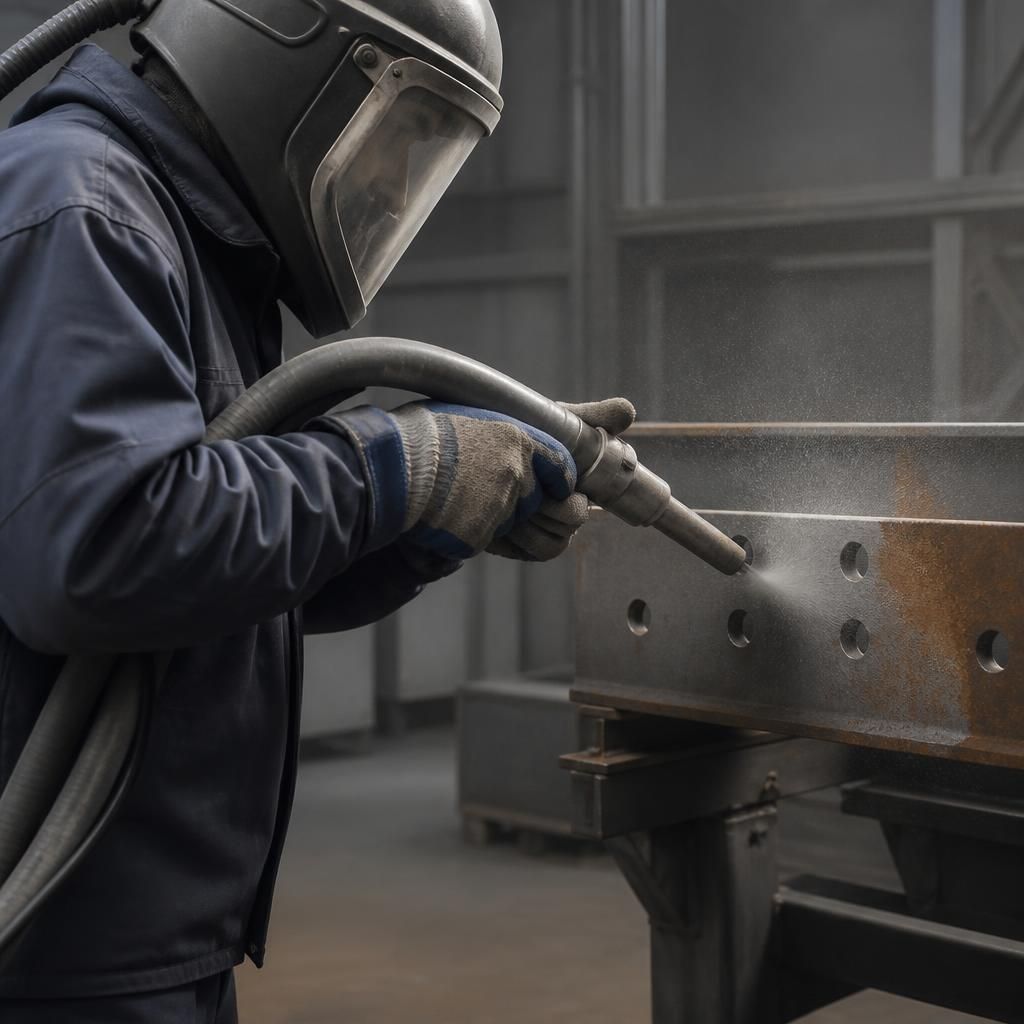
Aluminium oxide can be advantageous where rust removal needs to be integrated with selective preparation rather than treated as a separate cleaning stage. Its abrasive action can be directed at exposed corrosion while carefully controlled blasting limits treatment around masked areas, apertures and surfaces that must retain their existing dimensions. This is particularly relevant for components with defined contact faces, holes or fitted sections.
It also supports a dry, mechanical alternative to methods that rely on liquid rust treatments. Because the abrasive acts physically on the contaminant, the operator can assess the metal directly once the rust has been removed, identifying pitting or other surface defects before the component receives further protection. Any dust or spent abrasive must still be removed thoroughly, but the process provides a clear, inspectable basis for deciding whether the part is suitable for recoating.
Discuss Aluminium Oxide Rust Removal for Your Components
If you are assessing aluminium oxide for a rust-affected component, discuss the metal type, corrosion depth, dimensions and required post-treatment finish with the powder-coating team. This information helps establish whether the abrasive and preparation method are appropriate for the part.