

What types of abrasive media are most effective for different metal surfaces in abrasive blast cleaning?
The most effective abrasive media depends on the metal’s hardness, condition and required surface profile: aluminium oxide suits robust steel, glass bead is gentler for aluminium and stainless steel, while garnet can provide effective cleaning with controlled surface impact. Softer media may be preferable for delicate components, whereas harder abrasives are used to remove heavy corrosion, mill scale or existing coatings.
The most effective abrasive media are selected by matching the abrasive’s hardness, shape, density and particle size to the metal substrate and the condition of its surface. The aim is to remove contamination or an existing coating without causing distortion, excessive roughness, embedded particles or a surface profile that is unsuitable for the next finish.
Carbon steel and structural steel can generally tolerate relatively aggressive media, particularly where the surface contains mill scale, heavy rust or tightly bonded coatings. Angular mineral grit or aluminium oxide cuts into these deposits and produces a pronounced profile for mechanical keying. Steel grit can also be suitable for robust steelwork where rapid removal and a consistent etched surface are required. The selected grade should reflect the thickness and condition of the component: a very coarse, aggressive medium may be inappropriate for thin sheet, machined edges or parts with tight dimensional tolerances.
Cast iron often requires a firm cutting action because corrosion products and casting residues can be difficult to remove from its irregular surface. Angular media are useful for reaching recesses and breaking up adherent contamination. However, castings should be assessed for fragile edges, inclusions and deep surface defects before blasting, as excessive impact can expose weaknesses or exaggerate an uneven texture.
Stainless steel needs particular control because contamination from ordinary carbon-steel abrasives can introduce particles that later become points of corrosion. Dedicated non-ferrous or stainless-compatible media are normally preferred, with careful separation of equipment and consumables where cross-contamination is a concern. A finer, rounded medium may be chosen when cleaning is required without creating a coarse appearance or an unnecessarily deep profile.
Aluminium and other light alloys are more vulnerable to distortion, surface bruising and dimensional change than heavy steel sections. Lower-impact media, controlled pressure and an appropriate particle size are therefore important. The required finish also matters: a fine, uniform texture may be preferable for visible components, while a more open profile may be needed for a subsequent coating. Excessive blasting can alter sharp edges, thin sections and machined features.
Galvanised steel presents a different challenge because the zinc layer may be the intended protective finish rather than contamination to be removed. Aggressive blasting can strip or thin that layer, so a gentler cleaning or surface-preparation medium is generally considered where the galvanising is to remain. If the zinc coating is damaged, the preparation specification should address how the exposed steel will be protected afterwards.
Copper, brass and other non-ferrous metals usually benefit from media that clean without cutting deeply into the relatively softer substrate. Fine mineral, glass or specialist non-ferrous media may be considered according to the required appearance and coating system. Rounded particles tend to produce a more subdued texture, whereas angular particles create more mechanical abrasion. The choice should also account for whether the metal is solid, plated or decorative, since a thin surface layer can be removed quickly.
Common abrasive categories have different practical characteristics:
- Angular mineral and oxide media: effective for cutting corrosion, scale and old coatings and for creating a defined surface profile on durable metals.
- Steel grit: suited to robust ferrous components when a strong cutting action and repeatable profile are required, but unsuitable where ferrous contamination must be avoided.
- Steel shot: rounded rather than angular, so it is more associated with cleaning and peening effects than with producing a sharply keyed profile. It should be selected carefully where coating adhesion depends on a specific surface texture.
- Glass bead: useful where a relatively uniform, cosmetic or satin finish is required and aggressive cutting would be excessive. It is not normally the first choice for deeply bonded scale or thick coatings.
- Garnet and other lower-contamination mineral media: useful where controlled cutting, surface cleanliness and reduced risk of ferrous residue are priorities. Their suitability still depends on the metal and the required profile.
- Plastic, walnut shell and similar soft media: appropriate for delicate substrates or for removing contamination and coatings while limiting substrate damage. They may not provide enough cutting power for heavy corrosion or hard mill scale.
Particle size affects the result as much as the material itself. Coarser particles remove deposits quickly and create a deeper profile, while finer particles provide more control and can produce a smoother, more even finish. Particle shape is also significant: angular media cut and etch the surface, whereas rounded media clean with less pronounced cutting. Air pressure, nozzle distance, angle of impact and dwell time must be controlled alongside the abrasive choice, since unsuitable settings can undermine an otherwise appropriate medium.
Before work begins, the specification should identify the base metal, any existing coating, the type of contamination, the target surface profile and the finish that will follow. A test area or sample component can confirm whether the chosen media removes the unwanted material without damaging edges, threads, welds or machined surfaces. After blasting, the surface should be checked for residual dust, salts, oil, embedded abrasive and uneven preparation before it proceeds to powder coating or another finish. This assessment-based approach is more reliable than choosing media solely by the apparent hardness of the metal.
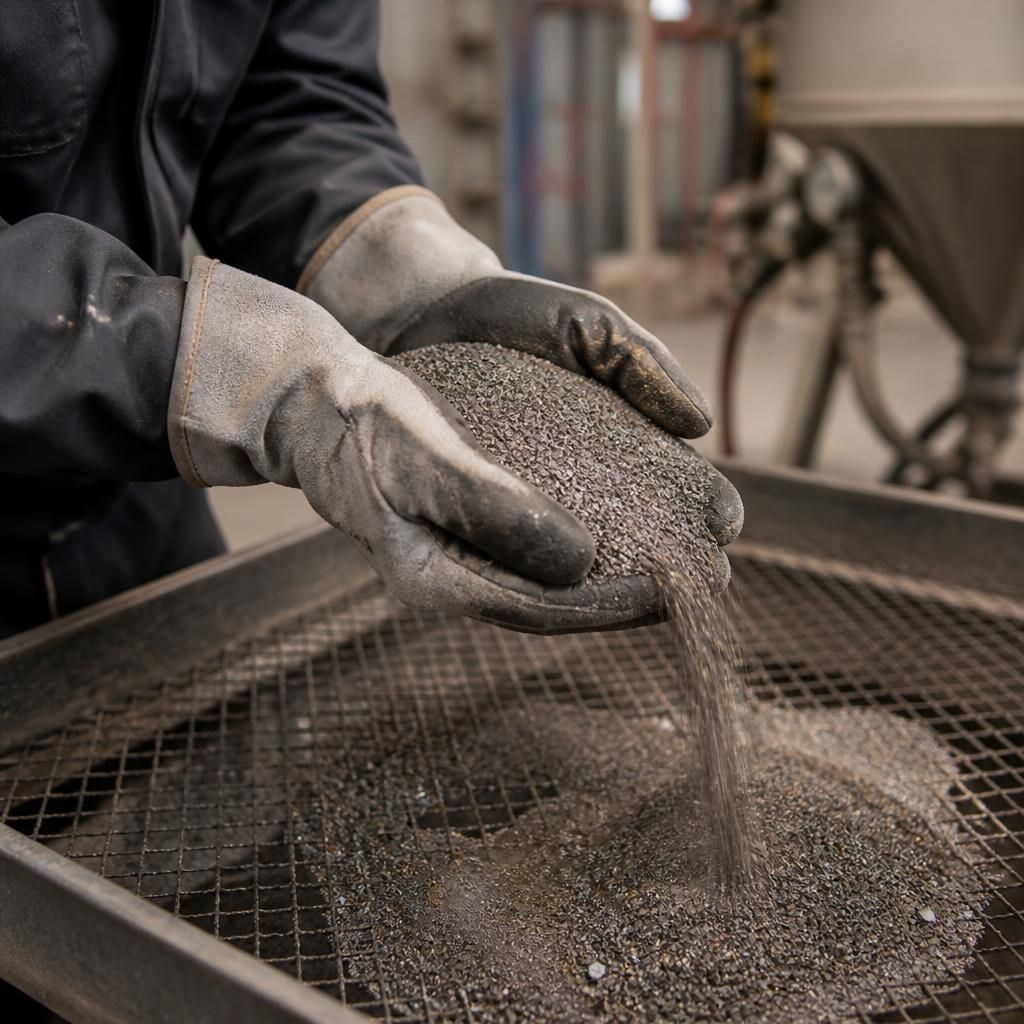
The condition of abrasive media during blasting affects results as much as the original media type. Repeated impact can fracture particles, reduce their cutting action and create finer dust, making the cleaning rate and resulting surface texture less consistent.
Media should therefore be monitored throughout the process and managed in line with the equipment and preparation specification. Removing excess fines and replacing worn abrasive helps maintain predictable performance, particularly across batch work where every component needs a comparable surface before powder coating. This control is especially important when the specification calls for a consistent surface profile rather than cleaning alone.
Discuss the Right Abrasive Media for Your Metal Surfaces
Discuss your metal components and intended finish with the powder-coating.co.uk team to identify a suitable abrasive media and preparation approach. Collection and delivery options are available for businesses across the Midlands and surrounding areas.