

What types of abrasive media are best for different metal surfaces?
The best abrasive media depends on the metal’s hardness, condition and required surface profile: aluminium oxide or steel grit suits robust steel, while glass bead or fine non-ferrous media is generally more appropriate for aluminium and other softer metals. For delicate or contamination-sensitive surfaces, the media should be selected to clean effectively without excessive abrasion, distortion or embedding.
The most suitable abrasive media is determined by the substrate, the condition of the surface and the profile required for the next process. The correct choice should remove rust, scale, old coating or contamination while preserving the component’s dimensions, edges and surface integrity.
Carbon steel and structural steel: Steel grit is commonly selected where a relatively aggressive cut is needed to remove mill scale, corrosion or firmly bonded coatings. Its angular shape produces a defined anchor profile for a subsequent coating. Steel shot is round rather than angular, so it is more suited to cleaning and work-hardening certain robust components where a lower-profile finish is required. The grade and size should be matched to the thickness and condition of the workpiece; an unnecessarily coarse medium can create a profile deeper than the coating system can properly cover.
Cast iron: Cast iron can tolerate robust media, but its pores, irregular geometry and brittle edges require careful control. Angular mineral or steel media may be appropriate for heavy contamination, while a finer grade is preferable for machined faces, thin sections and detailed castings. Abrasive selection should also account for trapped dust and residue in recesses, as these can interfere with cleaning and later coating adhesion.
Stainless steel: Stainless components require media that will not introduce unwanted ferrous contamination. Dedicated aluminium oxide, glass bead or another non-ferrous medium can clean and key the surface without transferring ordinary carbon-steel particles. Separate equipment, clean hoses and uncontaminated media are also important where corrosion resistance and appearance are critical. A gentle bead finish may be suitable for cosmetic work, while a sharper non-ferrous abrasive is more effective when a stronger mechanical key is needed.
Aluminium and other light alloys: Aluminium is relatively soft, so excessive pressure, coarse particles or repeated blasting can erode edges, distort thin sections and create an uneven texture. Glass bead, fine aluminium oxide or other carefully controlled non-ferrous media can remove oxidation and surface contamination while limiting damage. Low pressure and a suitable nozzle distance are often as important as the media itself. Components should be inspected for embedded particles, particularly where the finished part will be exposed to moisture or chemicals.
Zinc, galvanised steel and die-cast parts: These surfaces need a restrained approach because the protective zinc layer or thin cast section can be removed too aggressively. Fine glass bead or a suitable fine mineral medium may be preferable to coarse steel grit. The objective is usually to clean and provide sufficient keying without stripping the protective layer or opening up defects in the casting. A test area is advisable before processing a large or visually important batch.
Copper, brass and other non-ferrous metals: Softer non-ferrous alloys can mark readily and may become rounded at corners if blasted too aggressively. Fine glass bead, plastic media or a fine mineral abrasive can be used where the aim is light cleaning, paint removal or a uniform satin appearance. Plastic media is particularly useful when the substrate must be treated more gently than the contaminant, although it may be less effective against heavy rust or tightly bonded scale.
Machined, thin or detailed components: Delicate parts benefit from fine, low-aggression media and carefully controlled blasting parameters. Glass bead can provide a relatively uniform finish, while plastic or other soft media can remove light coatings without substantially changing the underlying form. Masking may be required for bearing seats, threads, sealing faces and accurately machined areas. Abrasive blasting should not be used to compensate for a dimensional defect or to remove material where tight tolerances are involved.
Factors that influence the final choice include:
- Contamination: Rust, paint, scale, grease and previous coating layers do not all require the same cutting action.
- Required surface profile: The profile must suit the thickness and specification of the coating that will follow; excessive roughness can leave peaks insufficiently covered, while too little keying can reduce adhesion.
- Component geometry: Recesses, welds, sharp edges, holes and thin sections may require a finer medium or a separate blasting approach.
- Appearance: Glass bead and fine media can create a more uniform cosmetic finish, whereas angular grit is generally selected for stronger surface preparation.
- Contamination control: Media used on ferrous steel should not automatically be reused on stainless steel, aluminium or other non-ferrous substrates.
- Post-blast requirements: Residual dust and abrasive particles must be removed, and the prepared surface should be protected from handling contamination before coating.
For powder coating preparation, the preferred medium is therefore the one that achieves the specified cleanliness and profile without compromising the metal. A practical selection process considers the substrate and its thickness, identifies the contaminants, checks any dimensional or cosmetic restrictions, and then confirms the result on a representative area. The blasted surface can be assessed for uniformity, visible residue, sharp damage and compatibility with the intended powder-coating system before the full component or batch is processed.
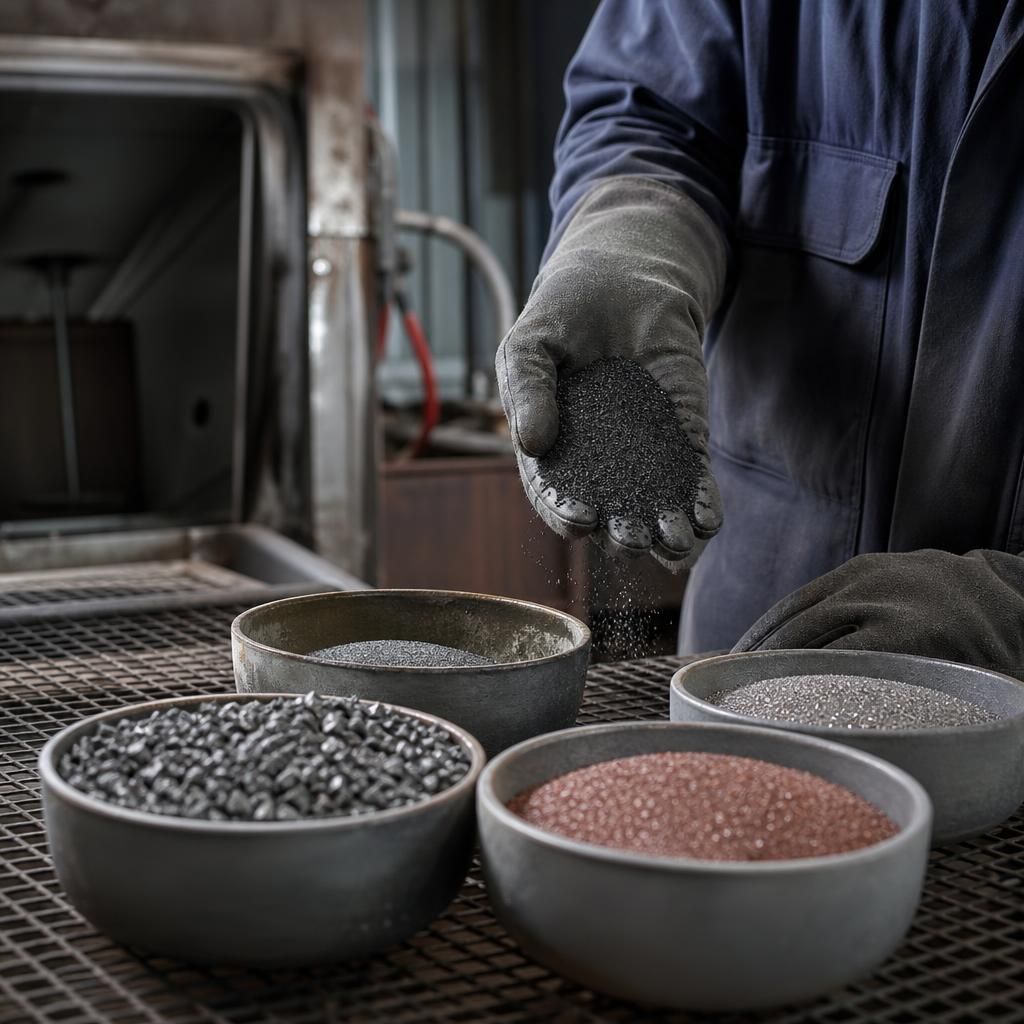
The condition of abrasive media is as important as its material type when preparing metal surfaces. Reusable media gradually breaks down during blasting, producing smaller particles and additional dust. This can reduce cutting efficiency, alter the texture created on the surface and make the finish less consistent across a batch.
Media should therefore be inspected and managed throughout the process. Removing broken-down particles and debris, checking for contamination and replenishing or replacing the abrasive when necessary helps maintain predictable cleaning performance. This is particularly important where a consistent surface profile is required before powder coating, or where different metals are processed using separate media streams.