

What industries benefit most from using abrasive blast cleaning services?
Manufacturing, metal fabrication, construction and automotive businesses benefit most from abrasive blast cleaning when components need rust, scale, corrosion or previous coatings removed before finishing. The process prepares the metal surface for improved coating adhesion, helping support durable finishes on parts, structures and fabricated assemblies.
Abrasive blast cleaning is most beneficial to industries that process, fabricate, maintain or refurbish metal components where surface condition affects the next stage of manufacture or service. It is particularly useful for businesses handling fabricated steelwork, engineered parts and vehicle components because it can create a consistent, suitably prepared surface across complex shapes and production batches.
Manufacturing and engineering
Manufacturers use abrasive blast cleaning for components that have accumulated production residues, weld discolouration, light oxidation or handling contamination. It can be applied to brackets, frames, housings, machine parts and fabricated assemblies, helping create a uniform surface before powder coating, painting or another specified finish.
The process is also relevant where components need to be refurbished rather than replaced. Cleaning exposes the underlying metal condition, allowing defects such as pitting, cracking or excessive material loss to be identified before further work takes place. For repeat production, an agreed preparation method can help maintain consistency between batches, provided the abrasive, pressure and finishing requirements are matched to the material.
Metal fabrication
Fabricators benefit when welded or assembled items have awkward corners, joints, returns and recessed areas that are difficult to prepare manually. Blast cleaning can treat these areas more evenly than isolated hand-preparation methods, which is useful for gates, frames, guards, supports, enclosures and bespoke metalwork.
It is especially relevant before a protective coating is specified for fabricated steel. The required preparation grade depends on the metal condition and the coating system, so the fabricator should confirm the specification before work begins. Threaded holes, machined faces, bearing seats and other close-tolerance areas may need masking or separate protection to prevent unwanted abrasion.
Construction and structural steel
Construction businesses use abrasive blast cleaning for structural and architectural steelwork, refurbishment projects and components that require a defined coating system. Steel beams, columns, platforms, handrails and support assemblies can be prepared before protective or decorative finishing, subject to their size, condition and the access available for safe processing.
For refurbishment, cleaning can help reveal the extent of corrosion and the condition of an existing coating. This gives the contractor a clearer basis for deciding whether a component can be recoated, requires local repair or should undergo more extensive remedial work. Newly fabricated steel may also benefit where mill residues, weld-related contamination or fabrication marks could interfere with the specified finish.
Automotive businesses
Automotive manufacturers, restoration specialists and component suppliers may use blast cleaning for suitable chassis parts, brackets, suspension components, frames and other metal assemblies. The main benefit is controlled preparation of parts with irregular profiles, old finishes or corrosion that would otherwise make subsequent coating less consistent.
Automotive components often combine visible surfaces with close-fitting or functional areas. For that reason, the cleaning method must account for dimensional tolerances, mating faces, threads, seals and heat-sensitive sections. A suitable abrasive and controlled operating pressure are important: an aggressive process can damage edges or alter a precision surface, while insufficient preparation may leave contamination behind.
What these industries have in common
- They work with metal parts or assemblies where surface preparation influences coating performance and appearance.
- They may need consistent treatment across multiple components rather than isolated manual cleaning.
- They often handle complex geometries, welded areas or previously coated surfaces that are difficult to prepare uniformly.
- They benefit from inspecting the exposed substrate before committing to a new finish or returning a refurbished part to service.
Abrasive blast cleaning is not automatically suitable for every metal item. Thin sheet, soft alloys, precision-machined parts and components with protected functional surfaces may require a gentler method, selective masking or an alternative preparation process. The correct approach should therefore be based on the substrate, component geometry, existing surface condition, required coating system and acceptable surface profile.
In practice, the strongest use cases are projects where repeatable preparation, access to difficult areas and reliable inspection are more important than simply removing visible dirt. Manufacturers, fabricators, construction firms and automotive businesses can all benefit when the cleaning specification is agreed in advance and matched to the coating or refurbishment work that follows.
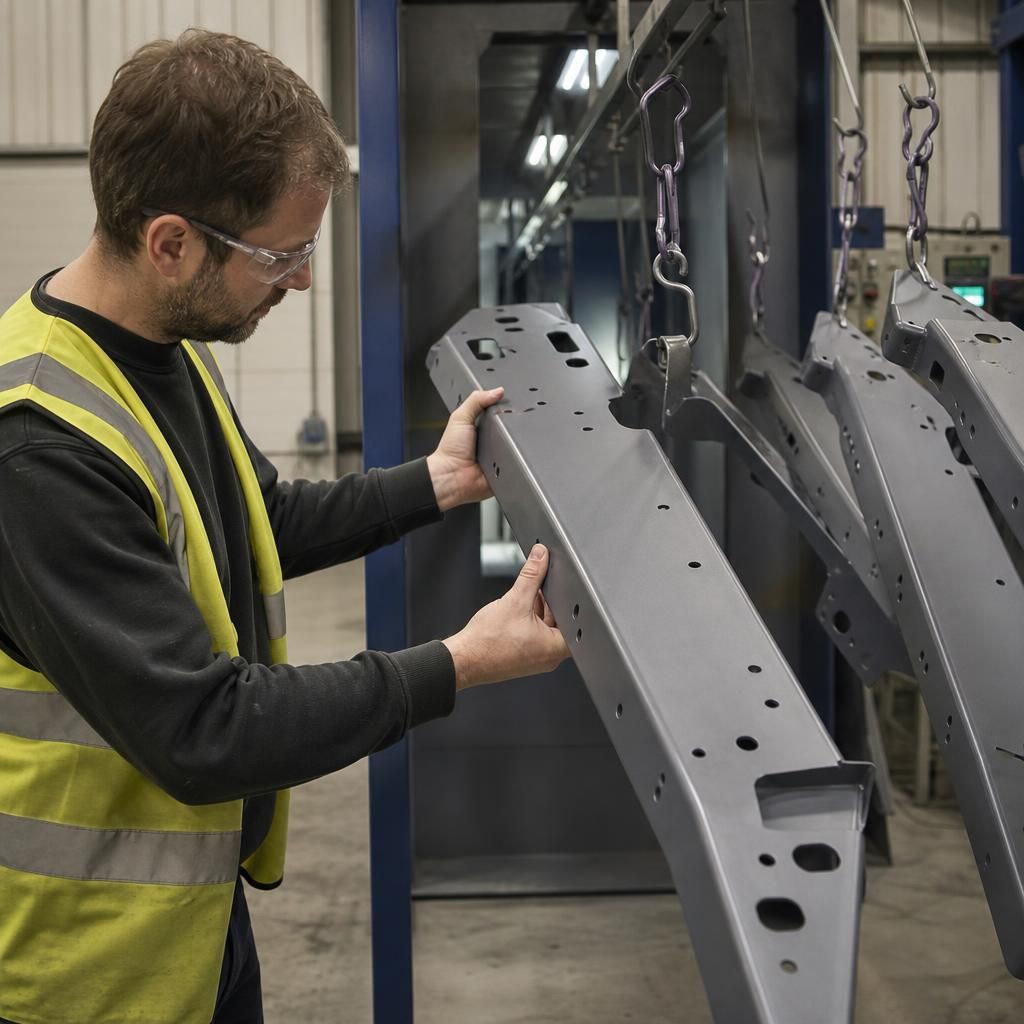
The benefit of abrasive blast cleaning depends partly on what happens after the surface has been prepared. A freshly cleaned metal substrate can be vulnerable to renewed contamination from moisture, dust, handling and workshop residues. Businesses therefore need a controlled handover between blast cleaning, inspection and the specified coating stage, particularly where components pass between different production areas or contractors.
This is important for any industry working to a defined finish because preparation quality can be undermined before coating begins. Clean handling, suitable protection during storage and inspection for remaining corrosion or contamination help ensure that the prepared surface still matches the agreed specification when it reaches the next process.