

What factors should be considered when selecting the best electrostatic powder coating system for specific industrial applications?
The best electrostatic powder coating system is selected by matching the metal substrate, component size and geometry, production volume, powder formulation, required finish, curing conditions and operating environment. Consider transfer efficiency, coverage of difficult areas, line or batch configuration, pre-treatment compatibility, oven capacity and process control so the system delivers consistent protection and appearance for the specific application.
Selecting an electrostatic powder coating system means matching the application equipment to the component-handling method, coating specification, production workflow, safety requirements and quality controls. The correct choice is not simply the system with the highest output; it must apply the required powder consistently, accommodate the parts safely and remain practical to operate and maintain.
Consider the application method. Manual spray equipment can be appropriate for varied parts, prototypes, repair work and batches with frequent changes in component geometry. Automatic guns become more suitable where parts follow a repeatable route and consistent gun positioning is valuable. A combined arrangement can provide automated coverage on predictable surfaces while allowing an operator to coat areas that are difficult to reach or vary between components.
Assess the booth and gun arrangement. The booth needs enough internal clearance for the largest parts, their movement path and safe operator access. Gun position, reciprocation and the number of application points affect how evenly powder reaches faces, edges, recesses and shielded areas. For complex fabrications, the system should be assessed using representative parts rather than a flat test panel alone, because Faraday-cage effects can restrict powder penetration into internal corners and narrow cavities.
Review powder recovery and colour-change requirements. Recovery equipment can reduce overspray waste where the same powder is used repeatedly, but it also introduces cleaning and contamination-control considerations. If the work involves many colours or coating specifications, the time and complexity of changing filters, hoses, guns and booth surfaces should be included in the assessment. A system that is efficient for long runs may be less suitable for frequent short runs if cleaning between powders is difficult.
Check part handling and grounding. Hooks, racks, conveyors and fixtures must hold each component securely without masking important surfaces. Contact points should remain clean enough to maintain an effective earth path; accumulated coating on hooks can reduce transfer efficiency and create inconsistent deposition. The handling arrangement should also prevent parts touching one another, swinging excessively or entering the booth in a position that leaves critical surfaces poorly exposed.
Specify suitable controls. Useful controls include repeatable powder-feed settings, adjustable electrostatic output, stable air supply and clear recording of the settings used for each coating specification. The system should make it possible to identify changes in application conditions before they produce visible defects. Overspray, uneven coverage, back-ionisation and inconsistent texture can result from incorrect settings, poor grounding, contaminated equipment or unsuitable powder feed, so adjustment and fault-diagnosis features have practical value.
Include safety and environmental controls. The design should address combustible powder dust, ventilation, extraction, ignition-risk control, operator exposure and safe access for cleaning. Electrical equipment, compressed air systems and extraction arrangements should be selected and installed in accordance with relevant workplace requirements. These matters are part of system selection, not additions to be considered only after the equipment has been chosen.
Plan quality verification. A suitable system should support checks for coating coverage, film thickness, adhesion, appearance and, where required, resistance to the intended service conditions. Acceptance criteria should be agreed before installation, with test pieces or production samples used to confirm that the selected equipment and settings can meet the specification. Visual appearance alone is insufficient where the coating is required to provide defined protection or functional performance.
Compare total operating practicality. The assessment should include cleaning, filter and hose replacement, gun servicing, fixture maintenance, compressed-air demand, powder handling and operator training. A system with a lower initial cost may be less appropriate if it is difficult to clean, restricts future work or requires frequent intervention. Conversely, highly automated equipment may be unjustified where component variety makes manual adjustment unavoidable.
For a specialist coating operation, the most reliable selection process begins with representative components, the required finish specification and the intended workflow. Trial application can expose access, grounding, masking and recovery issues that are not apparent from equipment descriptions. Powder-coating specialists serving manufacturers, fabricators, construction and automotive businesses can also help assess whether a component is better suited to manual, automated, batch or larger-scale processing before a system is specified.
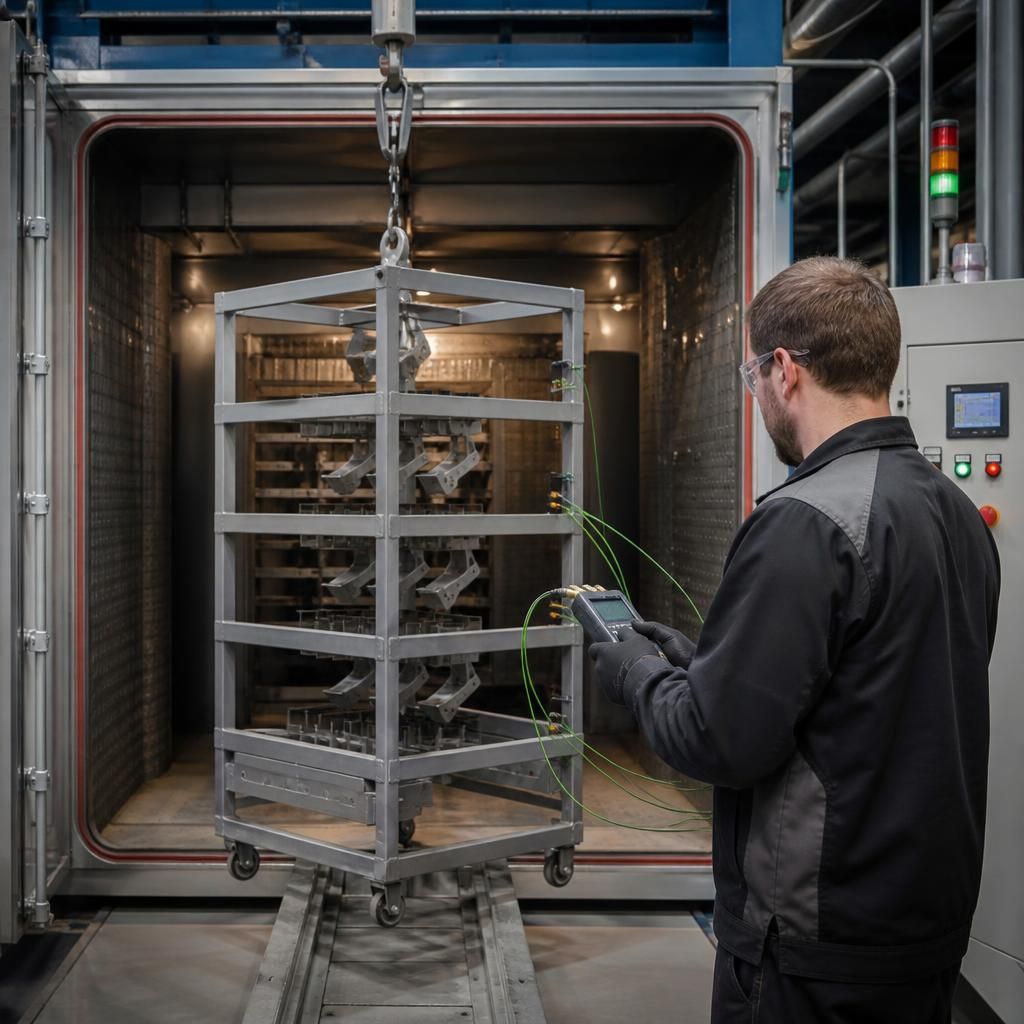
A powder coating system must be matched to the way each component reaches its required cure temperature, not merely to the oven’s stated air temperature. Part thickness, metal mass, geometry and loading density affect heat-up time, so a system suitable for light panels may be unsuitable for heavy frames or densely loaded batches.
Assess the oven’s usable temperature range, airflow pattern, internal clearance and heat distribution alongside the powder manufacturer’s curing schedule. The relevant measure is the temperature reached by the metal and the time it remains at that temperature. Thermocouple checks on representative components can help confirm that thick sections, corners and shielded areas receive an adequate cure without over-curing thinner parts.
This consideration is particularly important where one operation handles mixed component sizes or changes between coating formulations. The selected system should allow the curing process to be verified for the actual production load, with documented settings for different component groups. If the required cure cannot be achieved consistently across the part, application quality and service performance may vary even when powder deposition appears satisfactory.
Discuss Your Electrostatic Powder Coating System Requirements
Discuss your component requirements and coating specification with Powder-coatings.co.uk to establish which electrostatic powder coating system is most suitable for your application. Providing representative parts, drawings or production details can support a practical assessment before equipment or processing arrangements are selected.