

What are the best methods for cleaning metals before powder coating?
The best methods for cleaning metals before powder coating are degreasing to remove oils and grease, followed by abrasive blasting or another suitable mechanical treatment to eliminate rust, mill scale and existing coatings. Thorough rinsing and drying are then essential so the surface is clean, dry and free from residues before powder is applied.
The best cleaning method before powder coating depends on the metal, the contaminants present and the required finish. A reliable preparation process combines an initial assessment, a compatible chemical or mechanical treatment, controlled rinsing, complete drying and a final inspection. The objective is not simply to make the surface look clean; it must also be chemically suitable for powder adhesion and free from residues that could cause defects during curing.
Begin with substrate and contamination assessment. Identify whether the part is mild steel, galvanised steel, aluminium, stainless steel or another alloy, then check for oils, cutting fluids, weld spatter, corrosion, mill scale, old paint, adhesive residue and handling marks. The correct process for lightly contaminated aluminium may be unsuitable for heavily oxidised steel. Parts should also be inspected for design features such as box sections, recesses, threaded holes and drainage points, as these can retain cleaning chemicals or water.
- Alkaline cleaning is commonly used for oils, grease and workshop soils. It may be applied by immersion, spray or a combination of both. The concentration, temperature and contact time need to be controlled: insufficient treatment leaves contamination behind, while excessive exposure can attack sensitive alloys or alter the surface.
- Solvent cleaning can be useful for localised oil, wax or adhesive contamination, particularly before a wider preparation process. The solvent must be compatible with the substrate and must not leave an oily film. Cloths, application equipment and work areas should also be clean, otherwise contamination can simply be redistributed.
- Acidic cleaning or pickling can remove oxides, rust and certain scale deposits that alkaline products will not dissolve. This treatment requires careful control because over-pickling can roughen or chemically attack the base metal. It is particularly important to neutralise and rinse the part correctly afterwards.
- Phosphating or other conversion treatment may be used after cleaning to improve corrosion resistance and provide a more receptive surface for the coating system. The treatment must be selected for the particular substrate; a process intended for steel is not automatically suitable for aluminium or galvanised components.
- Mechanical preparation is appropriate where contamination is bonded to the surface or where corrosion and previous coatings need to be removed. The abrasive or tool must be chosen so that it does not embed damaging material, round critical edges or contaminate the part with residues. The required surface profile should be proportionate to the coating system and component specification.
Cleaning stages should be arranged to prevent one operation from undermining another. For example, heavy oil contamination should be removed before abrasive treatment so that the abrasive does not spread it across the surface. Once a chemical treatment has been completed, rinsing should remove both the cleaning product and dissolved contamination. Water quality can matter on demanding work: minerals or salts left behind during rinsing may contribute to staining, poor adhesion or corrosion beneath the coating.
Drying is a process control step rather than a cosmetic finishing step. Water can remain in seams, folded sections, blind holes and joints even when the exposed faces appear dry. Trapped moisture or cleaning solution may later escape during curing, causing blistering, pinholing or local coating failure. Components should therefore be arranged to drain freely, with particular attention paid to hollow fabrications and overlapping sections.
Aluminium and galvanised steel require additional care. Aluminium can develop a tenacious oxide layer and may be damaged by strongly caustic or acidic products. Galvanised surfaces can react with unsuitable chemicals, while zinc residues may affect the appearance or adhesion of the finished coating. Stainless steel also needs a method that removes contamination without introducing iron particles from tools or abrasive media. Where dissimilar metals are present on one assembly, the process should be checked against the most sensitive material.
Some parts need selective cleaning rather than treatment of every surface. Areas that must remain uncoated, such as electrical contact points, bearing seats, earth points or precision threads, should be identified before preparation and protected with suitable masking. Masking must withstand the preparation and curing process without shedding fibres, leaving adhesive residue or allowing chemicals to collect at the boundary.
Verification should take place before powder application. A prepared surface should have an even appearance appropriate to the substrate, with no visible oil, dust, rust scale, fingerprints, abrasive residue, chemical staining or standing moisture. A clean white lint-free cloth can help reveal loose contamination, while surface-water behaviour and process records can provide further checks. For critical components, adhesion testing, surface-profile measurement or chemical cleanliness testing may be specified by the coating specification.
Cleaning products and contaminated rinse water also require proper handling. Operators should follow the relevant safety data, use suitable personal protective equipment and control ventilation, splash and waste disposal. In production work, recording the cleaning chemistry, concentration, temperature, treatment sequence and inspection result makes the process repeatable and helps identify the cause if coating defects occur.
For industrial components, the most dependable approach is therefore a substrate-specific preparation schedule rather than a single universal cleaner. The schedule should remove the actual contaminants present, preserve the base metal, avoid residue retention and leave the part in a verified condition for electrostatic powder application.
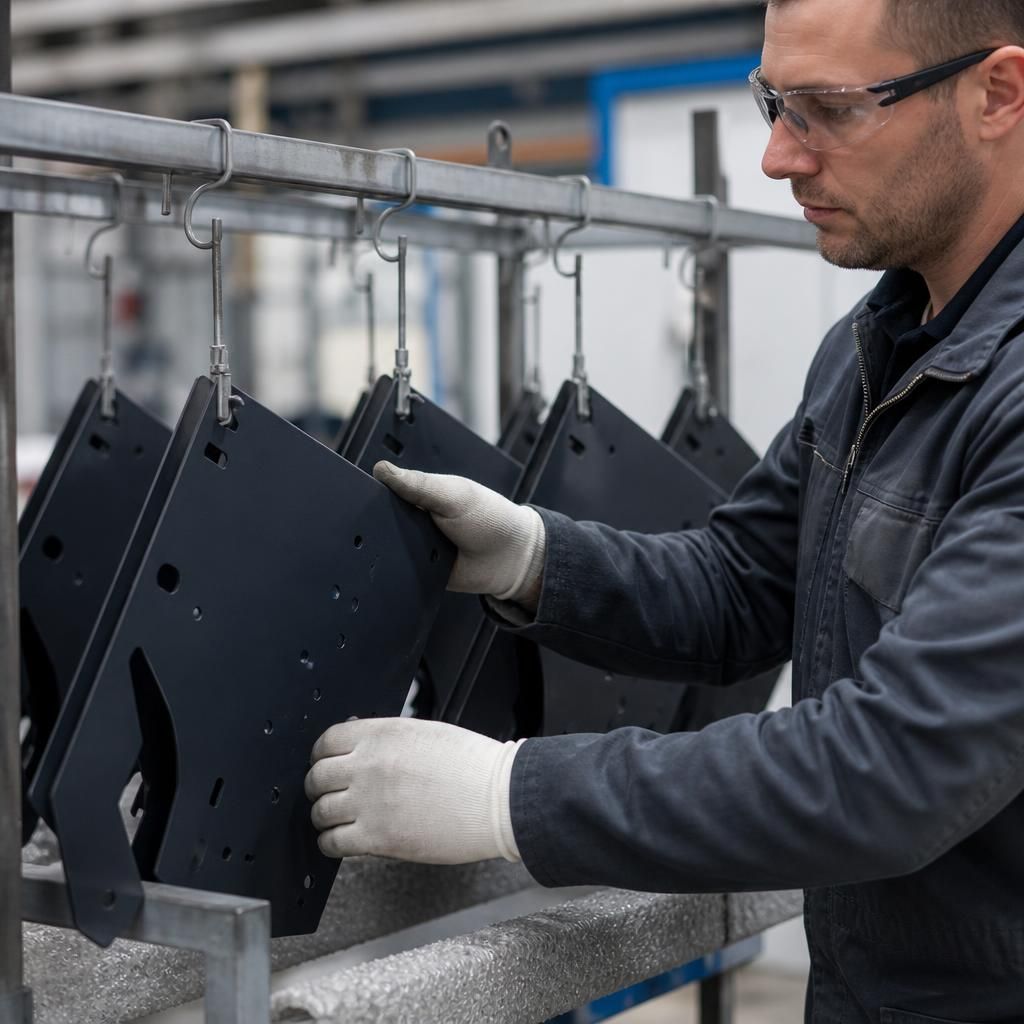
Preventing recontamination after cleaning is an essential part of metal preparation. Once the final treatment and rinse are complete, components should be handled with clean gloves and placed on clean supports that will not transfer oil, dust or abrasive particles. Contact with bare hands can leave salts and skin oils on areas that have already been prepared.
Prepared parts should also be kept separate from untreated or dirty components. Racks, hooks and masking materials need to be clean, while hollow sections should remain positioned so that water or residue cannot collect again. If a surface is touched, exposed to workshop contamination or shows signs of staining, it should be rechecked and cleaned as necessary before powder coating.
Discuss the Best Cleaning Method for Your Powder Coating Project
Discuss your component, substrate and contamination concerns with our powder coating team to identify a suitable cleaning and preparation method. We can help establish the information needed before coating, including any areas that require protection or masking.