

What are the best cleaning and degreasing methods to ensure effective surface preparation for electrostatic coating?
Effective surface preparation for electrostatic coating starts with removing oils, grease, dirt and manufacturing residues using a suitable alkaline cleaner, aqueous detergent or compatible solvent. Rinse thoroughly where required, dry the metal completely and inspect it to confirm that no residue, contamination or flash rust remains before coating.
The most effective approach is a controlled, staged cleaning and degreasing process matched to the metal, the type of contamination and the coating system. In practice, this means identifying the soil first, selecting a compatible aqueous, alkaline, emulsifying or solvent-based method, controlling the process variables, and verifying the surface before it is handled or coated.
Start by identifying the contamination. Cutting fluids, stamping oils, drawing compounds, grease, polishing residues, weld spatter, marker ink and silicone-based products do not respond equally to every cleaner. A light oil film may be removed by an aqueous detergent, while heavily deposited or cured residues may require a stronger alkaline treatment, an emulsifying cleaner or a carefully controlled solvent process. If the contaminant is not known, a small trial on representative material is preferable to applying an aggressive chemical across the whole batch.
Choose the cleaning method according to the component.
- Spray cleaning provides consistent coverage on accessible faces and is well suited to production components with repeatable geometry. Nozzles, pressure, temperature and exposure time must be sufficient to reach recessed areas without damaging the substrate.
- Immersion cleaning allows complex parts to remain in contact with the solution, making it useful for awkward profiles, fabricated assemblies and components with enclosed or partially enclosed sections. Agitation can improve the release of oil and trapped debris.
- Ultrasonic cleaning can assist with smaller or intricately formed parts by creating cavitation around difficult-to-reach surfaces. It is less suitable where component size, construction or trapped liquid makes thorough drainage difficult.
- Solvent cleaning can be effective for localised contamination or materials that may be affected by water-based chemistry. The solvent must be compatible with the substrate and any existing sealants, plastics or temporary protective materials. Residual solvent must not remain in joints, cavities or porous deposits.
Control the process rather than relying on the cleaner alone. Cleaner concentration, bath condition, temperature, contact time and agitation all influence performance. An under-strength or exhausted solution may leave a thin film that is difficult to see, whereas excessive strength or prolonged exposure can attack sensitive metals, alter the surface or create additional rinsing problems. Aluminium, zinc-coated steel and other non-ferrous substrates require particular care because their surface can be affected by strongly alkaline chemistry. The cleaning specification should therefore state the permitted chemistry and operating range for each substrate.
Pay attention to part geometry. Threads, folded edges, weld zones, blind holes and overlapping joints can retain oil and cleaning solution after the main operation. Components should be positioned to allow drainage, and cavities may need additional agitation or a separate treatment. Where a design traps contamination, cleaning alone may not produce a dependable coating surface; the fabrication, storage and handling arrangements may also need review.
Use a compatible follow-on treatment. Where a conversion treatment or other pre-treatment is specified, the cleaning stage must leave the surface in a condition that allows that treatment to work consistently. Cleaner carry-over, excessive alkalinity, hard-water deposits and residues from poorly maintained equipment can interfere with subsequent stages. Process water quality, rinse management and drainage should be controlled as part of the complete preparation system, not treated as separate issues.
Verify the result with practical checks. Visual inspection under suitable lighting should look for oil smears, dull patches, fingerprints, streaks, water marks and deposits around welds or recesses. A clean, compatible test cloth can reveal contamination that is not obvious visually. A water-break assessment may also help identify whether a continuous film remains on the surface: uneven wetting or beading indicates that further investigation is needed. These checks should be carried out after preparation and before the part is exposed to fresh handling contamination.
Prevent recontamination after cleaning. Operators should use clean gloves and suitable handling equipment, avoiding contact with prepared faces. Components should be protected from workshop dust, oil mist, condensation and contact with untreated fixtures. Cleaned parts should be transferred through the remaining preparation stages without unnecessary delay, while ensuring that any storage or packaging materials cannot transfer plasticiser, wax or silicone contamination.
For repeat production, the method should be documented as a work instruction covering the approved chemistry, equipment settings, part orientation, inspection checks and actions for failed results. Trial panels or representative components can be used when changing the substrate, forming process, oil type or coating system. This approach makes cleaning performance measurable and helps distinguish a degreasing problem from later issues such as poor rinsing, inadequate drying, handling contamination or unsuitable pre-treatment.
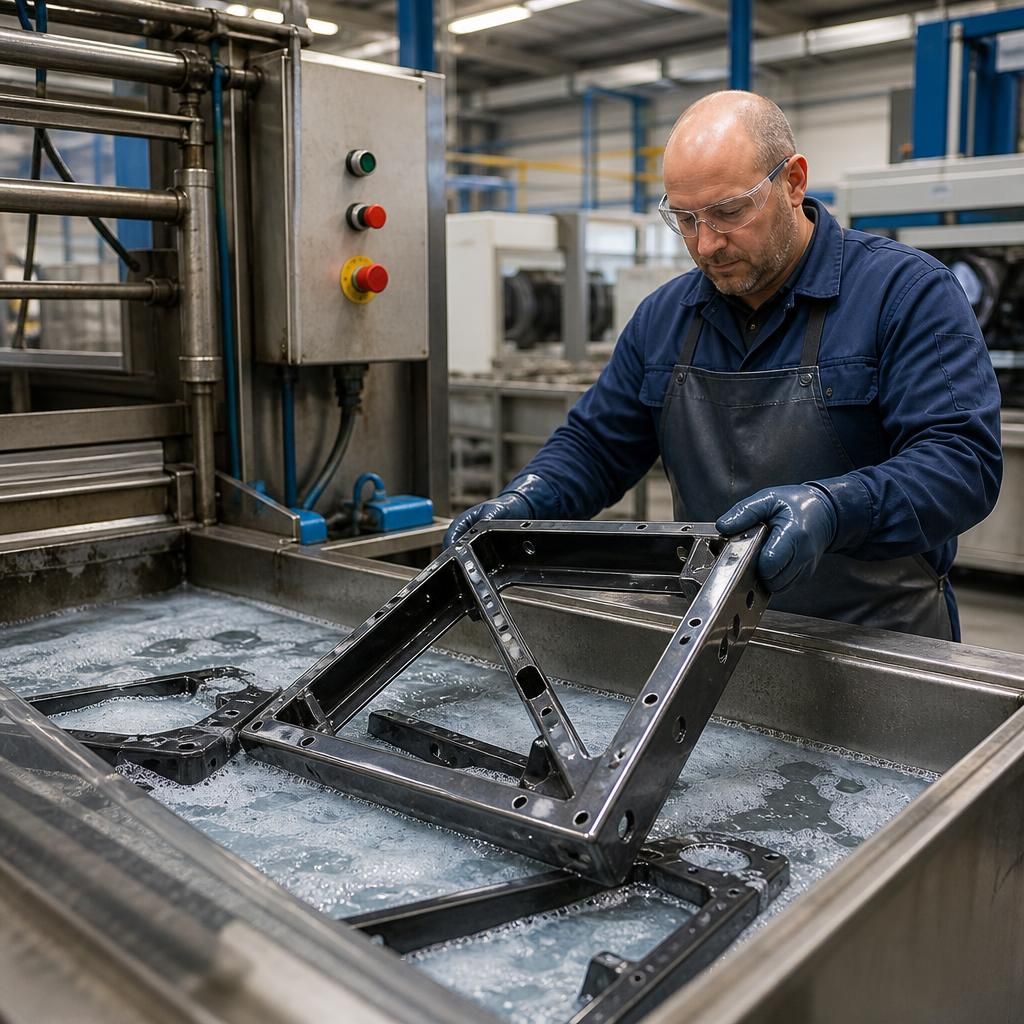
Degreasing should normally take place before abrasive preparation. If oil, grease or silicone contamination remains on the metal, blasting can spread it across the surface or press it into newly exposed areas. The abrasive may also become contaminated, reducing its effectiveness on subsequent components. Removing the bulk of the contamination first allows abrasive preparation to create a more consistent, receptive surface for electrostatic coating.
After blasting, the component should still be protected from fresh handling contamination and checked for residues before coating. This is especially important where the preparation sequence includes more than one operation, because a clean, profiled surface can be compromised by contact with oily fixtures, unsuitable packaging or unclean equipment between stages.