

What is the process of applying powder coating to steel?
Powder coating steel involves cleaning and preparing the metal, applying dry powder electrostatically, then curing it in an oven so the particles melt and form a continuous protective finish. The result is a durable coating applied through controlled preparation, spraying and heat-curing stages.
Applying powder coating to steel is a controlled sequence of inspection, surface preparation, powder deposition, heat curing and quality checks. Each stage affects the adhesion, appearance and service performance of the finished component, so the process must be matched to the steel grade, part design, intended use and selected powder system.
- Inspection and preparation of the component. The steel is checked for oil, grease, mill scale, rust, weld spatter, sharp edges, burrs and other contamination. Fabrication defects should be corrected before coating because powder will follow the shape of the surface rather than conceal significant imperfections. Hollow sections also need suitable drain and vent holes so that cleaning chemicals and trapped air do not create problems during processing.
- Cleaning and removal of surface defects. Degreasing removes oils and residues left by manufacture or handling. Mechanical preparation, such as abrasive blasting, may then be used to remove mill scale, corrosion and tightly bonded contamination while creating an appropriate surface profile. Weld areas, corners and recesses require particular attention, as contamination or excessive roughness in these locations can weaken the coating or affect its appearance.
- Chemical pre-treatment. After cleaning, the steel may receive a conversion or other pre-treatment selected for the substrate and the required level of protection. This stage improves the bond between the metal and the powder film and helps limit corrosion if the coating is damaged in service. The prepared surface must be kept free from recontamination before powder is applied.
- Masking and racking. Areas that must remain uncoated, including threads, bearing faces, earth points and close-fitting interfaces, are protected with suitable plugs, caps or tape. Components are mounted on racks so that they are secure and electrically connected during spraying. Rack positions are planned to minimise contact marks while allowing the powder and heat to reach the required surfaces.
- Powder selection. The coating material is chosen according to the component’s environment and performance requirements. Factors can include exposure to moisture, chemicals, abrasion, impact, ultraviolet light and cleaning processes, as well as the desired colour and texture. Steel parts for indoor use may require a different formulation from external architectural, construction or automotive components. Where a specialist nylon or protective coating is required, the preparation and curing method must be compatible with that system.
- Electrostatic application. The dry powder is introduced through a spray gun, where the particles receive an electrical charge. The steel component is electrically earthed, causing the charged particles to be attracted to its surface. The coater controls gun distance, air movement, powder flow and voltage to achieve an even deposit. Corners, internal faces, recesses and Faraday cage areas may need adjusted technique because the electrical field can make these locations more difficult to cover consistently.
- Checking the uncured coating. Before the part enters the oven, the powder deposit is examined for thin areas, excessive build, contamination and missed sections. Correcting an issue at this point is considerably easier than correcting it after curing. Components may also be repositioned where necessary to reduce contact marks and ensure that critical surfaces are exposed to the heat.
- Curing. The coated steel is heated in an oven until the powder melts, flows and chemically cross-links into a continuous film. The required schedule depends on the powder formulation and the temperature reached by the metal itself, rather than simply the air temperature inside the oven. Part thickness, geometry, load arrangement and steel mass can therefore affect the time needed for a complete cure. Under-curing may leave the film short of its intended properties, while excessive heat can affect colour, gloss or substrate-sensitive components.
- Cooling and finishing checks. Once curing is complete, the components are allowed to cool before masking is removed or parts are handled and packed. The finished coating is checked for coverage, colour, gloss, texture, runs, pinholes, impact damage and other visible defects. Depending on the specification, checks may also include coating thickness, adhesion, cure and resistance to particular service conditions.
Steel components that require a particularly robust system may use additional preparation or a multi-coat arrangement, such as a primer followed by a topcoat. This can be appropriate where corrosion exposure, edge protection or mechanical wear is a significant concern. The correct system should be agreed before production because changing the coating sequence can affect compatibility, curing and the final film properties.
Good process control is especially important at joins, welds, edges and areas that are difficult to spray. These features can collect contamination, receive less powder or experience greater coating stress during service. Designing the component with powder coating in mind—by providing drainage, reducing sharp transitions and identifying surfaces that must remain uncoated—helps produce a more consistent result.
For batch or larger steel work, an effective specification should identify the substrate, preparation standard, powder type, colour and finish, target areas, masking requirements, cure conditions and inspection criteria. Clear requirements allow the coater to set up the work correctly and provide a finish that is suitable for the component’s intended industrial application.
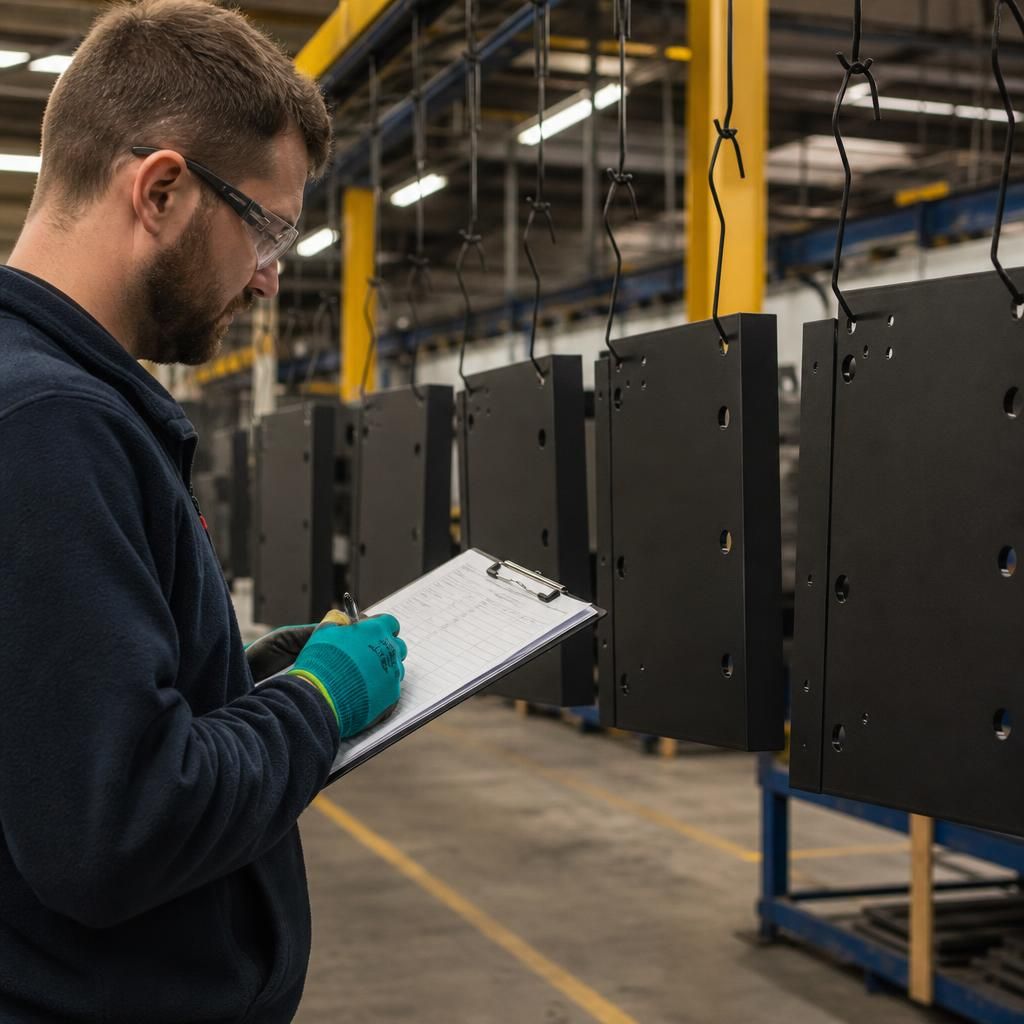
Process traceability helps maintain consistency across coated steel batches. Components should be identified and kept with their agreed coating specification throughout preparation, application and curing. Recording the powder system, colour, preparation method, masking requirements and curing conditions creates a clear reference for inspection and any later investigation. This is particularly useful where a batch contains parts with different sizes, geometries or steel thicknesses, because each may respond differently during oven curing. Traceability links the finished coating back to the process conditions used to produce it, rather than relying on appearance alone.