

What environmental conditions are ideal for powder-coated steel installations?
Powder-coated steel installations perform best in clean, dry conditions with stable temperatures and limited humidity or condensation. Select a coating system suited to the expected exposure, particularly where components face persistent moisture, salt, chemicals, UV or industrial pollutants, and prevent water from becoming trapped against the coated steel.
The ideal environmental conditions for powder-coated steel installations are those that allow the coating to remain dry, mechanically undamaged and compatible with the conditions the finished component will experience. The surrounding installation should therefore support good drainage, ventilation, clean handling and suitable protection from construction-related contamination.
Site design is as important as the coating itself. Steelwork should be arranged so rainwater and wash-down water can run off rather than collect on ledges, inside joints or around fixings. Narrow crevices and unsealed interfaces can retain contaminants and encourage deterioration at the edges of the coating. Where the design permits, provide drainage paths and avoid details that create permanent damp pockets.
Installers should also consider how the component is supported. Powder-coated steel should not be forced into position, twisted or held under unnecessary stress, as movement can damage the film or expose vulnerable edges. Allowances for thermal movement may be required on larger assemblies or where steel is fixed to materials with different expansion characteristics. Fixings, washers and brackets should be selected so they do not cut into the finish or create points where water can remain trapped.
Storage before installation requires controlled handling. Coated parts are best kept under cover with air able to circulate around them. They should be separated to prevent rubbing, pressure marks and scratching, and should not be left in packaging that allows moisture to accumulate against the surface. Long components may need adequate support to prevent bending, while lifting equipment should use clean, non-abrasive contact points.
The installation area should be free from activities that could contaminate or damage the finish. Cement dust, plaster, mortar, welding debris, grinding particles, cutting oils and aggressive cleaning products can mark or attack a powder-coated surface. If powder-coated components are installed alongside wet trades, protect them from splashes and remove contamination using the coating supplier’s recommended cleaning method rather than allowing residues to dry onto the finish.
Particular care is needed where steel is cut, drilled or modified after coating. These operations interrupt the protective film and can expose bare metal. Wherever possible, fabrication, drilling and edge preparation should be completed before coating. If site modification is unavoidable, the exposed area should be assessed and repaired with a compatible system appropriate to the component’s service conditions.
For external installations, orientation and local surroundings influence performance. Overhangs, recesses and sheltered faces may receive less natural washing from rainfall and can retain airborne deposits. Conversely, exposed faces may receive stronger sunlight, wind-driven particles or repeated wetting. The coating specification should reflect the actual location rather than relying solely on whether the steel is described as indoor or outdoor.
Locations near roads, manufacturing processes, agricultural operations or marine-influenced air need closer consideration because airborne deposits can remain on the surface. Regular removal of those deposits may be necessary, particularly on surfaces with limited runoff. The same principle applies in buildings where cleaning chemicals, process vapours or high levels of airborne dust may affect the coating.
Good installation practice also includes checking the finished work for scratches, chips, impact marks and damaged edges before handover. Small defects should be recorded and dealt with using an appropriate repair procedure. Repairs are not automatically equivalent to the original factory-applied finish, so the method and materials should be agreed with the coating provider or specification holder.
For a B2B project, the environmental assessment should be made before manufacture. Provide the coater with the component’s location, exposure, cleaning regime, expected contact with chemicals and any unusual temperature or mechanical conditions. This information helps determine whether the proposed powder system and finish are suitable for the installation rather than selecting a coating on appearance alone.
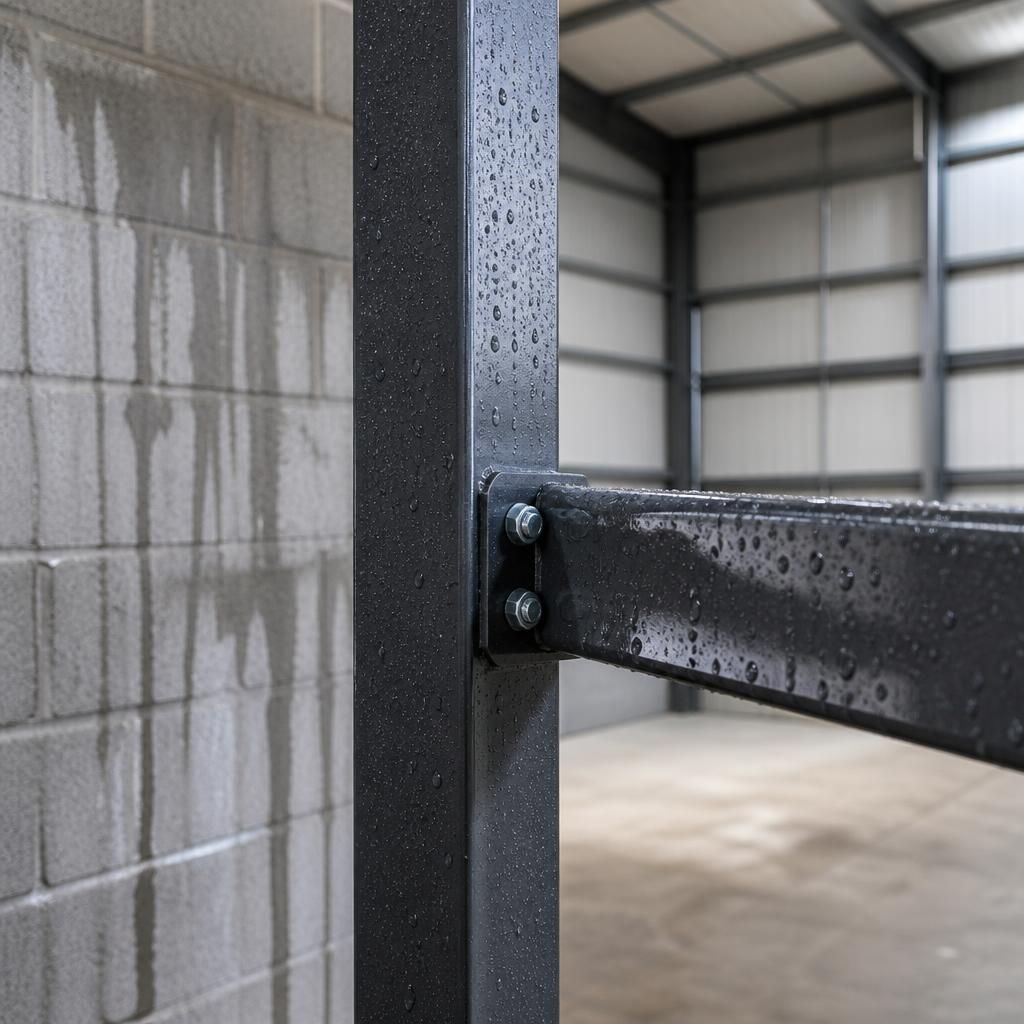
Humidity can create a problem even when powder-coated steel is installed indoors. In poorly ventilated spaces, warm moist air may condense on a cooler steel surface, particularly where the component is close to an external wall, roof or unheated opening. Repeated condensation keeps the surrounding environment damp and can increase the risk of corrosion at scratches, cut edges, joints and fixing points.
Before enclosing or insulating the installation, allow damp surfaces and adjacent construction materials to dry fully. Consider ventilation and the temperature of the steel itself, rather than relying only on the room’s air temperature. This is especially important in warehouses, plant rooms, agricultural buildings and other spaces where humidity levels can change significantly during operation or weather changes.