

How does powder coating contribute to the anti-corrosion properties of steel?
Powder coating protects steel from corrosion by forming a continuous, strongly bonded and chemically resistant film over its surface. This barrier limits contact with moisture, oxygen and corrosive contaminants, helping prevent the electrochemical reactions that cause rust when the coating is correctly specified, applied and cured.
Powder coating contributes to the anti-corrosion performance of steel by combining surface preparation, strong adhesion and a correctly cured coating system. Its effectiveness depends not only on the powder formulation, but also on how the steel is prepared, the component is designed and the finished part is exposed in service.
Surface preparation is the first control against corrosion. Steel may carry mill scale, oil, grease, moisture, weld residues or existing rust. If these contaminants remain beneath the coating, they can reduce adhesion and create sites where corrosion develops. Appropriate preparation removes contamination and produces a clean, suitably keyed surface. Depending on the component and its condition, this can include degreasing, abrasive blasting, mechanical preparation and chemical pre-treatment. The selected process should reflect the steel grade, its previous finish and the environment in which it will be used.
Good adhesion helps prevent corrosion from spreading beneath the finish. A coating that is poorly bonded can lift, blister or flake after exposure to moisture and temperature changes. Once a damaged area allows water and oxygen to reach the steel, corrosion can progress under the surrounding film. Correct preparation and curing reduce the likelihood of this under-film spread, while thorough inspection helps identify thin areas, contamination or visible defects before the component enters service.
The coating also improves protection at vulnerable features when the application is properly controlled. Corners, edges, welds, drilled holes, joints and recessed areas can receive less consistent coverage than broad flat surfaces. Sharp edges can cause the applied powder to pull away during curing, leaving a thinner protective layer. Designing parts with suitable radii, removing sharp burrs, cleaning weld areas and ensuring that powder reaches difficult geometry all help produce more even protection. Drainage and ventilation openings are also important because trapped water can maintain a corrosive environment against the steel.
Film thickness and cure are critical to the coating’s performance. The applied layer must be sufficiently continuous for the specified service conditions, but excessive build can create its own problems, including poor appearance, cracking or incomplete cure. The curing cycle must be matched to the powder system and the steel component’s actual temperature, rather than relying only on oven air temperature. Under-cured powder may have reduced hardness, adhesion and chemical resistance; over-curing can adversely affect the coating’s properties. A professional application process therefore controls application, oven conditions and inspection against the relevant specification.
Powder coating is generally a barrier system rather than a sacrificial one. In other words, it normally protects steel by separating it from corrosive agents rather than by preferentially corroding in place of the steel. This makes damage assessment important. Deep scratches, impact damage, cut edges and drilled or welded areas should be dealt with using a repair method compatible with the original system. Touch-up treatment can limit the exposed area, but it should not be assumed to restore the same performance as an intact factory-applied finish without checking the specification.
The surrounding environment determines how demanding the corrosion protection needs to be. Indoor dry conditions are less aggressive than persistent condensation, high humidity, road salt, industrial pollutants or outdoor exposure. Steel used near coastal locations, in chemical environments or where moisture can collect may require a coating formulation, pre-treatment and quality-control regime selected specifically for that exposure. Areas where dissimilar metals meet should also be considered, as retained moisture can contribute to galvanic corrosion even when the steel surface itself is coated.
Component design and installation can therefore be as important as the powder itself. Avoiding water traps, allowing coated surfaces to drain, sealing suitable joints and preventing abrasion during handling reduce the opportunities for corrosion to begin. Fasteners, cut-outs and contact points should be assessed separately, since they may expose uncoated steel or damage the finish during assembly.
For a steel component requiring dependable corrosion resistance, the specification should define the exposure conditions, preparation method, pre-treatment, powder type, target film characteristics, curing requirements and inspection criteria. It should also identify how edges, welds, repairs and any exposed cut surfaces are to be treated. This joined-up approach is what allows powder coating to provide durable anti-corrosion protection, rather than treating colour or surface appearance as evidence of performance.
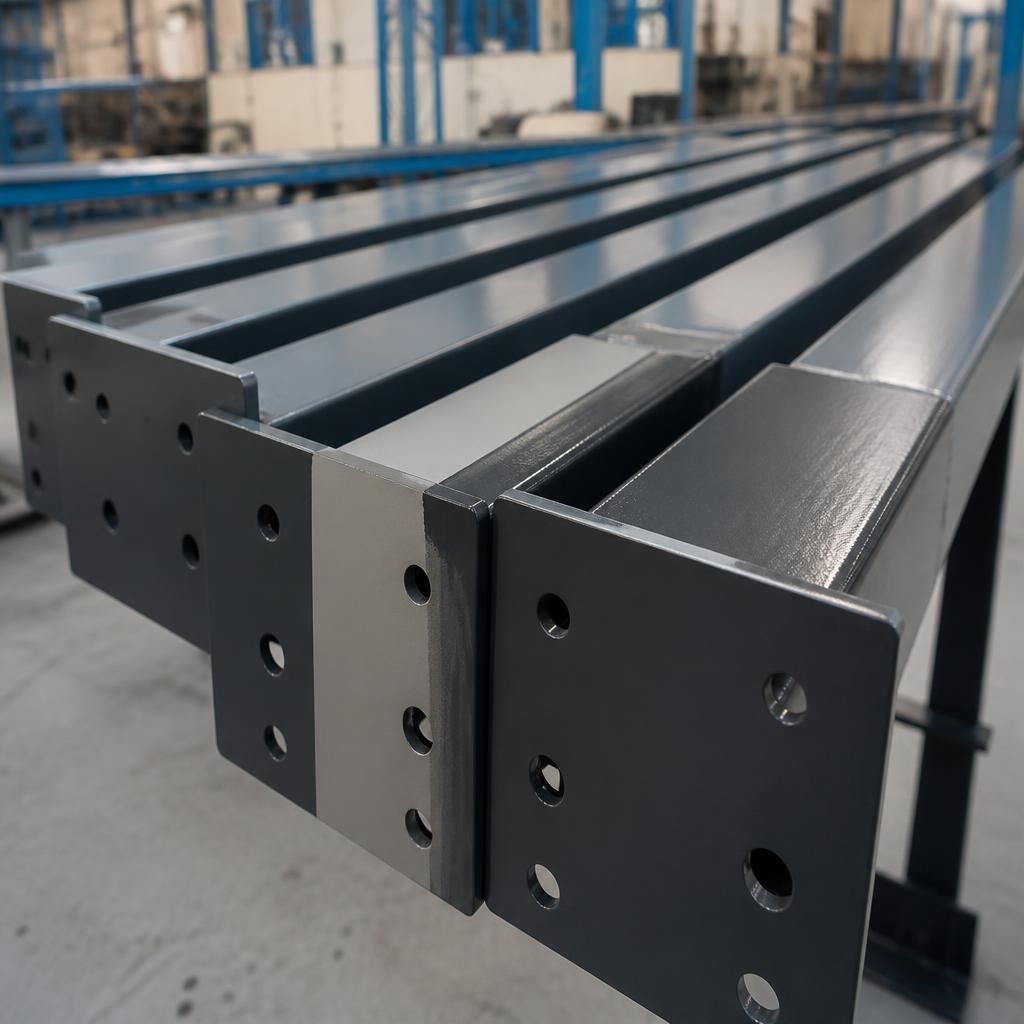
A multi-layer coating system can provide additional anti-corrosion protection where a single powder coat is not sufficient for the steel’s service environment. A compatible primer is applied beneath the powder topcoat to support adhesion and strengthen protection at areas more vulnerable to corrosion, while the topcoat provides the final barrier against moisture, oxygen and contaminants.
The primer and topcoat must be selected as a matched system. Compatibility, film thickness, curing requirements and the intended exposure should all be confirmed before application. This approach is particularly relevant for steel components subject to persistent moisture, industrial pollutants or mechanical wear, but it does not remove the need for sound steel preparation and correct application. The complete coating specification, rather than the colour or topcoat alone, determines the system’s anti-corrosion performance.
Discuss Your Steel Powder Coating Requirements
Discuss your steel components, service environment and required corrosion protection with the Powder-coatings.co.uk team to identify a suitable coating specification. Provide details of the part design, intended exposure and any existing finish so the requirements can be assessed accurately.