

What are the key factors that determine the quality and effectiveness of stainless steel electrostatic coatings in industrial settings?
The quality and effectiveness of stainless steel electrostatic coatings depend on thorough surface preparation, suitable powder selection, consistent electrostatic application, correct curing and controlled environmental conditions. Coating thickness, coverage of complex features, adhesion and final inspection also determine whether the finished coating provides the required protection and service performance.
High-quality stainless steel electrostatic coating is determined by how consistently the complete process meets the component’s intended service requirements. Beyond the coating material and application itself, important factors include the component’s design, powder handling, equipment control, masking, batch traceability and objective performance testing.
Component design and geometry
Stainless steel parts with deep recesses, narrow channels, sharp transitions, threaded sections or closely spaced features require careful process planning. These areas can affect powder access and may produce variations in the finished film if they are not considered before coating. Drawings should identify surfaces that must remain uncoated, functional contact points, threads, holes and areas requiring a particular finish.
Edges and weld zones also need to be assessed as part of the specification. Burrs, spatter, abrupt corners and poorly defined transitions can affect the appearance and long-term integrity of the coating. Where practical, radiused edges and accessible surfaces make it easier to produce a consistent finish and reduce areas of mechanical vulnerability.
Masking and contact-point control
Masking must protect threads, bores, mating faces, earth-contact points and other areas where coating would interfere with assembly or electrical continuity. The masking materials and method need to withstand the process without leaving residue or creating an unwanted boundary on the visible surface.
Hanging and contact arrangements are equally important. Components must be supported securely while allowing the required surfaces to be coated. Contact points should be planned so that any small uncoated marks are positioned on non-critical areas and do not compromise handling, assembly or corrosion protection.
Powder storage and handling
Powder quality can deteriorate if it is exposed to contamination, moisture, excessive heat or unsuitable storage conditions. Containers should remain properly closed, and powders should be clearly identified to prevent mix-ups between colours, gloss levels and product types. Equipment and recovery systems must also be kept clean, since contamination can cause speckling, colour variation, pinholes or loss of finish quality.
Where recovered powder is used, its management must be controlled rather than added indiscriminately to virgin material. Changes in reclaimed material, batch proportions or application conditions can affect colour and surface appearance. For critical components, using a controlled and documented powder route supports better consistency between production batches.
Equipment condition and process repeatability
Stable results depend on well-maintained coating equipment, clean hoses and nozzles, reliable air supply and correctly functioning control systems. Worn components or inconsistent powder delivery can create uneven appearance even when the part looks correctly coated during a visual check.
Repeatability is particularly important for batch production. The same part orientation, hanging method, equipment settings and process sequence should be used wherever possible. Recording these details gives the coater a reference for subsequent batches and makes it easier to investigate colour, finish or performance differences.
Specified finish and acceptance criteria
Quality cannot be judged by appearance alone. A coating specification should define the required colour, gloss, texture, visual standard and permissible imperfections, together with any functional requirements. It should also state which surfaces are critical and identify whether the coating must withstand abrasion, cleaning chemicals, outdoor exposure, elevated temperatures or repeated handling.
Clear acceptance criteria prevent disagreements between the coater and the customer. For example, a minor variation that is acceptable on a concealed structural component may not be acceptable on a visible architectural panel. Inspection conditions should therefore reflect the component’s actual use rather than an undefined expectation of perfection.
Testing and verification
Appropriate tests provide evidence that the finished coating is suitable for its duty. Depending on the application, verification may include:
- visual assessment for colour consistency, runs, pinholes, inclusions, craters and other surface defects;
- film assessment to confirm that the coating is present consistently across specified areas;
- adhesion checks to identify weaknesses between the coating and stainless steel;
- impact, abrasion or hardness testing where the part will experience mechanical wear; and
- chemical, corrosion or weathering tests selected to reflect the service environment.
Test methods should be agreed before production, particularly for components used in regulated, safety-critical or highly demanding applications. A test result is meaningful only when the method, location, acceptance limit and sample status are recorded consistently.
Traceability and final quality control
Production records should link the component or batch to the specified powder, process instructions, operator checks and inspection results. Traceability helps identify the source of a defect and supports repeat orders where the same appearance and performance are required.
Final inspection should check both the visible finish and the practical condition of the part. Masking should be removed cleanly, threaded and mating areas should remain usable, and components should be packaged in a way that prevents damage during storage and transport. A sound quality system therefore considers the coated part as a finished engineering component, not simply as a painted surface.
For industrial stainless steel work, the most reliable specification combines the component drawing, intended service conditions, finish requirements, agreed test methods and documented process controls. This gives the coating provider enough information to select and manage the process against measurable requirements rather than relying on appearance alone.
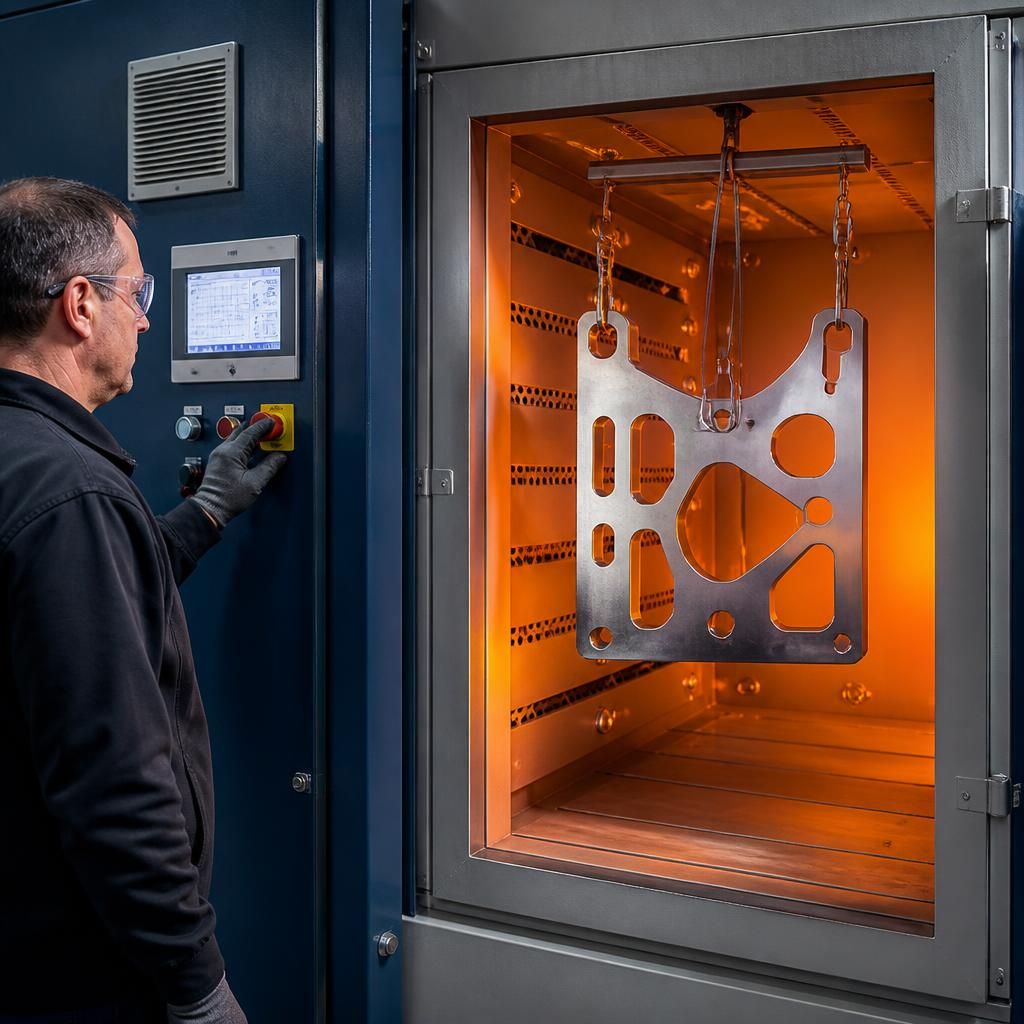
Curing quality depends on the temperature reached by the stainless steel component, not simply the temperature displayed by the oven. Part thickness, shape, loading arrangement and the mass of the batch can affect how quickly the metal reaches the powder manufacturer’s required curing condition. The process should therefore be assessed against the specified time and part-metal temperature for the selected powder.
Insufficient curing can leave the film with reduced adhesion, hardness or chemical resistance, while excessive heat exposure may affect colour, gloss or the stainless steel component itself. Monitoring the curing cycle and validating it on representative parts helps ensure that the coating develops its intended properties consistently across different component sizes and production batches.