

What specific properties should I consider when selecting an electrostatic powder coating for outdoor applications?
When selecting an electrostatic powder coating for outdoor applications, assess its resistance to ultraviolet light, moisture, corrosion, temperature changes, impact and abrasion, as well as its ability to retain colour and gloss. Also consider the metal substrate, the severity of the environment and the required finish, because these factors determine the appropriate powder formulation and pretreatment system.
The most important properties to specify in an outdoor electrostatic powder coating are adhesion, film integrity, chemical resistance, flexibility, edge coverage and compatibility with the substrate and pretreatment. These should be assessed alongside the actual exposure conditions, because a coating suitable for a sheltered external enclosure may not be appropriate for architectural metalwork, roadside equipment or components exposed to industrial contaminants.
Adhesion and film integrity
A coating must remain firmly attached to the metal after application, curing and exposure. Good adhesion depends on more than the powder itself. Surface preparation, removal of oil and contamination, conversion treatment, application technique and curing all affect the bond between the coating and substrate. A sound coating should resist lifting, flaking and under-film deterioration when the finished part is exposed to water, handling or temperature movement.
Film integrity is also important. The cured layer should be continuous, without pinholes, voids, craters or thin areas that could expose the metal. These defects are particularly significant around welds, folded sections, drilled holes, sharp transitions and recessed areas. A specification should therefore address the required film build and inspection method rather than relying only on the powder colour or visual appearance.
Resistance to chemicals and contaminants
Outdoor components may encounter more than rain. Diesel residue, oils, detergents, fertiliser, road salt, exhaust deposits, cleaning chemicals and industrial fallout can all affect a coating. Where these substances are likely, chemical resistance should be treated as a separate selection criterion.
Consider both the concentration and the duration of contact. A coating that tolerates occasional splashes may not be suitable for regular immersion, repeated washing or deposits that remain on the surface. The cleaning regime should also be disclosed to the coater, since aggressive detergents, solvents or abrasive methods can reduce the service life of an otherwise suitable finish.
Flexibility and resistance to cracking
Outdoor metalwork can expand and contract as its temperature changes, while thin sections may flex during transport, installation or use. The coating should have enough flexibility to accommodate normal movement without cracking or losing adhesion. This is especially relevant for formed sheet, fabricated assemblies, brackets and parts that are handled after coating.
Flexibility does not mean that the coating should be soft. The selection must balance movement tolerance with the required hardness and resistance to marking. The correct balance depends on the component design, the amount of handling and whether the part is rigid or subject to repeated mechanical movement.
Coverage of edges, recesses and complex shapes
Electrostatic powder application is affected by the geometry of the component. Corners, internal recesses, Faraday cage areas, narrow channels and deep cavities may receive a different deposit from broad, exposed faces. Sharp edges can also have a thinner coating than adjacent surfaces.
For outdoor use, the specification should identify areas where consistent coverage is critical. Design modifications such as suitable radii, drainage holes and accessible faces can improve coating results. Where the geometry cannot be changed, the application process and inspection requirements should account for those difficult areas.
Permeability and protection at joints
Water can remain trapped at overlapping joints, seams, fasteners and enclosed sections. Even a well-selected powder coating cannot compensate for poor drainage or a design that allows moisture to remain against the metal. Outdoor specifications should therefore consider joint design, sealing, drainage and the compatibility of any sealants or assembled materials.
Pay particular attention to cut edges, drilled holes and areas machined after coating. If these expose bare metal, they may require a defined repair or supplementary protection procedure. The same applies to damage caused during assembly: the repair material and preparation method should be agreed before production rather than improvised on site.
Substrate and system compatibility
The coating must be matched to the metal and to any pre-existing treatment. Steel, galvanised steel, aluminium and other substrates can behave differently during preparation, heating and exposure. Galvanised surfaces may require specific preparation to manage surface condition and outgassing, while aluminium may need a pretreatment system appropriate to its alloy and intended use.
Where two different metals are joined, consider the possibility of galvanic interaction, particularly in damp or contaminated conditions. The coating specification should cover the complete protective system, including pretreatment, powder, curing and any additional sealing or duplex protection. Selecting a powder in isolation can leave weaknesses elsewhere in the system.
Colour and appearance retention
Colour and gloss retention are relevant, but appearance should be specified in practical terms. Decide whether the finish must remain visually consistent across batches, replacement parts and adjacent components. Texture can conceal minor surface variation, whereas smooth finishes may make substrate marks, handling damage and application defects more noticeable.
For large or assembled items, agree how appearance will be assessed and from what viewing distance. A visual approval sample can help establish expectations, but it should not replace technical requirements for adhesion, film continuity and resistance to the intended environment.
How to turn the requirements into a coating specification
- Describe the location and exposure, including shelter, pollution, salt, cleaning and contact with chemicals.
- Identify the substrate, fabrication method, welds, joints, fasteners and any existing treatment.
- State the required mechanical performance, including handling, assembly and likely sources of flexing or abrasion.
- Define the acceptable appearance, texture and consistency between components.
- Specify pretreatment, curing, inspection and repair requirements as part of one coating system.
- Ask for evidence that the proposed system has been tested or used for an equivalent exposure, rather than selecting solely by colour or price.
For industrial outdoor components, the best choice is therefore a complete, documented coating system rather than a powder selected on appearance alone. Sharing the component drawings, substrate details, exposure conditions and cleaning requirements with a specialist powder coater allows the formulation, pretreatment and application process to be assessed together.
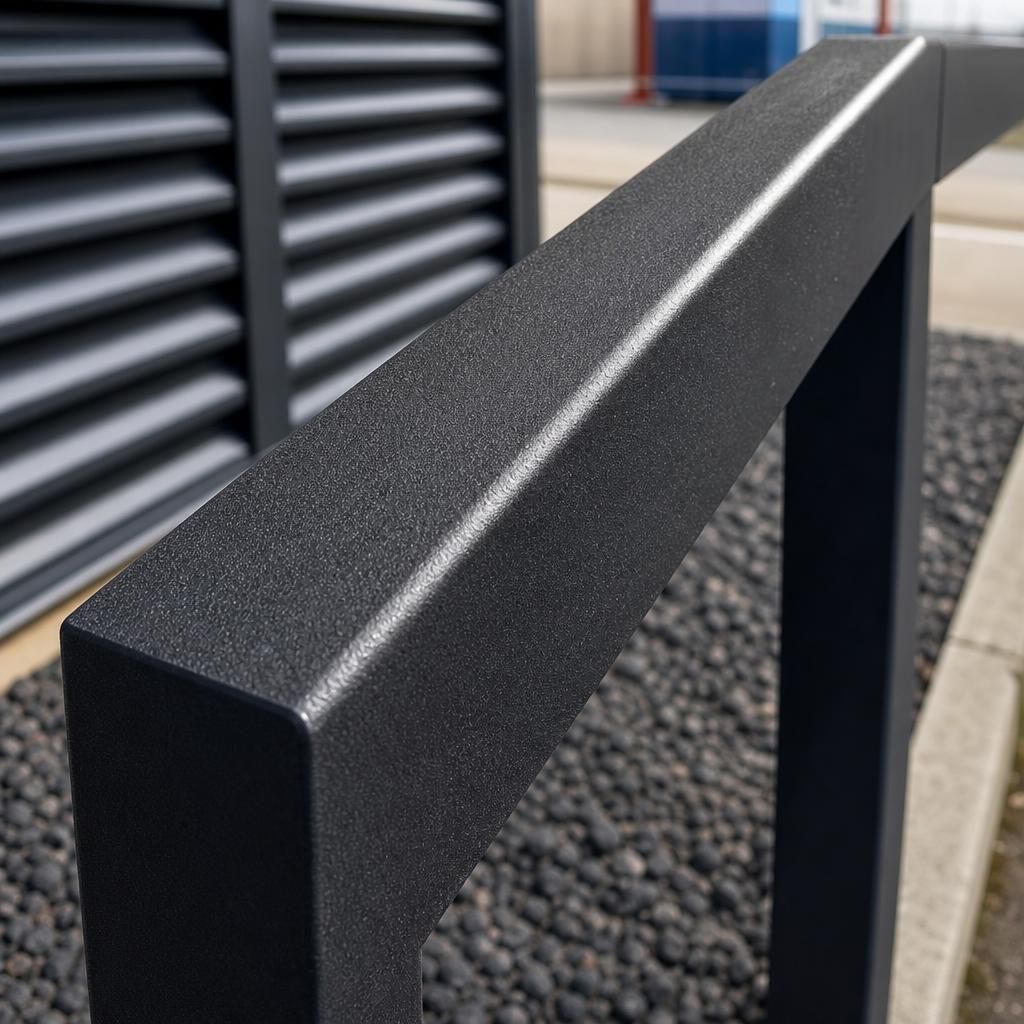
UV stability should be assessed separately from initial colour and gloss. Prolonged sunlight can cause fading, loss of gloss or chalking, where the binder breaks down and leaves a powdery surface. Chalking can make components look dirty, transfer residue during handling and gradually reduce the protective quality of the finish.
Specify an outdoor-grade formulation suited to the expected level of sunlight and the required appearance over its service life. This is particularly important for prominent architectural parts, equipment exposed in open locations and components where consistent colour is needed between replacement batches. Ask the coater to distinguish between decorative appearance requirements and the underlying protective performance when reviewing the proposed system.