

How can electrostatic coatings contribute to achieving sustainability goals in industrial operations?
Electrostatic powder coatings can support industrial sustainability goals by applying dry powder efficiently, avoiding the solvent emissions associated with conventional wet paint and reducing coating waste through controlled application. Their durable finish can also extend the service life of metal components, helping reduce recoating, replacement and associated resource use.
Electrostatic powder coatings can support industrial sustainability goals by improving material utilisation, reducing solvent-related impacts and helping manufacturers manage the whole lifecycle of coated components more effectively. The environmental value does not come from the application method alone: it depends on powder selection, preparation, curing, energy management, maintenance and end-of-life considerations.
Lower solvent-related emissions
Powder coating is applied as a dry material rather than a liquid coating carried in solvent. This can reduce the need to handle and release solvent vapours associated with many conventional wet-paint systems. It may also simplify some aspects of workplace controls, waste handling and air-emissions management. However, the powder still has an environmental footprint from its manufacture, packaging and transport, so it should be assessed as part of the complete coating process rather than treated as impact-free.
More controlled use of coating material
The electrostatic charge helps powder particles adhere to suitably prepared metal surfaces before curing. In a properly configured line, this can make application more consistent and reduce unnecessary coating outside the target area. Overspray may be collected in systems designed for recovery, although the suitability of reuse depends on the equipment, coating formulation, colour, contamination risk and required finish. Reclaimed material is not automatically suitable for every job, particularly where strict appearance or performance requirements apply.
Good process control is therefore important. Correct gun settings, part positioning, earthing, film-thickness control and regular equipment maintenance can all help prevent excessive application. Avoiding overcoating is relevant to sustainability because it reduces unnecessary material use while also supporting consistent curing and performance.
Managing energy used during curing
Powder coatings require heat to melt and cure the applied film. The curing oven can consequently be a significant part of the process energy demand. Sustainability planning should consider oven insulation, airflow, burner or heating-system efficiency, loading patterns and the avoidance of empty or under-filled cycles. Heat recovery and careful control of exhaust air may also be considered where the equipment and site layout make them practical.
Coating manufacturers specify curing conditions for each formulation. Running below the required schedule can leave the film under-cured, while excessive temperature or dwell time can waste energy and potentially affect the finish or substrate. Selecting a coating with a curing specification suited to the component, production volume and available equipment can help balance product performance with energy management. Any lower-temperature or faster-curing option should still be validated against the required mechanical, chemical and environmental performance.
Supporting longer maintenance intervals
A coating that remains suitable for its service environment can reduce the need for stripping, cleaning, repainting and associated transport. The correct finish must be chosen for factors such as ultraviolet exposure, moisture, abrasion, chemicals, temperature variation and contact with other materials. Selecting a coating solely on initial appearance may lead to avoidable maintenance if the operating conditions are more demanding.
This is why sustainability decisions should include the expected service conditions and maintenance plan. A finish that can be cleaned using less aggressive methods, or that resists the particular contaminants encountered in operation, may reduce the use of cleaning chemicals and maintenance consumables. The coating must still be specified against the actual duty; no powder finish is suitable for every environment.
Reducing process losses through preparation and quality control
Surface preparation has a direct bearing on sustainability because poor preparation can cause adhesion failure, rework or premature removal of the finish. Degreasing, pretreatment, drying and masking should be matched to the base metal and the intended service conditions. Correct preparation helps prevent a component having to pass through the coating process more than once.
Quality control can include checks on surface cleanliness, film thickness, appearance, cure and adhesion, using methods appropriate to the specification. Identifying defects before coated parts move into assembly or installation avoids wasting the additional resources already invested in those components. It also gives manufacturers useful information about recurring causes of rework, such as contamination, poor earthing, unsuitable settings or handling damage.
Considering the complete lifecycle
An industrial sustainability assessment should compare the impacts of the coating system across its lifecycle. Relevant questions include:
- What are the material and energy requirements for application and curing?
- Can overspray be recovered without compromising the required finish?
- What preparation chemicals, rinsing processes and waste streams are involved?
- How will the coating perform in the component’s actual environment?
- What maintenance will be required during service?
- Can the coated metal be separated, recycled or processed at the end of its useful life?
The final question needs careful interpretation. A cured coating is bonded to the metal and is not normally removed simply for routine recycling. Metal recyclers use established processing routes, but the acceptability of a particular coated component can depend on the material combination and recycling facility. Procurement and design teams should therefore discuss end-of-life requirements early, especially where components are intended for high-volume recovery.
Using evidence rather than assumptions
Environmental claims should be supported by information relevant to the selected coating and process. Useful evidence may include technical data sheets, safety data, product environmental information, curing requirements, waste records, energy measurements and documented rework rates. A life-cycle assessment can provide a broader comparison where a project requires quantified environmental reporting, but the result will depend on the coating formulation, production method, component design, transport and service life.
For industrial buyers, the most practical approach is to set measurable process objectives: control film thickness, monitor powder consumption, record rework, review oven energy use, manage pretreatment waste and select finishes for the conditions in which parts will operate. Electrostatic coating can form part of that strategy, but sustainability is achieved through the combination of suitable specification, disciplined application and responsible lifecycle management.
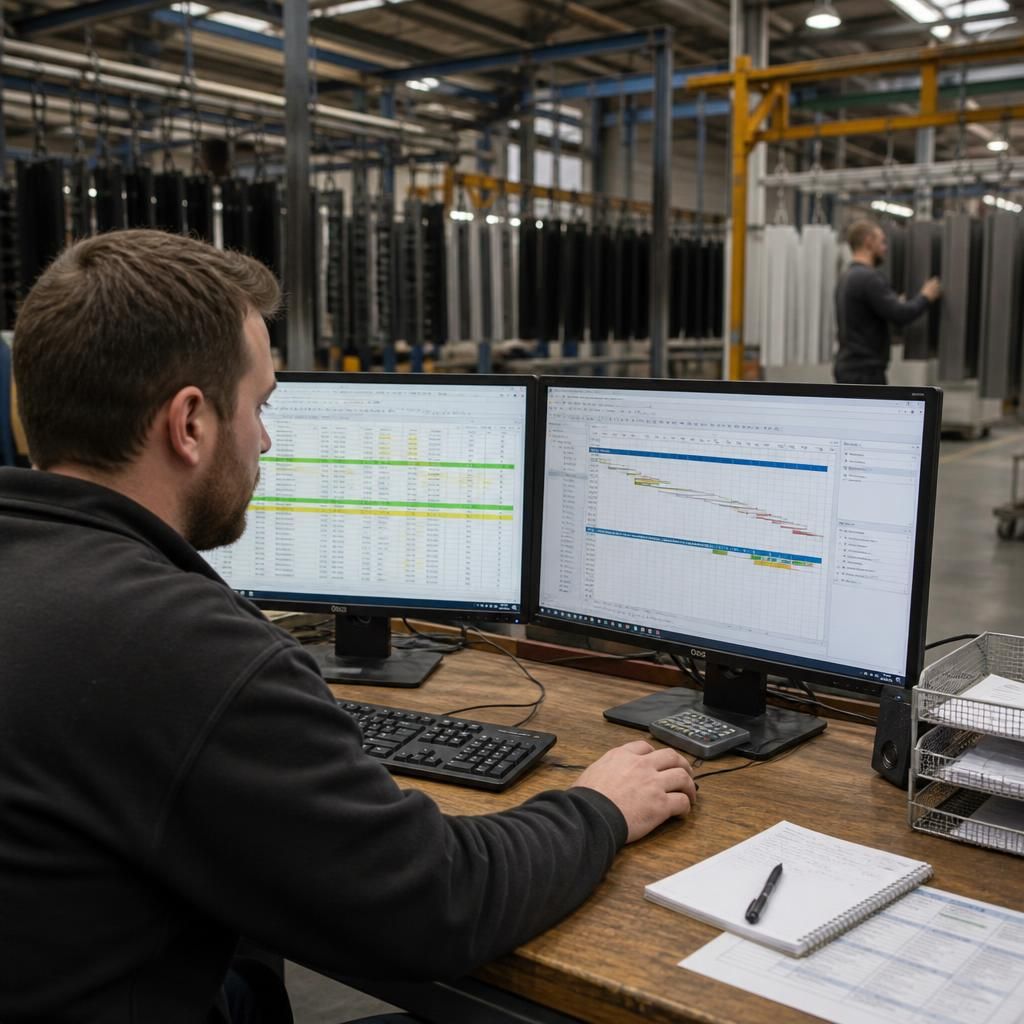
Production planning can support sustainability in powder coating by reducing avoidable changeover, cleaning and heating requirements. Grouping compatible components by colour, coating formulation or curing schedule can limit equipment preparation between batches and make better use of each production run.
This approach must remain subject to the coating specification. Jobs should not be combined where different performance requirements, contamination risks or finish standards could be affected. When planned carefully, suitable batch sequencing can reduce process interruptions, cleaning materials and coating waste while helping maintain consistent quality.
Discuss your industrial sustainability goals with our coating team
Discuss your industrial sustainability goals with our coating team and outline the components, operating conditions and process requirements involved. We can help you assess whether powder coating is appropriate for the application and specification.