

How does powder coating on galvanised steel differ in performance and longevity compared to other coating methods?
Powder coating on galvanised steel forms a duplex system: the galvanised layer provides sacrificial corrosion protection, while the powder coating adds a tough, sealed and decorative outer surface. Compared with liquid paint or galvanising alone, it can offer stronger resistance to impact, weathering and corrosion, provided the zinc surface is correctly prepared and the coating is applied and cured to the required specification.
Powder coating on galvanised steel generally provides a more complete combination of corrosion resistance, surface protection and appearance than either coating system used alone. Its performance is not determined by the powder film only: the condition of the galvanised surface, preparation method, coating specification, curing and service environment all influence how long the finished component remains protective and presentable.
Compared with galvanising alone, the powder layer provides a sealed, coloured finish that can improve resistance to abrasion, handling marks, staining and weather-related surface deterioration. It also gives designers greater control over colour and texture. Galvanising alone remains highly effective where sacrificial protection is the main requirement, particularly if the surface appearance is less important. However, exposed zinc can develop visible corrosion products, and the finish may not provide the same decorative or touch-friendly surface as a correctly applied powder coating.
The two-layer arrangement also changes how local damage behaves. A scratch through the powder film may still leave the underlying zinc able to provide limited sacrificial protection to nearby steel. This does not make damage harmless: deep gouges, cut edges, drilled areas and impact sites should be assessed and repaired because prolonged exposure can eventually undermine the surrounding coating.
Compared with liquid paint, powder coating usually produces a more uniform, mechanically resistant film when applied to suitable components in a controlled factory process. It avoids the solvent evaporation associated with many liquid systems and can provide good resistance to chipping, scuffing and routine industrial handling. Liquid systems remain useful for on-site work, very large structures that cannot enter an oven, heat-sensitive assemblies and local repair. Their durability varies considerably according to the primer, intermediate coats, topcoat, application conditions and film build, so a direct comparison must consider the complete paint system rather than the word “paint” alone.
Compared with zinc-rich primers and liquid protective paint systems, powder coating over galvanised steel can reduce the number of wet-applied stages and provide a tougher finished surface. A zinc-rich system may be preferable where site application, repairability or low-temperature processing is essential. It can also be specified as part of a multi-coat system for severe exposure, but its effectiveness depends on correct mixing, application, drying and overcoating. Powder coating is not automatically the better choice for every structure; access, component size, heat sensitivity and the required repair method must be considered.
Longevity depends heavily on exposure. Indoor components protected from moisture and chemicals place less demand on the finish than external steel exposed to salt, industrial pollutants, standing water, ultraviolet radiation or repeated wetting and drying. Coastal and aggressive industrial environments can shorten the useful life of any coating system. Good component design is therefore important: water traps, unsealed overlaps, sharp edges and inaccessible recesses can cause local failure even when the main faces remain sound.
- Surface preparation: oils, storage residues, loose zinc corrosion products and contaminants must be removed. The galvanised surface may require suitable chemical treatment, controlled abrasion or another specified preparation method to promote adhesion without unnecessarily removing the zinc layer.
- Outgassing control: pores in galvanised steel can release gases during heating, causing pinholes or blisters in the powder film. Appropriate preheating, degassing practice and powder selection can reduce this risk.
- Film specification: the required thickness, finish and performance class should reflect the exposure rather than being chosen solely for appearance. Excessive or uneven build can affect edge coverage, curing and dimensional fit.
- Curing: the powder must reach the specified metal temperature for the required time. Under-curing can reduce adhesion and chemical resistance, while unsuitable curing conditions can affect colour, gloss and the properties of the galvanised component.
- Handling and assembly: lifting damage, poorly protected contact points and abrasive fasteners can create defects before the component reaches service. These areas need inspection and, where appropriate, compatible repair treatment.
Performance should be judged using the requirements of the application rather than an assumed service life. Relevant checks can include adhesion, visual uniformity, film thickness, impact resistance, flexibility, gloss and colour retention, together with corrosion testing appropriate to the specified system. Accelerated laboratory tests help compare coatings, but they do not reproduce every combination of sunlight, moisture, pollutants, temperature change and mechanical wear found in service.
Maintenance also affects the comparison. Routine inspection should look for cuts, blistering, lifting at edges, corrosion staining, chalking and damage around fixings. Cleaning with suitable non-abrasive methods removes deposits that can retain moisture or chemicals. Small defects should be dealt with using a repair procedure compatible with both the powder film and the galvanised substrate; a generic touch-up paint may provide temporary coverage but is not automatically equivalent to the original system.
For manufacturers and fabricators, the most reliable choice comes from matching the coating system to the component’s exposure, geometry, handling requirements and future maintenance arrangements. Powder coating on galvanised steel can offer a longer-lasting and more resilient finished surface than many single-coat alternatives, but that advantage depends on specification and execution. Poor preparation, trapped gases, unsuitable design or incorrect curing can reduce longevity regardless of the apparent quality of the powder itself.
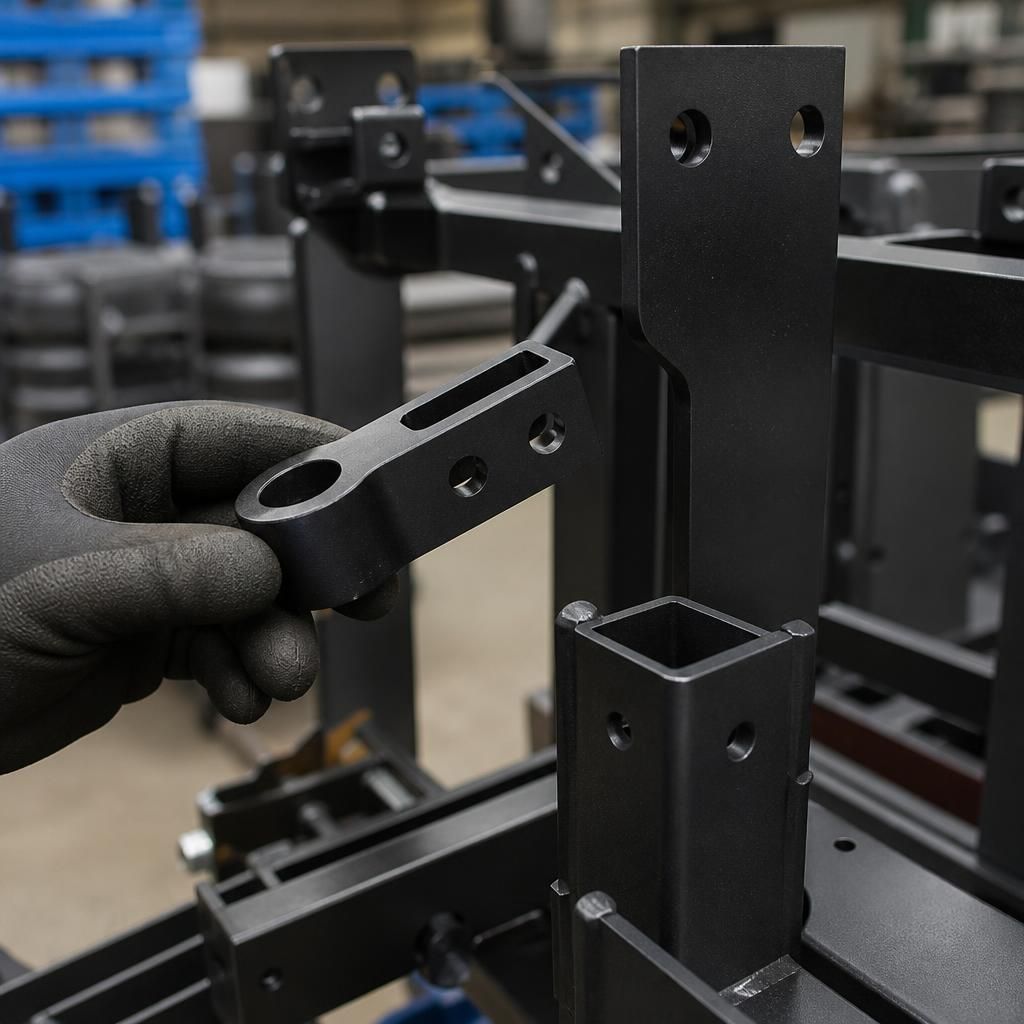
A key difference between powder coating on galvanised steel and thinner liquid coating systems is the effect of the finished film on component fit and function. The powder layer adds measurable build to faces, threads, slots, bearing surfaces and mating points, so these areas may need masking, clearance allowances or post-coating inspection. If this is overlooked, assembly pressure can damage the finish or prevent parts from seating correctly, shortening the practical life of an otherwise well-protected component.
Performance should therefore include dimensional consistency as well as corrosion and abrasion resistance. Contact points for electrical continuity, earth connections, hinges and moving interfaces may require defined coating boundaries, while concealed faces should be assessed for access and drainage. Agreeing these details before coating helps preserve the advantages of the galvanised-and-powder-coated system without compromising assembly, operation or future maintenance.