

What types of finishes are available for powder coated chassis and frames?
Powder coated chassis and frames can be finished in smooth, textured, matt, satin or gloss options, with a broad choice of colours to suit the application. Specialist protective finishes, including nylon coatings, may also be appropriate where the component requires additional resistance to wear, impact or harsh conditions.
Finishes for powder coated chassis and frames fall into three broad groups: decorative finishes selected for appearance, protective finishes chosen for resistance to the service environment, and specialist functional coatings intended to manage wear, friction, impact or chemical exposure. The correct option depends on the substrate, operating conditions, handling methods and the required appearance.
Decorative powder finishes provide control over colour, reflectivity and surface character. Colour is normally selected from an established powder-coating colour range, although the precise choice should be confirmed against the required standard, approved sample or existing components. On a chassis or frame, the coating may also need to conceal minor visual variation in the metal, provide a consistent appearance between batches or complement surrounding panels and assemblies.
Surface character has practical as well as visual consequences. A highly reflective surface can make unevenness, handling marks or small imperfections more noticeable, while a low-reflectivity surface can be more forgiving in hard-wearing applications. A textured surface can also provide additional grip where people handle a component, although it may be more difficult to clean than a comparatively even coating. The selected appearance should therefore be assessed alongside the way the chassis or frame will be installed, handled and maintained.
Exterior-grade polyester coatings are commonly considered for chassis and frames exposed to weather or sunlight. They are formulated for outdoor use and can provide a durable decorative and protective layer when the preparation, powder specification and curing process are suitable for the component. The correct grade still depends on the severity of exposure, including moisture, pollutants, road contaminants and contact with other materials.
Epoxy-based coatings are valued for adhesion and resistance to many forms of chemical attack, but they are generally selected more cautiously for components that remain exposed to sunlight because prolonged ultraviolet exposure can affect their appearance. They may be appropriate for indoor chassis, enclosed equipment or as part of a coating system where chemical resistance is more important than long-term colour retention in direct sunlight.
Hybrid powders, combining epoxy and polyester characteristics, can be considered for applications where a balance of finish quality and resistance is required. They are often more suitable for internal or sheltered components than for heavily exposed outdoor frames. The intended location and exposure should be stated before the coating is selected rather than assuming that one powder type suits every chassis.
Nylon and other specialist protective coatings may be appropriate where the frame or chassis experiences repeated abrasion, impact, sliding contact or demanding chemical conditions. Nylon is a thicker functional coating than a standard decorative powder finish and may be specified where surface resilience and reduced damage from contact are priorities. It can alter dimensions, edge definition and the fit of mating parts, so clearances, threaded areas and masking requirements should be considered at the design stage.
Other functional requirements can influence the finish specification. For example, a coating may need to provide a particular level of electrical insulation, reduce friction, withstand contact with oils or cleaning chemicals, or protect areas that are frequently loaded against supports. These requirements should be described in practical terms, including the substances involved, operating temperature, frequency of contact and whether the component is indoors, outdoors or exposed to road spray.
- For exposed frames: prioritise a powder formulation suitable for outdoor ultraviolet and weather exposure, together with preparation appropriate to the base metal.
- For indoor equipment: the choice can focus more heavily on appearance, chemical contact, cleaning methods and the risk of impact or abrasion.
- For components with moving or rubbing interfaces: consider a specialist coating and confirm the finished dimensions before application.
- For parts assembled after coating: identify earth points, threads, bearing seats, press fits and other areas that must remain free of powder.
Finish selection should also account for the metal itself. Steel, galvanised steel and aluminium may require different preparation and powder specifications, while welds, sharp edges, cavities and mixed-metal assemblies can affect coverage and appearance. A coating sample or agreed reference panel is useful where colour, texture or batch consistency is important, but it should represent the intended substrate and application process as closely as possible.
For a chassis or frame, the most suitable finish is therefore not simply the one that looks right on a colour chart. It is the combination of powder chemistry, surface appearance, coating thickness, preparation and curing that matches the component’s environment and use. Providing drawings, substrate details, service conditions and any masking or dimensional requirements allows the specification to be assessed before coating begins.
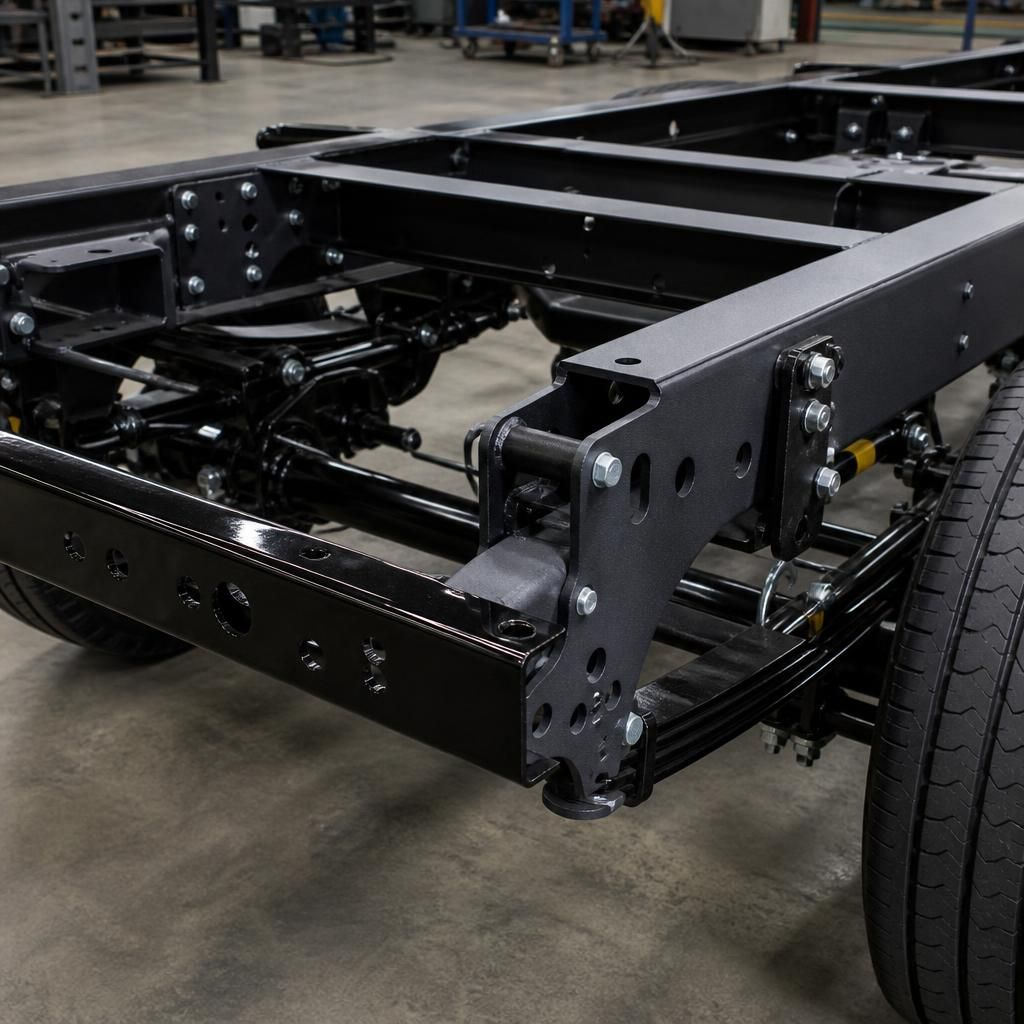
Different parts of the same chassis or frame assembly can use different powder finishes where their functions differ. For example, visible outer members may use a smooth or satin finish, while brackets or contact areas may require a more resistant specialist coating. The specification should confirm which surfaces share a colour and appearance, and which are selected for functional reasons.
When combining finishes, check that the differences are intentional rather than the result of varied application or curing conditions. A reference sample for each finish helps distinguish an approved contrast between components from an unwanted mismatch.