

What are the environmental benefits of choosing powder coated steel panels?
Powder coated steel panels can reduce environmental impact through low-VOC application, long service life and efficient material use. Their durable finish helps limit repainting and replacement, while the steel panels and coating can be managed within established recycling processes at the end of their service life.
Powder coated steel panels can offer environmental advantages because the coating process produces little liquid waste, allows unused powder to be controlled more effectively, and can reduce the need for repeated coating work over the panel’s working life. The overall benefit depends on the powder formulation, surface preparation, curing requirements, transport and the way the finished steel is managed at end of life.
Less liquid coating waste: Powder coating is applied as a dry powder rather than as a liquid paint system. This avoids the liquid paint residues, contaminated thinners and solvent-based cleaning materials associated with some conventional coating methods. Unused powder can often be collected within suitably designed application equipment, reducing the amount sent for disposal. Any recovery system must be properly managed, as contamination and changes in powder composition can affect whether material is suitable for reuse.
More controlled material handling: The dry application process can provide a more predictable coating deposit on correctly prepared panels. This helps limit unnecessary material use caused by runs, drips or uneven wet-paint application. It also reduces the need to manage paint sludge and liquid overspray. These process benefits are strongest where the coating line is correctly set up for the panel size, shape, batch volume and specified finish.
Reduced reliance on solvent-based products: Powder formulations do not require a liquid solvent carrier to form the coating film. This can reduce the use and handling of solvent-containing products during application. It does not mean that the entire production process is chemical-free: degreasing, rinsing and pre-treatment may still involve chemicals, and these stages require appropriate containment, treatment and disposal arrangements.
Potentially lower waste from maintenance: A coating that remains sound under the conditions for which it was specified can reduce the environmental burden associated with stripping, recoating and transporting replacement panels. This benefit is linked to correct specification rather than powder coating alone. Coastal exposure, industrial pollutants, moisture, abrasion and high temperatures may require different powder types and preparation methods, so selecting a finish for the actual service environment is important.
Energy use needs to be assessed: Powder coating requires an oven or another controlled curing method, so the environmental assessment should include the energy used for heating, extraction and handling. A panel’s size, batch arrangement and curing specification influence this demand. A durable finish may still provide a better whole-life outcome where it avoids frequent refurbishment, but a coating should not be described as environmentally preferable without considering both its application energy and its expected service conditions.
For a more responsible specification, purchasers should ask for information about:
- the powder chemistry and any relevant environmental or hazardous-substance declarations;
- how unused powder, contaminated material and preparation residues are controlled;
- the curing temperature and process requirements for the selected system;
- the pre-treatment chemicals, rinsing arrangements and waste-water controls used;
- whether the finish is appropriate for the panel’s exposure, cleaning regime and expected service conditions; and
- the packaging and transport arrangements for the panel size and order volume.
For manufacturers, fabricators and construction businesses, the most meaningful comparison is therefore between complete coating systems rather than between finish names alone. Powder coated steel panels can reduce process waste and maintenance-related impacts, but the result depends on responsible preparation, controlled application, suitable curing and a coating specification matched to the panel’s intended use.
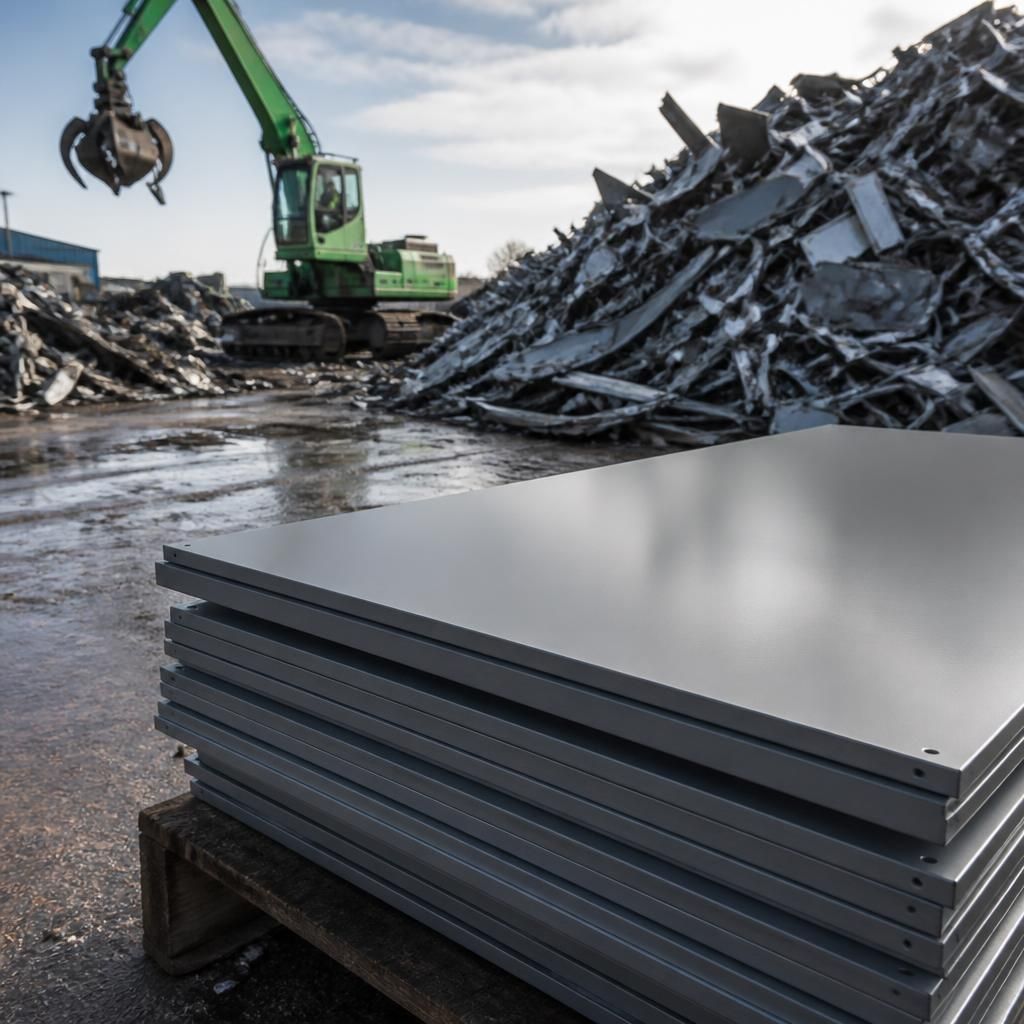
Powder coated steel panels can retain a practical end-of-life recycling route. The powder coating is a surface finish applied to the steel rather than a separate structural layer, so the panel can generally be directed into established steel recycling processes when it is removed from service. This helps preserve the value of the steel substrate and reduces the likelihood that usable metal will require disposal.
End-of-life planning still matters. Panels should be separated from attached non-metal materials where practical, and the coating system should be identified when recycling requirements call for it. This makes the environmental benefit part of the panel’s full lifecycle, from specification and use through to recovery.