

What factors should be considered to ensure the durability and efficiency of powder coating for large-scale industrial projects?
Durability and efficiency depend on selecting the correct coating system for the service environment, preparing the metal thoroughly, and matching application and curing conditions to the component’s material, size and geometry. In large-scale projects, consistent film thickness, controlled oven conditions, efficient part handling and documented inspection are essential for repeatable results.
For large-scale industrial projects, durable and efficient powder coating depends on controlling the entire process from component design and specification through to packing and installation. The coating must be compatible with the metal, the intended duty and the required appearance, while the production plan must minimise unnecessary handling, variation, masking and rework.
Define the service conditions accurately. The specification should state whether the finished parts will be exposed to indoor or outdoor conditions, moisture, salt, chemicals, abrasion, impact, heat or frequent cleaning. It should also identify areas that may be concealed, immersed or exposed to dissimilar metals. These details affect the required protection level and help prevent an attractive finish from being used in an environment that exceeds its capabilities.
Review the component design before production. Sharp edges, deep recesses, narrow gaps and enclosed sections can make it difficult to achieve a consistent finish. Designs should allow powder to reach the required surfaces and should include suitable drainage and ventilation where hollow sections are coated. Welds, folded edges and areas containing spatter may need attention in the design or fabrication stage because surface defects can remain visible after coating. Allowances may also be required for the coating build where components assemble closely.
Protect functional and assembly-critical areas. Threads, bearing seats, electrical contact points, locating faces and close-tolerance holes may need masking or post-coating treatment. The drawings should clearly identify these areas, along with surfaces that must remain uncoated. This reduces avoidable cleaning and rework and prevents the coating from interfering with assembly or electrical continuity.
Confirm the substrate and fabrication condition. Different metals and fabricated parts can behave differently during heating and cooling. The project specification should identify the substrate, weld treatments, existing finishes, oils, labels and temporary corrosion protection present on incoming parts. Mixed materials or parts with significantly different thermal mass may require separate process planning so that each receives an appropriate treatment without slowing the whole batch.
Control powder and process materials. Powder should be stored in conditions that preserve its specified characteristics and should be handled in a way that avoids contamination or unintended mixing. Where recovery and reuse are part of the process, the operating controls must prevent incompatible colours, chemistries or contamination from entering the recovered material. Clear identification of powders, components and batch instructions supports consistent results across a long production run.
Plan production around repeatability. Large projects benefit from grouping components with similar dimensions, substrate types, colours and functional requirements. A defined loading pattern can improve access to all required surfaces and reduce changes between batches. Racking and suspension points should be positioned on areas where contact marks can be tolerated or subsequently treated, while still providing secure support during transfer and processing.
Consider colour, gloss and appearance tolerances. A project should establish acceptable variation before production begins, particularly where parts are installed next to one another or supplied over several batches. Colour perception can change with gloss level, viewing angle, lighting and substrate texture. A retained reference sample or agreed inspection method gives production and the end user a consistent basis for assessing appearance rather than relying on subjective comparisons.
Build in verification at suitable points. Inspection should cover more than visible colour. Depending on the application, relevant checks may include coating adhesion, film build, surface defects, cure condition, masking accuracy and protection of uncoated areas. Checks at the start of a run and after any material, equipment or batch change can identify drift before a large quantity of components requires correction.
Manage handling, packaging and transport. A correctly applied coating can still be damaged by stacking, metal-to-metal contact, moisture or poorly selected protective materials. Parts should be allowed to reach a suitable handling condition before packing, with separators or supports used where contact could mark the surface. Packaging should reflect the component’s weight, shape and destination, and should allow inspection without requiring unnecessary unpacking.
Keep the specification traceable. Drawings, approved samples, batch references, powder details, process settings, inspection results and records of non-conforming work should be linked to the relevant production order. Traceability makes it easier to investigate variation, repeat an approved finish and identify which components may be affected if a process issue is discovered.
Efficiency should therefore be assessed alongside coating performance. The best approach is not simply the fastest route through the coating facility; it is a controlled workflow that reduces handling, changeovers, rejects, touch-up and disruption to assembly. Clear component information, compatible batch planning and agreed acceptance criteria give large-scale projects a stronger basis for achieving a durable finish without avoidable production waste.
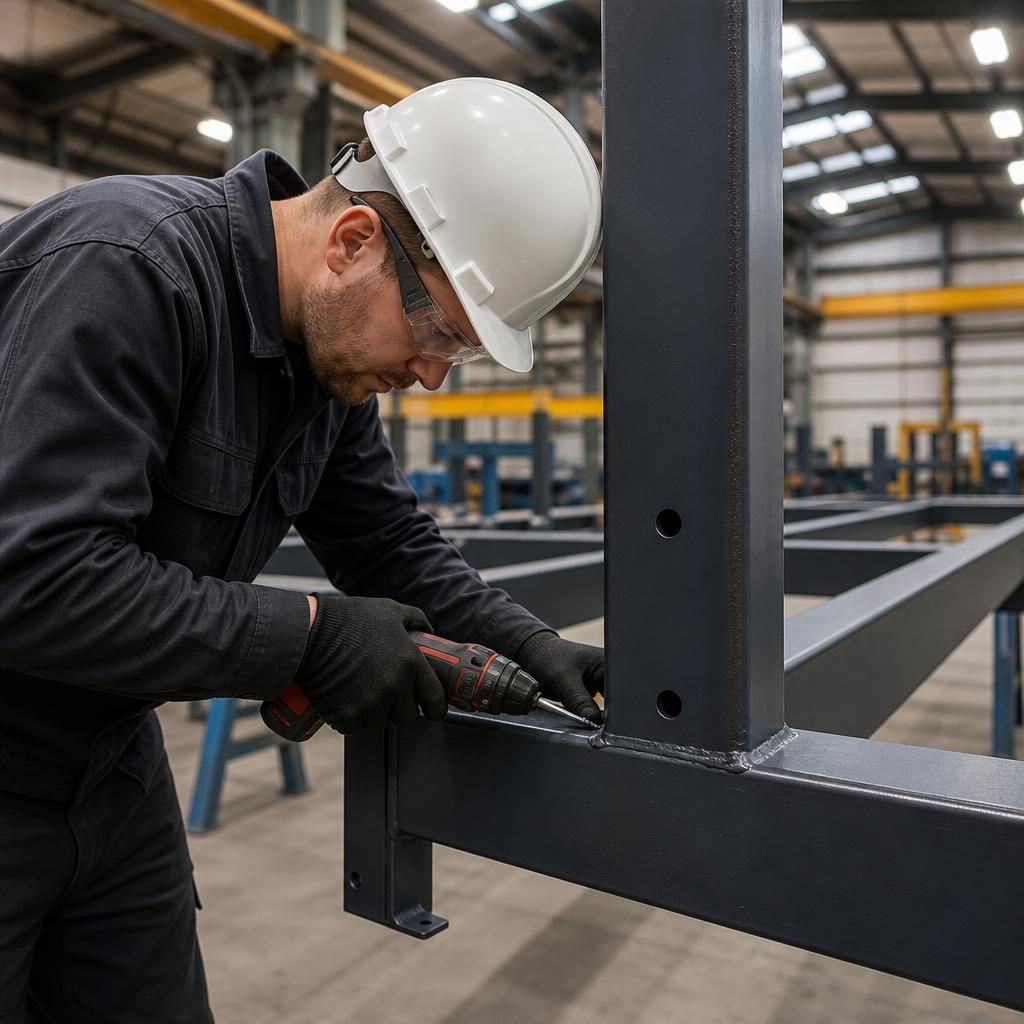
Post-coating modifications can reduce durability if they expose the substrate or damage the surrounding film. Large-scale projects should therefore complete drilling, cutting, welding and other fabrication work before coating wherever possible. If site modification is unavoidable, the method should define how exposed edges will be cleaned, protected and checked so that the coating system remains suitable for the service environment.
Installation interfaces also require attention. Fasteners, seals, brackets and adjacent materials should be reviewed for potential abrasion, trapped moisture or contact between dissimilar metals. Agreeing these details before production helps prevent damage during assembly and avoids inconsistent repair work across a large quantity of finished components.
Discuss Your Large-Scale Powder Coating Requirements
Contact Powder-coatings.co.uk to discuss your drawings, coating specification and production requirements for a large-scale industrial project. Sharing these details at the outset helps establish the appropriate process and finish for your components.