

How does electrostatic powder coating compare to other protective coating methods in terms of maintenance and long-term cost efficiency for industrial applications?
Electrostatic powder coating can offer lower long-term maintenance costs than liquid paint and some other protective methods because it forms a durable, uniform finish that resists wear, corrosion and repeated handling. Its overall cost efficiency depends on the component’s environment, required surface preparation, coating specification and the likely need for repairs or recoating over its service life.
For industrial components, electrostatic powder coating is often the most cost-efficient option over the service life when the specified powder, preparation and cure are suitable for the operating environment. Its financial advantage is not determined by application price alone: the relevant comparison includes preparation, production handling, inspection, cleaning, repair, downtime and the likelihood of complete recoating.
Maintenance requirements
A powder-coated component normally needs a straightforward maintenance regime. Routine inspection should look for impact damage, edge breakdown, blistering, corrosion at joints and areas where the coating has been abraded by contact or movement. Contamination can usually be removed using a suitable mild cleaning solution and non-abrasive equipment. The precise method depends on the powder chemistry and the substances encountered in service; aggressive solvents or abrasive cleaning can damage the finish even when the underlying coating remains sound.
Small defects should be assessed promptly. A local repair may involve removing loose coating, treating any corrosion, preparing the exposed metal and applying a compatible repair material. A repaired area may not match the original finish perfectly, particularly with textured, metallic or specially formulated powders. If damage is widespread, stripping and recoating is generally more reliable than repeatedly applying local repairs.
Comparison with liquid paint
Liquid paint can have a lower entry cost in some circumstances, particularly for one-off work, temperature-sensitive substrates or components that cannot be placed through a curing oven. It also allows relatively convenient brush or spray repairs on site. However, its maintenance burden can be greater where the coating is exposed to repeated handling, abrasion, moisture or outdoor weathering. Solvent evaporation, film build control and application conditions can affect the consistency of the finished layer, while damaged areas may need more frequent attention.
Electrostatic powder coating can reduce the frequency of planned recoating when the component is correctly prepared and the finish is matched to its environment. It is particularly suited to repeatable production work, where consistent application and curing can be controlled. The comparison becomes less favourable if the part is too large for the available process, cannot tolerate the curing temperature, or requires frequent colour changes and small isolated repairs.
Comparison with hot-dip galvanising
Hot-dip galvanising protects steel through a zinc coating that provides a barrier and, where exposed, sacrificial protection. This can be highly effective for steelwork exposed to weather or difficult-to-access locations because the zinc continues to provide a degree of protection around minor exposed areas. Maintenance may involve inspecting for mechanical damage, corrosion products, drainage issues and deterioration at cut edges or connections.
Powder coating may provide a more controlled decorative finish and a wider choice of colours, gloss levels and textures. It can be a practical choice where appearance, dimensional control or a smooth production finish matters. Galvanised steel can also receive a compatible powder system, but this requires appropriate preparation and treatment of the zinc surface. The additional process stages should be included in the whole-life cost rather than treated as incidental.
Comparison with plating and anodising
Electroplated finishes are valuable where a thin coating, electrical performance, low friction or a particular surface property is required. They may not provide the same level of impact tolerance or barrier protection as a correctly specified powder system on larger industrial components. Damage that reaches the substrate can also create a maintenance issue, especially where the plated layer is thin and difficult to restore locally.
Anodising is principally associated with aluminium and forms a surface layer within the metal rather than applying a separate paint film. It can offer useful wear and corrosion performance, but colour matching, repairability and suitability for different alloys must be considered. It is not a direct substitute for powder coating on every metal component, particularly steel parts.
Where long-term cost efficiency is determined
- Substrate preparation: Degreasing, removal of mill scale or rust, blasting, chemical pretreatment and primer selection influence adhesion and corrosion resistance. Inadequate preparation can shorten the coating’s service life regardless of the coating type.
- Exposure conditions: Coastal salt, industrial chemicals, road contaminants, ultraviolet radiation, continuous condensation and high temperatures require different specifications. A general-purpose decorative powder should not be assumed to suit severe chemical or thermal exposure.
- Component design: Sharp edges, crevices, trapped moisture, weld spatter and incompatible materials can create weak points. Designing for drainage, access and even coating coverage reduces future inspection and repair work.
- Handling and installation: Damage often occurs during transport, assembly or contact with tools rather than during normal service. Protective packaging, suitable lifting methods and controlled installation can prevent avoidable repair costs.
- Production volume: Batch and repeat production can spread preparation and set-up costs across multiple components. For isolated parts, liquid application or another method may be more economical after all process requirements are considered.
- Repair and recoating access: A finish that lasts well but is difficult to remove, match or reapply may still create high maintenance costs if the component is likely to suffer impact damage or needs frequent modification.
Assessing total cost of ownership
A useful comparison should record the initial coating cost, preparation and masking, transport, curing or drying requirements, inspection, cleaning, expected repair materials, labour, removal of failed coating and any production downtime. The calculation should also allow for the cost of taking a component out of service. A coating with a higher initial price may be preferable if it avoids repeated dismantling or access work, while a lower-priced finish may become uneconomical when maintenance requires frequent interruption of production.
Electrostatic powder coating is therefore not automatically the cheapest protective method in every application. It offers the strongest long-term economic case where the substrate can be suitably prepared, the part can be cured correctly, the powder is selected for the exposure and the finished component can be inspected and maintained without unusual difficulty. Comparing the complete service-life requirements, rather than only the quotation for application, gives a more accurate basis for selecting the coating system.
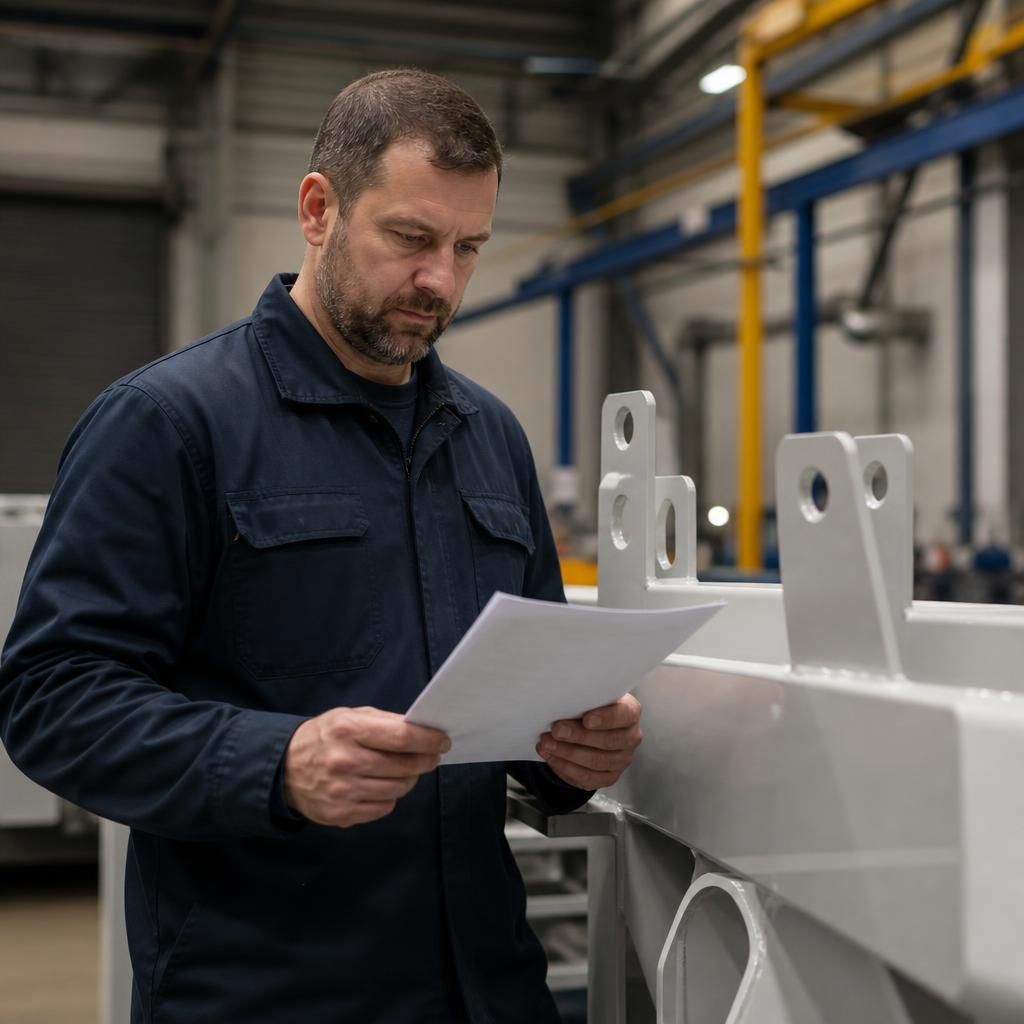
Coating records can reduce future maintenance costs. Keeping the powder specification, colour, surface preparation, cure requirements and application batch details with the component makes later inspection and repair more straightforward. Without this information, identifying a compatible repair material or replacement system may require additional testing, especially where the original finish is textured, metallic or formulated for a demanding environment.
For assets maintained over many years, this traceability supports more consistent repairs and reduces the risk of applying an incompatible coating. It is a practical part of long-term cost control because maintenance decisions can be based on the original system rather than guesswork.