

How can electrostatic powder coating ensure both short-term and long-term protection for metal components in different industrial environments?
Electrostatic powder coating protects metal components by charging the powder so it is attracted evenly to the earthed surface, followed by controlled curing that forms a continuous, strongly bonded finish. The coating system, powder formulation, film thickness and surface preparation can be selected for the component’s environment, helping provide immediate resistance to handling, moisture and wear while supporting long-term protection against corrosion, chemicals and weathering.
Electrostatic powder coating provides short-term and long-term protection by combining a correctly specified coating system with controlled application, curing and inspection. The finished film acts as a designed protective barrier: it must withstand handling and installation initially, then continue to limit the effects of moisture, ultraviolet exposure, chemicals, abrasion and temperature changes throughout the component’s working life.
Short-term protection begins with film integrity. After coating, components may be moved, packed, assembled or installed before they experience their full service conditions. The powder film therefore needs adequate adhesion, consistent coverage and sufficient cure to resist marking, chipping and damage during normal handling. Protection can be reduced by thin areas, pinholes, contamination, impact damage or contact between poorly protected surfaces. Inspection should identify these issues before parts leave the coating process.
Component design also affects early protection. Sharp edges, recesses, holes, welds and threaded sections can be more difficult to coat consistently than broad, accessible faces. Drainage and access should be considered so that cleaning and coating materials can reach relevant surfaces. Where parts are joined after coating, fasteners, cut edges and concealed interfaces may require separate consideration because the coating cannot protect areas that were not exposed during application.
Long-term performance depends on matching the system to the environment. A coating suitable for dry indoor machinery may not be appropriate for outdoor steelwork or equipment exposed to process chemicals. Specification should consider:
- Indoor, low-humidity environments: appearance, impact resistance and resistance to occasional oils or cleaning products may be the main requirements.
- Outdoor environments: the system should be selected for sunlight, rain, condensation, temperature cycling and airborne contamination. Colour and gloss retention may be as important as corrosion protection.
- Industrial and chemical areas: the likely chemicals, concentration, temperature and duration of contact should be identified rather than relying on a general chemical-resistance claim.
- High-wear applications: loading, vibration, rubbing and repeated contact may call for a tougher formulation or a specialist finish, with attention to edges and impact zones.
- High-temperature service: the operating temperature and periods of exposure must be compatible with the selected powder, substrate and any pre-treatment.
Powder chemistry is central to this selection. Polyester-based systems are commonly considered where exterior weathering and colour retention are important. Epoxy-based systems can provide useful resistance in many internal or chemically demanding applications, while hybrid systems may be selected where a balance of properties is required. Specialist coatings, including nylon, can be considered for components subject to particular wear, friction or chemical conditions. The correct choice depends on the actual exposure rather than the component’s name or industry alone.
Substrate and preparation influence the durability of every system. Steel, galvanised steel and aluminium can require different preparation routes because their surfaces differ in oxide layers, contamination and chemical behaviour. Weld residues, oil, mill scale, corrosion and handling contamination can interfere with adhesion. Preparation should therefore be specified alongside the powder, not treated as an unrelated production step. For demanding exposure, a compatible primer or multi-layer arrangement may be considered where it adds a suitable additional barrier and remains compatible with the topcoat.
Application controls help convert the specification into consistent protection. Operators need to control powder coverage, access to complex geometry, masking of functional areas and the condition of the component before coating. Cure should be assessed against the metal’s actual temperature and the powder manufacturer’s requirements, since the air temperature in an oven does not necessarily equal the temperature reached by a heavy component. Batch records, visual checks and appropriate adhesion or film assessment can help identify variation before it becomes a service problem.
Long-term protection is also affected by storage, transport and installation. Coated parts should be protected from abrasion, trapped moisture and unsuitable packing materials. During assembly, lifting points and contact surfaces should be planned to avoid unnecessary damage. Any exposed steel, impact mark or cut edge should be assessed and treated using a compatible repair method; simply covering contamination or corrosion can leave the underlying defect active.
Maintenance extends the useful performance of the coating by removing deposits before they retain moisture or concentrate chemicals at the surface. Cleaning methods should suit the powder system and should not introduce aggressive solvents, excessive pressure or abrasive action without justification. Periodic inspection is particularly valuable on edges, joints, fastener areas, underside surfaces and locations where water or process residue can collect.
For an industrial component, the most reliable specification therefore links four elements: the exposure conditions, the substrate and preparation route, the powder formulation and film requirements, and the inspection and maintenance arrangements. This approach allows electrostatic powder coating to provide a practical level of protection immediately after processing while preserving its barrier, appearance and wear performance over longer service periods in the environment for which it was selected.
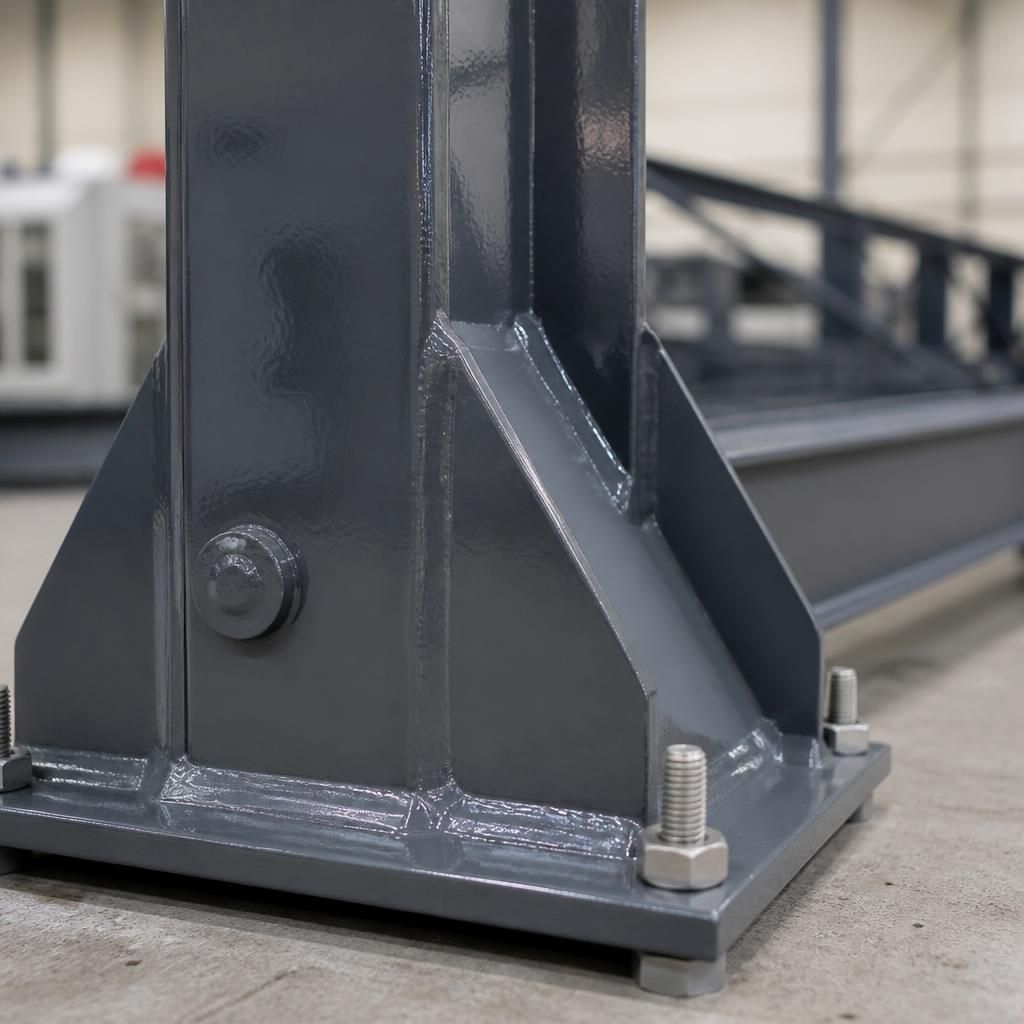
Protection at joints and dissimilar-metal interfaces requires separate consideration. Electrostatic powder coating provides an insulating barrier where it is applied, but a component may still contain exposed fasteners, cut edges, weld zones or contact points between different metals. If moisture reaches these interfaces, electrochemical corrosion can develop even when the main coated surface remains intact.
For this reason, the coating specification should consider the complete assembly rather than the visible faces alone. Compatible fasteners, suitable masking, sealed or well-drained joints and controlled contact between dissimilar metals can help reduce localised corrosion risks. Where a coating will be damaged during assembly, the repair method must be compatible with the original system and the surrounding surface must be clean before treatment.