

What types of materials can be coated using the electrostatic powder coating process?
Electrostatic powder coating is primarily suitable for electrically conductive metal materials, including steel, iron and aluminium, provided the component can be properly grounded and withstand the curing temperature. The process is commonly used for industrial metal parts, frames, panels and fabricated components where a durable, uniform finish is required.
Electrostatic powder coating is best suited to conductive metal substrates that can be cleaned, electrically grounded and heated during curing. In practice, this includes ferrous metals, non-ferrous metals and many fabricated assemblies, although the precise preparation and powder chemistry must match the material.
Commonly coated metal groups include:
- Mild and carbon steel: widely used for brackets, frames, enclosures, machine parts, guards and structural fabrications. The surface normally requires removal of oil, mill scale, rust and other contamination before coating.
- Galvanised steel: can be coated, but the zinc surface needs suitable cleaning and preparation. Outgassing, trapped moisture and poor adhesion can affect the finish if the galvanised layer is not treated correctly.
- Stainless steel: is electrically conductive and may be powder coated where the required appearance or additional protection justifies it. Degreasing and controlled surface preparation are important because its naturally passive surface can reduce adhesion.
- Aluminium alloys: are suitable for powder coating on items such as panels, profiles, housings and fabricated components. Aluminium transfers heat differently from steel, so the curing schedule must be based on the component itself rather than simply the oven air temperature.
- Cast metals: cast iron and aluminium castings can often be coated, provided their pores are clean and dry. Porosity may release gas during curing and cause pinholes or blistering, making preheating or other preparation necessary in some cases.
- Copper and other conductive alloys: may be coated for specialist applications, subject to compatibility between the alloy, preparation system and powder. Their thermal behaviour and surface condition should be assessed before production coating.
The base material is only one part of the decision. The component must also tolerate the powder manufacturer’s curing conditions without distortion, loss of temper, damage to seals or degradation of attached parts. Assemblies containing plastics, rubber, adhesives, bearings, electronics or dissimilar metals may therefore need to be dismantled, masked or assessed separately.
Shape and construction also influence suitability. Hollow sections, deep recesses and enclosed cavities can retain moisture or cleaning chemicals, while sharp edges may receive less powder than broad, accessible faces. Drainage and vent holes can be required on fabricated sections, and threaded holes, precision bores and mating faces usually need masking to preserve their dimensions.
Uncoated non-conductive materials such as ordinary wood, glass, most plastics and untreated rubber are not standard candidates for conventional electrostatic powder coating. They do not provide the electrical path needed to attract and hold the powder in the normal way, and many cannot withstand the curing temperature. Some specialist non-metallic substrates can be coated only when they have a suitable conductive treatment and are specifically designed for the selected powder system; this should be confirmed through testing rather than assumed.
Where a component combines different metals, coating performance can depend on their contact, pretreatment and relative expansion during heating. Masking may be preferable to coating surfaces that must remain electrically conductive, move against another part or meet a tight dimensional tolerance. Samples or test pieces are useful for checking adhesion, appearance, edge coverage and curing before a large batch is processed.
For industrial work, the most useful information to provide is the substrate or alloy, previous surface treatment, component dimensions, areas that must remain uncoated, intended service conditions and any temperature limits. This allows the preparation method and powder type to be considered together, rather than selecting a finish based on colour alone. Powder-coating specialists serving manufacturers and fabricators across the Midlands can assess these details and arrange collection and delivery where required.
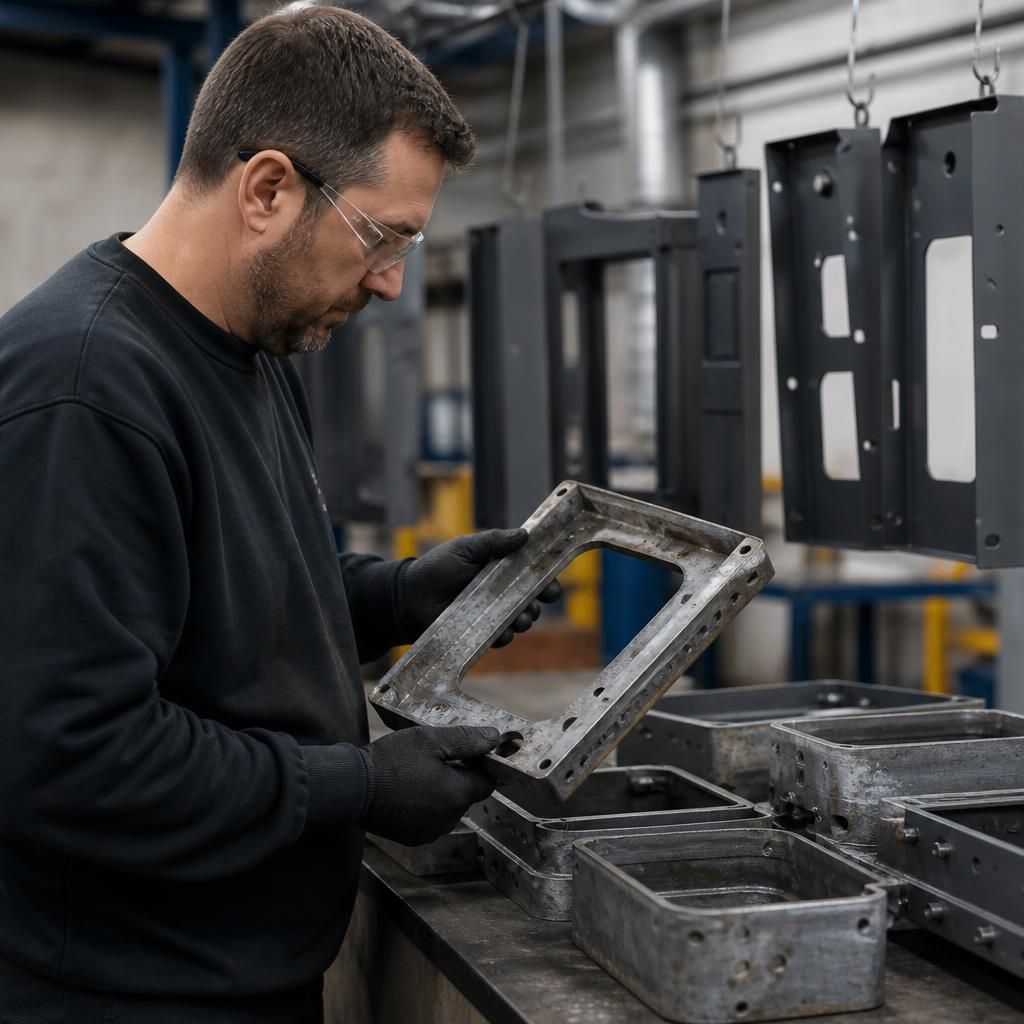
A metal component’s existing surface treatment can be as important as its base material when assessing suitability for electrostatic powder coating. Previously painted, plated or powder-coated parts may require stripping or specialist preparation, because the old layer can affect electrical grounding, adhesion, surface profile and the release of gases during curing.
Assessment should consider:
- Whether the existing coating is firmly bonded or showing flaking, corrosion or contamination
- Whether stripping could alter critical dimensions, edges or threaded features
- Whether residues from paint, oils or plating chemicals could interfere with pretreatment
- Whether a test area or sample component is needed to confirm adhesion and appearance
This is why two parts made from the same metal may require different coating routes. The substrate, existing finish and intended service conditions should be reviewed together before selecting the powder system.