

What is the maintenance process for components after electrostatic powder coating?
After electrostatic powder coating, allow components to cool fully before inspecting the finish for coverage, adhesion, damage or contamination. Maintain the coating by cleaning with mild detergent and water, avoiding abrasive tools and harsh chemicals, and promptly repairing any chips or scratches to prevent corrosion reaching the substrate.
The maintenance process for powder-coated components consists of planned inspection, suitable handling, controlled cleaning, protection from damaging conditions and timely repair of defects. Powder coating reduces exposure of the metal substrate to moisture, chemicals and abrasion, but it is not maintenance-free; the required level of care depends on the coating specification and the component’s working environment.
Establish a maintenance schedule based on how the component is used. Parts installed indoors in a clean, dry area generally require less attention than those exposed to rain, condensation, road salt, industrial dust, chemicals, ultraviolet light or repeated abrasion. Components used in demanding environments should be checked more frequently, particularly around edges, joints, fixings, recesses and areas where water or contaminants may collect.
Routine checks should look for changes that could allow corrosion or mechanical damage to develop. Relevant signs include lifting or blistering, cracking, flaking, unusual staining, loss of gloss, exposed metal and damage caused by impact or contact with other parts. Pay particular attention to cut-outs, drilled areas, corners and interfaces between coated components and other materials, as these locations can experience greater wear than broad, flat surfaces.
Handle components carefully during storage, transport and installation. Use separators or protective packaging where parts could rub together, and avoid dragging coated surfaces across benches, pallets or vehicle floors. Store components in a dry, well-ventilated location, raised from standing water and protected from contamination. Do not stack parts in a way that concentrates pressure on corners or finished faces.
Fasteners, brackets, seals and adjoining materials should also be kept compatible with the coating and the intended environment. Trapped moisture at a joint can create a localised corrosion risk even when the surrounding finish remains intact. Good drainage, appropriate spacing and the removal of debris from contact points help prevent this type of deterioration.
Where components are exposed to process chemicals, oils, solvents or cleaning agents, confirm that the coating is suitable for those substances. Chemical contact should not be assumed to be harmless simply because the finish appears sound. Follow the coating manufacturer’s care guidance and remove contamination using a method that will not soften, stain or abrade the surface.
Minor damage should be assessed rather than covered indiscriminately. A small mark on a non-critical surface may need a different treatment from damage that exposes the substrate, sits in a wet area or affects a load-bearing or safety-related component. Touch-up products can improve local protection, but they may not reproduce the original appearance, film build or performance. For larger damaged areas, widespread corrosion or loss of adhesion, the appropriate solution may be professional preparation and recoating rather than repeated local repairs.
Before any repair, identify the coating type and the cause of the damage. Impact, incorrect assembly, chemical exposure, excessive friction and unsuitable storage each require different corrective action. Simply applying fresh material over contamination, loose coating or active corrosion can conceal the problem without restoring a sound protective system.
For business-critical components, maintain a basic record of the coating specification, installation date, operating environment, inspections and repairs. This makes it easier to identify recurring damage, demonstrate that maintenance has been carried out and decide when a component requires refurbishment. If a coating is failing across multiple parts in the same location, review the original preparation, application, curing, design and service conditions rather than treating each defect as an isolated issue.
A specialist powder-coating provider can advise on the most suitable repair or recoating route when damage is extensive, the substrate is corroded or the component operates in a particularly aggressive environment. The objective is to preserve the integrity of the complete coating system, not merely improve its visible appearance.
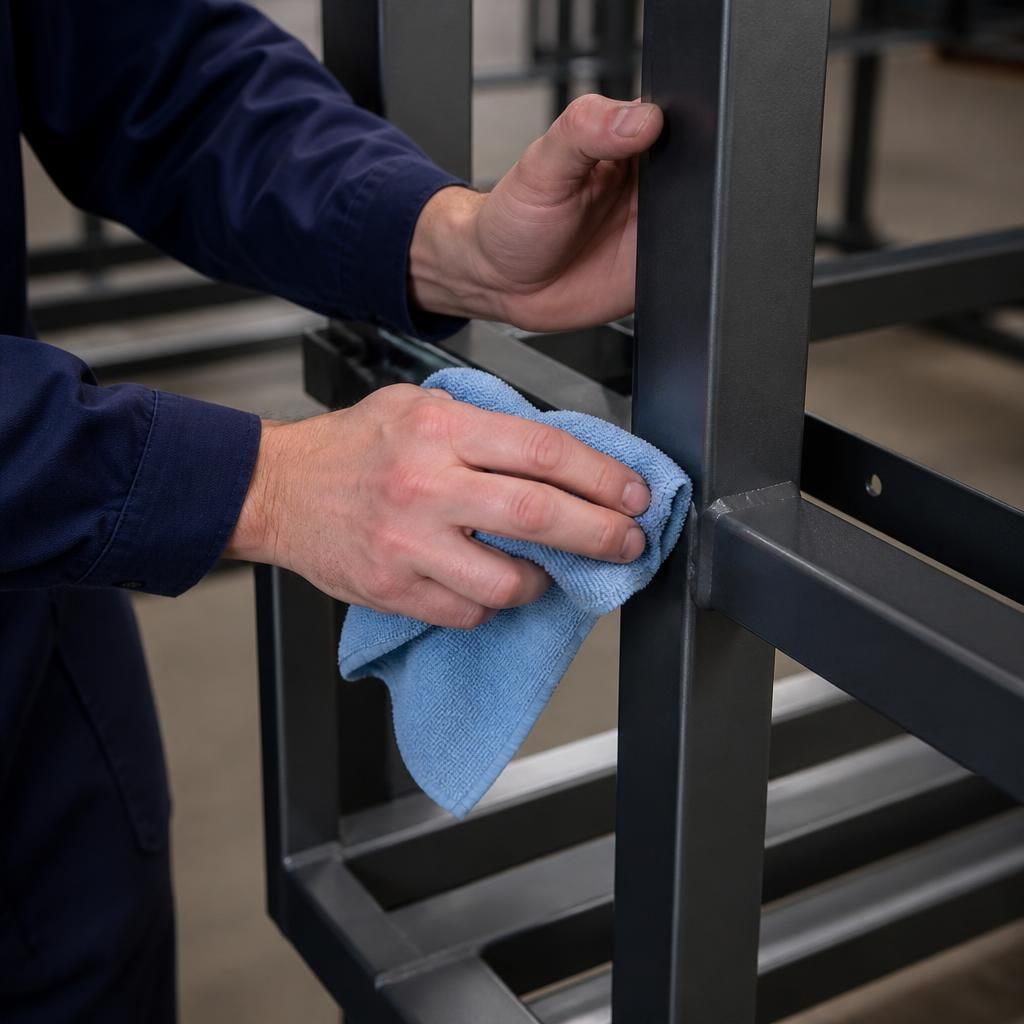
Cleaning should remove deposits before they become a coating problem. Dust, salt, process residue and other contaminants can hold moisture against the surface or affect the finish chemically. Clean the component with clean water and a mild detergent using a soft cloth or sponge, working from the least contaminated areas towards heavier deposits. Rinse thoroughly so detergent and loosened residue are not left on the coating, then allow the surface to dry completely before inspection.
Do not use abrasive pads, aggressive solvents or unapproved cleaning compounds to remove stubborn marks. If a deposit cannot be removed using a coating-compatible method, record its location and identify the substance before trying a stronger treatment. This prevents an attempt to improve the appearance from creating permanent staining, loss of gloss or surface damage.