

How can I ensure the longevity and performance of powder-coated components in harsh industrial environments?
Maximise the longevity and performance of powder-coated components by specifying a coating suited to the exposure conditions, preparing the metal thoroughly, and controlling application and curing. Correct component design, protection from mechanical damage, and routine inspection and cleaning also help preserve the finish in harsh industrial environments.
Long-term performance in harsh industrial environments depends on managing the complete coating system throughout its service life, not simply choosing a durable powder. The most reliable approach combines exposure-specific specification with controlled component design, suitable interfaces and fasteners, defined acceptance criteria, appropriate handling, and a documented response to early coating defects.
Begin by mapping the actual conditions the component will experience. Record contact with moisture, condensation, salt, process chemicals, oils, solvents, abrasive dust, ultraviolet light and elevated or fluctuating temperatures. Also consider whether contaminants will remain trapped against the surface or whether the component will be exposed to repeated washing, immersion or chemical splash. A coating that performs well in a dry internal plant may not be suitable for an external structure, a coastal location or equipment exposed to aggressive process fluids.
Where conditions are uncertain, use representative samples or test panels before committing to a production specification. Samples should reflect the actual substrate, edge geometry, joint arrangements and intended coating system. Assessment should consider adhesion, appearance, corrosion resistance and behaviour after exposure to the relevant chemicals or environmental cycles. This is more useful than relying on a generic description such as ‘heavy duty’, because the term does not define resistance to a particular chemical, temperature range or exposure category.
Component design has a significant influence on service life. Reduce features that can retain water, dirt or chemicals, and provide drainage where hollow sections, folded parts or recesses are unavoidable. Pay particular attention to seams, sharp transitions, enclosed sections and areas where two parts meet. These locations can remain damp for longer than exposed faces and may become the starting point for corrosion or coating breakdown.
Interfaces require separate consideration. Dissimilar metals can create galvanic corrosion when moisture is present, particularly where the coating is damaged or where an uncoated fixing contacts the substrate. Specify compatible fasteners, washers, seals or isolating materials where appropriate. Do not assume that a coated panel, bracket or frame will protect an unsuitable adjoining material; the complete assembly must be assessed.
Define measurable acceptance requirements before production. These may include:
- the permitted coating thickness range for the specified system;
- acceptable limits for runs, pinholes, craters, inclusions, orange peel or colour variation;
- adhesion requirements appropriate to the substrate and service conditions;
- corrosion-resistance testing or other verification relevant to the exposure;
- areas that must remain free from coating, such as threads, earthing points, bearing seats or close-tolerance interfaces.
Thickness should be assessed at representative locations rather than inferred from a single reading. Excessive thickness can affect fit, edge appearance and curing behaviour, while insufficient thickness may leave the substrate less protected than intended. Measurements and inspection results should be retained with the job information so that recurring issues can be traced to a particular component, batch or process stage.
Protect the finish after coating by controlling how components are moved, stacked and installed. Use clean separators and avoid dragging parts across one another or placing coated faces against contaminated surfaces. Packaging should prevent rubbing, moisture retention and contact with materials that can mark or soften the finish. If components are stored before installation, keep them dry and ventilated rather than allowing condensation to form beneath wrapping or inside enclosed sections.
Installation practices can also determine whether the coating remains effective. Prevent tools, clamps and lifting equipment from marking the surface, and avoid forcing coated parts into misaligned assemblies. Where cutting, drilling, welding or grinding is necessary after coating, treat the exposed areas as a new corrosion risk. Remove debris, protect the surrounding finish from heat and sparks, and use a repair system that is compatible with the original coating and the exposure conditions.
Repairs should be planned rather than carried out with an unsuitable general-purpose paint. The repair method should state how damaged material is removed, how the exposed area is treated, how the surrounding coating is feathered, and how the replacement protection is applied. On critical components, record the location and nature of each repair. Repeated damage in the same position may indicate an installation, handling or design problem that needs correcting at source.
Maintenance should be proportionate to the environment. In addition to removing deposits, check for changes that indicate a developing failure: blistering, lifting at edges, rust staining, loss of adhesion, cracking, unusual colour change, chalking, or powdering. Give extra attention to joints, fasteners, drainage points, undersides and locations where process residues collect. Early localised treatment is generally easier to control than allowing corrosion to spread beneath an apparently intact film.
Keep a coating record for components exposed to demanding service. It can include the substrate, coating specification, batch identification, preparation and application checks, curing information, inspection results, installation date, exposure conditions and subsequent repairs. This record supports consistent replacement decisions and helps establish whether a problem arises from the coating specification, the component design, assembly conditions or the operating environment.
Finally, review the specification when the service conditions change. A new cleaning chemical, altered process temperature, increased outdoor exposure or different production arrangement can invalidate assumptions made during the original selection. Treating the coating as part of an engineered protection system, with defined controls from specification through installation and maintenance, gives powder-coated components the best prospect of retaining their protective and functional performance in harsh industrial use.
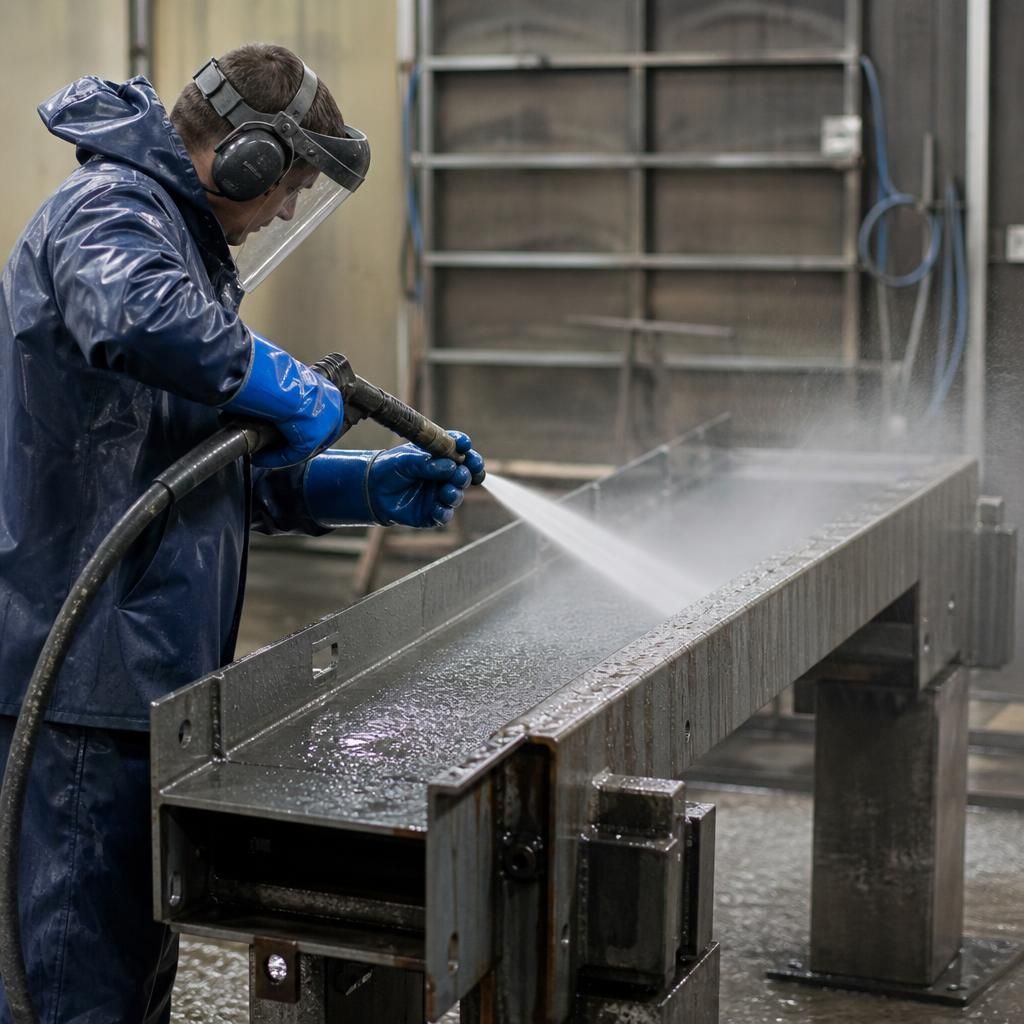
Surface preparation is a primary determinant of powder-coated component life because the coating can only protect metal effectively when it bonds to a clean, stable surface. Oil, grease, mill scale, rust, moisture and fabrication residues can create weak areas that later blister, flake or allow corrosion to develop beneath the film.
The preparation route should match the substrate and its condition. It may include degreasing, abrasive cleaning, removal of corrosion and a suitable chemical pre-treatment before powder application. Fabrication residues such as weld spatter, grinding dust and sharp burrs should also be addressed, as they can disrupt coating coverage or create points of early failure. Before coating, the prepared surface should be checked for cleanliness, dryness and visible contamination, with any delay between preparation and application controlled to prevent deterioration.
Discuss Powder Coating for Harsh Industrial Environments
Share your component details, substrate and expected exposure conditions with a powder-coating specialist to review the proposed protection system. Powder-coatings.co.uk can advise on suitable industrial coating options for projects across the Midlands and surrounding areas, with collection and delivery options available.