

What maintenance practices are essential for maximising the longevity and performance of a conveyor powder coating system?
Maximise a conveyor powder coating system’s longevity and performance through scheduled inspection, cleaning and servicing of the conveyor, spray equipment, curing oven, filters and extraction system. Check coating thickness and cure quality, maintain correct operating settings, replace worn or contaminated components promptly, and keep maintenance records so developing faults can be identified before they cause defects or unplanned downtime.
Maximising the life and performance of a conveyor powder coating system depends on a structured preventive-maintenance programme covering mechanical movement, electrical controls, compressed air, powder handling, safety devices and process consistency. The most effective approach combines manufacturer-recommended servicing with condition-based checks, documented fault trends and planned replacement of consumable parts before they affect production.
Establish a maintenance baseline. Record the system’s normal operating condition when it is producing acceptable results. Useful baseline information includes conveyor speed, motor load, air pressure, booth pressure, oven temperature distribution, recovery performance and the condition of finished parts. Future readings can then be compared with this reference to identify gradual deterioration rather than waiting for a visible coating fault or mechanical failure.
Maintain the conveyor’s mechanical integrity. Conveyor systems are exposed to continuous movement and variable loads, so attention should be given to chain elongation, trolley movement, drive sprockets, bearings, hangers and load bars. Lubricate only where the equipment design permits it, using the correct lubricant and preventing oil or grease from reaching coating surfaces. Check that the conveyor remains correctly aligned and that carriers do not wobble, bind or accumulate impact damage. Uneven movement can alter the time a component spends in each process zone and may produce inconsistent film build or curing.
Loading practices also affect mechanical life. Components should be distributed within the permitted load range, with sufficient clearance to prevent contact between parts, booth equipment and oven internals. Overloading or unbalanced loading places unnecessary stress on the drive and can transfer vibration through the line. Hangers and fixtures should be rotated through a cleaning and repair cycle so that buildup, distortion and poor electrical contact do not become normalised.
Protect electrical and control equipment. Control cabinets, sensors, variable-speed drives and junction boxes should be kept free from powder contamination, excessive heat and moisture. Check that cabinet cooling paths are not obstructed and that cable glands, connections and enclosures remain secure. Sensors used for position detection, temperature control or interlocking should be tested as part of a planned safety and controls regime, rather than bypassed when faults occur. Any recurring alarm should be investigated at source; repeatedly resetting a warning can conceal a failing sensor, loose connection or developing control fault.
Keep an up-to-date record of control parameters and approved programme changes. Unauthorised adjustments can make fault-finding difficult and may cause apparently unrelated changes in coating quality. Where the system has data logging or alarm history, use it to compare faults with production batches, line speed changes, material changes and maintenance work.
Manage compressed air quality. Powder application equipment relies on clean, dry and stable compressed air. Water, oil or excessive pressure fluctuation can affect powder transport, fluidisation and atomisation. Drain moisture separators and receivers in accordance with the air-system design, maintain filters, and investigate pressure drops rather than compensating by changing spray settings. Air hoses and fittings should be checked for leaks, abrasion and insecure connections. A small leak can reduce system stability and increase demand on the compressor.
Control powder handling and recovery. Powder should be stored sealed and protected from moisture, contamination and unsuitable temperature conditions. Use a clear stock-rotation system and keep reclaimed powder separate from virgin material until the approved mixing and quality-control procedure has been followed. Do not allow different colours or chemistries to become mixed in shared equipment. During colour changes, remove residual powder from areas where it could contaminate the next batch, including hoses, pumps, feed equipment, booth surfaces and recovery routes. The cleaning method should suit the powder and equipment, since aggressive or unsuitable cleaning can damage seals, hoses and grounded surfaces.
Preserve grounding and contact points. Reliable earthing is essential for efficient electrostatic transfer and consistent deposition. Contact surfaces on hangers, hooks, fixtures and the conveyor should be kept free from insulating powder buildup, paint or corrosion. Check continuity using suitable test equipment and examine earth connections for looseness or damage. Poor contact can appear as weak transfer, uneven coverage or increased powder accumulation, while also creating a safety concern. Grounding checks should form part of the maintenance programme, not only a response to application problems.
Look after fixtures and product presentation. Fixtures should hold parts securely without shielding critical faces or creating excessive Faraday-cage effects in recesses. Bent hooks, worn contacts and unsuitable spacing can cause defects that are incorrectly attributed to the spray equipment. Standardise fixture designs where practical, identify them for traceability and remove damaged fixtures from use. Periodically review whether fixture wear or changes in component geometry are affecting access, drainage, powder coverage or curing.
Use planned shutdowns effectively. Group intrusive work into controlled maintenance windows and prepare the necessary parts, tools and isolation procedures in advance. Before work begins, isolate electrical, pneumatic, thermal and mechanical energy sources in accordance with the site’s lockout and permit arrangements. After maintenance, verify guards, interlocks, emergency stops and protective devices before returning the line to production. A controlled restart should include checks for abnormal noise, vibration, air loss, movement or alarms.
Keep critical spares available. Identify parts whose failure would stop the line or compromise coating quality, such as bearings, seals, sensors, air fittings, filters, hooks, nozzles and drive components. Store spares in conditions suitable for the material and record part specifications so that an incorrect substitute is not fitted during an urgent repair. Consumables and replacement parts should be inspected for damage before installation, particularly where contamination could transfer to the coating process.
Review maintenance evidence and recurring defects. Maintenance records are most useful when they include the symptom, probable cause, corrective action and post-repair result. Analyse repeated defects such as poor transfer, uneven coverage, conveyor stoppages, contamination or temperature variation as patterns rather than isolated incidents. Root-cause analysis may show that a mechanical alignment issue, air-quality problem, grounding fault or loading practice is responsible for repeated coating failures. Maintenance plans should be revised when the evidence shows that a task is too infrequent, incorrectly specified or being performed without adequate verification.
Finally, ensure that operators and maintenance personnel understand the system’s operating limits, isolation procedures and escalation points. Clear responsibilities reduce the risk of minor abnormalities being overlooked, while planned servicing by suitably competent personnel helps preserve the conveyor, application equipment and associated safety systems over their working life.
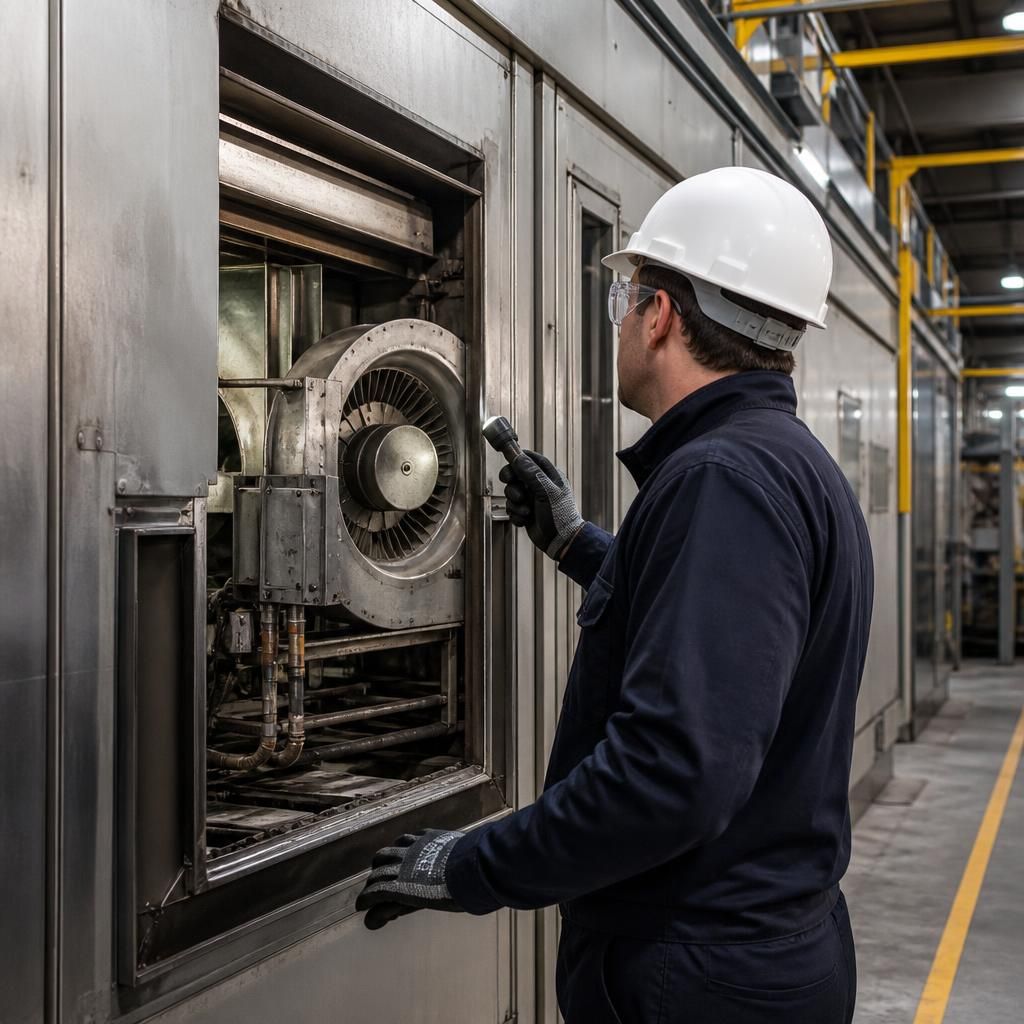
The curing oven requires particular attention because stable heat transfer determines whether the powder film develops the required properties. Inspect heaters or burners, circulation fans, ducting and oven seals for contamination, damage or restricted airflow. Powder deposits on these components can affect heat distribution and may become a contamination or fire risk if allowed to accumulate.
Temperature indicators should be checked against independent measurement equipment at planned intervals, with particular attention to differences between zones and areas where components enter or leave the oven. Where product size, loading density or conveyor speed changes, confirm that the revised process still provides adequate time at the required part temperature. Keep records of thermal checks alongside coating inspection results so that gradual loss of heating performance can be identified before it produces under-cured or inconsistent finishes.