

What are the main components of a conveyor powder coating system, and how do they contribute to the overall coating process?
A conveyor powder coating system typically comprises a conveyor, pre-treatment and drying stages, powder application equipment, a curing oven, extraction and filtration equipment, and control systems. Together, these components move and prepare metal parts, apply an even powder layer, cure it into a durable finish, and manage airflow, overspray and process settings.
The main components of a conveyor powder coating system are the handling and fixturing arrangement, grounding provision, powder application hardware, booth airflow and recovery equipment, oven heating controls, and process monitoring devices. Their contribution is interdependent: parts must be presented consistently, charged powder must reach the intended surfaces, the deposited film must remain stable until curing, and operating conditions must be controlled and recorded.
Handling, loading and fixturing
The conveyor is only one part of the handling arrangement. Loading stations, hooks, jigs and carriers determine how each component is supported and orientated throughout the line. Suitable fixtures expose the required faces, reduce contact shadows and keep parts secure as they pass through each stage. Their design must also allow powder to reach recesses and permit uncured coating to remain undisturbed.
Fixture design affects both coating quality and production control. Contact points should be placed where any small uncoated area will not affect the finished component, while hooks and carriers need enough rigidity to prevent swinging. In a batch operation, carriers may also be configured for different component sizes or weights. Regular cleaning is important because accumulated cured powder can alter the contact position and reduce repeatability.
Electrical grounding and charge control
Grounding provides the reference needed for electrostatic powder application. The workpiece, hanger and conveyor path must maintain a reliable electrical connection so charged powder is attracted to the metal surface. Poor contact can cause light coverage, uneven deposition, excessive powder around edges or inconsistent transfer between batches.
Grounding points therefore need to be considered as part of the line design rather than treated as a separate safety detail. Coating build-up on hooks and contact surfaces can interrupt continuity, making inspection and cleaning essential. The arrangement must also be compatible with the component material, geometry and required finish.
Powder delivery and application equipment
The application package normally includes a powder feed container, fluidising or conveying equipment, hoses, guns and gun-positioning devices. The feed equipment keeps powder moving consistently, while the guns control the electrostatic charge and the volume of powder directed towards the component. Hose routing and gun placement influence whether powder arrives evenly at flat faces, edges, internal sections and recessed areas.
Automatic guns or reciprocating units can provide repeatable coverage on regular components. Manual guns remain useful for complex shapes, touch-up and areas that require an operator to adjust the spray pattern. The important settings include powder output, air volume, voltage or current control, spray pattern and gun-to-part position. These settings must be matched to the powder, component geometry and required film build rather than adjusted in isolation.
Booth, airflow and powder recovery
The booth encloses the application zone and helps keep the spray environment controlled. Its airflow pattern draws airborne overspray away from surrounding equipment and towards the extraction path without disturbing powder already deposited on the component. The booth arrangement also separates colour or material changes from areas where stray powder could contaminate the finish.
Recovery equipment collects usable overspray where the process and powder specification permit it. Cyclones, cartridge filters, ducting and collection vessels each have a role in moving and separating airborne powder. A recovery arrangement must balance capture performance with the risk of pulling powder away from the workpiece. Filter loading, air velocity and seals can therefore affect both finish consistency and powder housekeeping.
Oven heating and temperature measurement
The curing oven contains several functional elements: an insulated enclosure, burners or electrical heating elements, circulation fans, ductwork, exhaust arrangements and temperature sensors. The fans distribute heat around the load, while the sensors allow the control system to regulate the operating condition. Good circulation is needed to limit hot and cold areas, particularly where components vary in size or obstruct airflow.
Curing is determined by the metal part reaching the powder manufacturer’s specified metal temperature for the required dwell time, not simply by the air temperature shown on the oven display. For that reason, production teams may use temperature recording equipment on representative components during validation. Oven capacity, conveyor speed, loading density and component mass all influence whether the coating receives the intended cure.
Control, monitoring and interlocks
The control panel coordinates conveyor movement, application settings, extraction, heating and alarms. A programmable control system can maintain a repeatable sequence and provide operators with information about temperature, line speed, fan operation and fault conditions. Interlocks can prevent unsafe or unsuitable operation when essential services such as extraction, airflow or heating are not functioning correctly.
Monitoring devices may include temperature probes, airflow indicators, pressure gauges, powder-level sensors and conveyor-position controls. These instruments help identify drift before it becomes a visible coating defect. Recorded settings also support traceability when a manufacturer needs to investigate variation between loads or confirm that a defined process window was maintained.
Inspection and process support
Although inspection equipment is not part of the coating line’s mechanical path, it is an important supporting component. Operators may check appearance, coverage, adhesion, film thickness and cure using methods appropriate to the specification. The results can indicate whether the issue originates in grounding, spray settings, oven conditions, contamination or part preparation.
When assessing a conveyor system, the key question is not whether each item exists independently, but whether the components are correctly matched. Handling capacity must suit the required load, application equipment must reach the part geometry, extraction must support the booth design, and oven performance must suit the material and production sequence. This compatibility determines whether the line can deliver a consistent finish across different metal components and batch requirements.
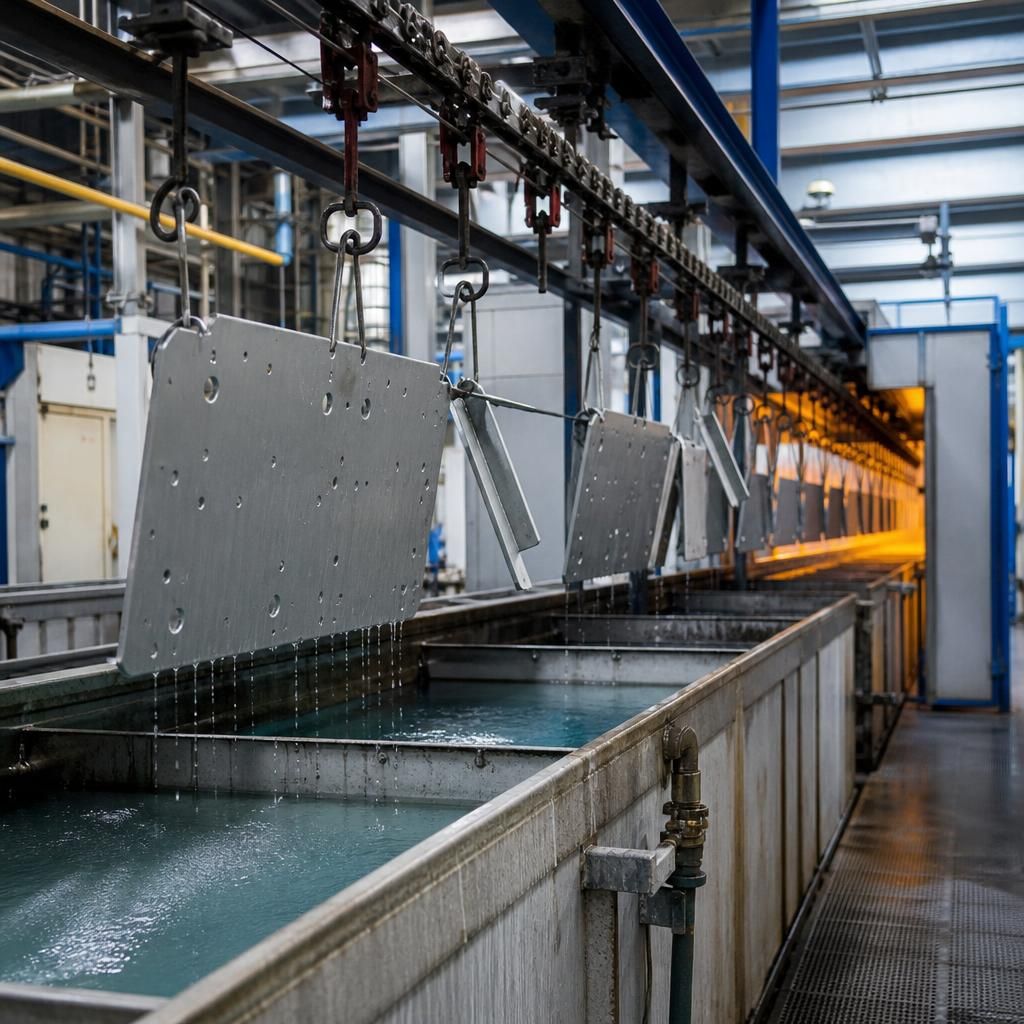
The pre-treatment and drying section prepares the metal surface before powder is applied. It commonly includes cleaning stages, rinse stages, pumps, spray equipment and a drying zone, with each part removing contaminants or moisture that could interfere with coating adhesion.
Consistent preparation is particularly important for components exposed to handling, storage residue or manufacturing oils. The drying stage must leave the part free from retained moisture before it enters the spray booth; otherwise, contamination or trapped water can contribute to surface defects and reduce the reliability of the finished coating. This section therefore links the incoming metal condition to the performance of every later stage in the conveyor powder coating system.
Discuss Your Conveyor Powder Coating System Requirements
If you are assessing a conveyor powder coating system, discuss your component dimensions, materials, loading method and required finish with the Powder-coatings.co.uk team. This information helps identify a suitable system configuration and coating process for your application.