

What are the key components and features to consider in a high-performing conveyor powder coating system?
A high-performing conveyor powder coating system combines effective metal pretreatment, controlled powder application, dependable conveyor movement, correctly specified curing, efficient filtration and precise process controls. The key features are consistent part presentation, accurate temperature and airflow management, suitable powder recovery, accessible maintenance points and a configuration matched to the component size, coating specification and production volume.
A high-performing conveyor powder coating system is defined by how consistently it converts prepared metal parts into fully cured, specification-compliant products at the required production rate. Its effectiveness depends not only on the booth, oven and conveyor, but also on the interfaces between each stage, the suitability of the equipment for the parts being processed and the ability to monitor, adjust and maintain the complete line.
Part loading and unloading arrangements should be treated as core system features rather than peripheral equipment. Loading stations need to present components in a repeatable orientation without damaging coated surfaces or creating unsafe manual handling conditions. Unloading arrangements should provide sufficient access for inspection, transfer and packaging. Where parts vary substantially in size or shape, the system may need adjustable loading positions, different hanging methods or separate routes for unusually heavy or awkward components.
Fixtures and hanging equipment must provide secure support while exposing as much of the surface as possible. Poorly designed hooks can create excessive contact marks, allow parts to swing or restrict powder access to recesses. A suitable fixture design also provides a reliable electrical path through the component, which is important for powder transfer and finish consistency. Contact points should be positioned in areas that are either concealed, easily touched up or acceptable within the product specification.
Booth access and internal layout affect both process control and usability. The booth should provide adequate clearance for the largest component, allow guns or applicators to be positioned correctly and give operators access to inspection and cleaning points. Smooth, accessible internal surfaces help limit powder build-up. Where different colours or materials are processed, the layout should support controlled changeovers and prevent residue from a previous run contaminating the next one.
Application equipment flexibility is particularly important where the system handles more than one component family. The equipment should accommodate the required powder type, part geometry and finish specification without relying on excessive manual adjustment. Useful features can include independently adjustable application parameters, suitable gun positioning, recipe storage and controls that make approved settings clear to the operator. These features help distinguish a repeatable process from one that depends heavily on individual technique.
Electrical earthing and process monitoring deserve specific attention. Poor earthing can reduce powder transfer, increase overspray and contribute to uneven coverage. The system should make earthing points accessible for inspection and provide a means of identifying faults before they affect a large batch. Monitoring may also include powder feed conditions, booth status, oven operating conditions, conveyor status and fault history. Clear alarms and readable displays are more useful than controls that simply show that the system is running.
The control architecture should match the complexity of the line. A smaller installation may require straightforward local controls, while a larger production system may benefit from recipe management, interlocks, event logging and connection to wider production monitoring. Controls should prevent incompatible stages from operating in an unsafe sequence; for example, the system should manage the relationship between conveyor operation, application equipment and curing equipment. Password access or role-based permissions can help prevent unapproved changes to critical settings.
Oven construction and heat distribution should be assessed across the usable working volume, not only at one convenient measurement point. A suitable system should minimise cold spots, avoid excessive heat exposure and allow the actual metal temperature to be checked for representative components. This is especially important where parts have different thicknesses or thermal masses. The oven design should also provide access for inspection of burners, heating elements, insulation, seals and air circulation equipment.
Cooling and post-cure handling influence when coated parts can be inspected, moved or packed. The cooling section should be compatible with the part material, coating specification and line speed. It should not introduce contamination, contact damage or uncontrolled handling while the coating is still vulnerable. Transfer points between hot, cooling and finished-product areas should be designed to avoid bottlenecks.
Safety features and containment should be integrated into the design rather than added later. Relevant considerations include guarding around moving equipment, emergency stops, access doors, interlocks, fire protection arrangements, safe cleaning procedures and control of airborne powder. The specification should account for the characteristics of the powder used and the workplace risk assessment. Operators also need clear procedures for starting, stopping, cleaning, fault recovery and changing materials.
Maintainability and spare-parts support are practical indicators of system quality. Motors, sensors, filters, guns, pumps, burners, seals and electrical components should be reachable without dismantling unrelated equipment. Diagnostic information should help maintenance staff identify the source of a fault rather than only displaying a general alarm. Documentation should include operating instructions, electrical drawings, recommended service tasks and component identification.
Quality assurance features enable the finished coating to be assessed against the required specification. Depending on the application, this can include checks for appearance, coverage, adhesion, film thickness, cure and contamination. The system should make it possible to associate process settings and inspection results with a batch or product type. This supports investigation when a defect occurs and helps separate equipment faults from problems relating to parts, powder, preparation or handling.
Before selecting a system, the specification should therefore define:
- the largest, smallest, heaviest and most geometrically complex components;
- the range of coating materials, colours and finish requirements;
- the required production mix and acceptable changeover method;
- loading, unloading, inspection and packaging arrangements;
- required monitoring, records, alarms and operator permissions;
- cleaning, maintenance, access and spare-parts requirements; and
- the safety controls and site services needed for installation.
The strongest conveyor powder coating system is not necessarily the one with the greatest number of features. It is the configuration in which equipment capacity, part handling, process control, safety, quality checks and maintenance access are matched to the actual production requirements. A detailed specification and trial assessment can identify whether the proposed arrangement will remain suitable when component dimensions, coating materials or production demands change.
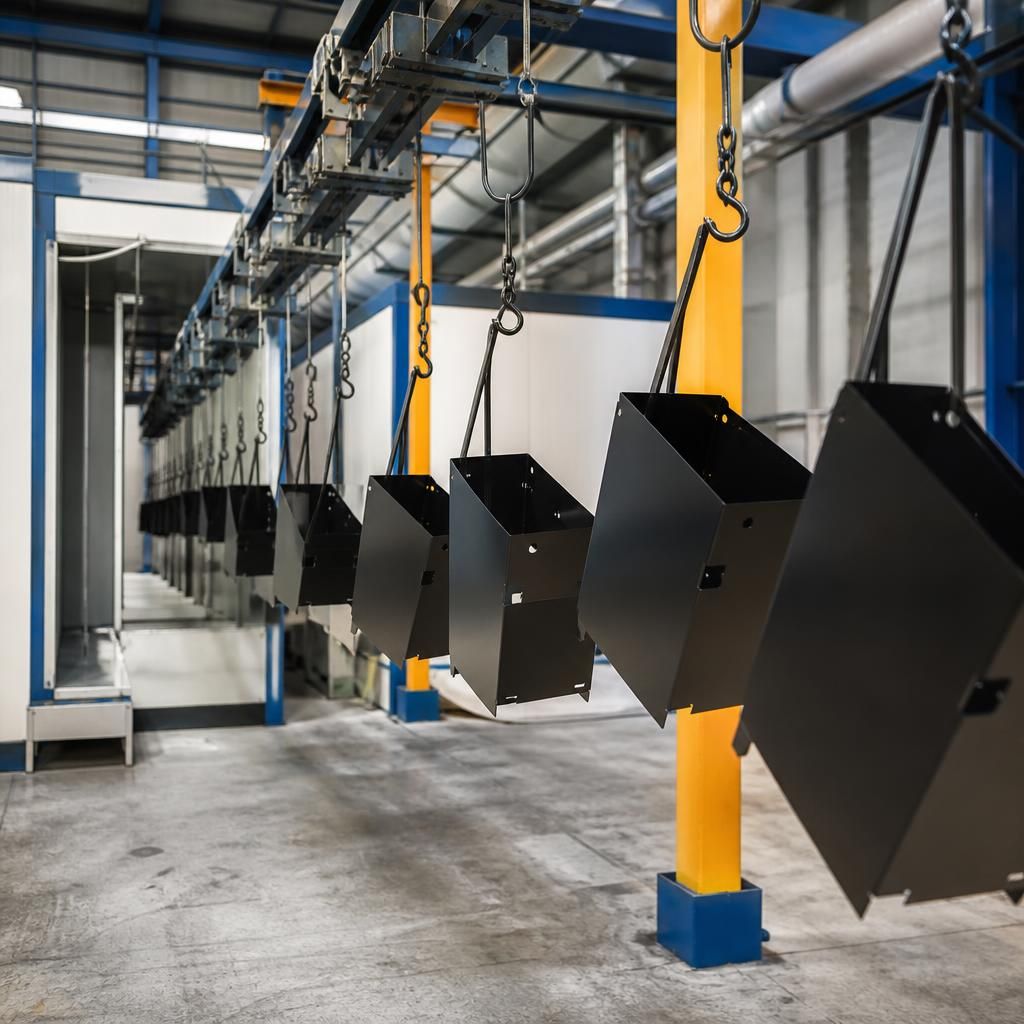
Consistent loading density is a key feature of conveyor powder coating performance. Hanger spacing, component orientation and the number of parts carried through each section must be controlled so that parts do not shield one another from the powder spray or restrict airflow in the curing oven. Overloading a conveyor can produce variable coverage, uneven heating and unpredictable dwell conditions, even when the booth and oven are correctly specified.
A suitable system should therefore support a repeatable loading pattern for each component family. Parts with similar dimensions and thermal characteristics can often be grouped to create more stable process conditions, while unusually large or heat-retentive components may need wider spacing or a different conveyor speed. This makes the loading plan an important part of system design, rather than simply a decision made at the start of production.