

What are the environmental benefits of using conveyor powder coating systems in industrial painting processes?
Conveyor powder coating systems can reduce the environmental impact of industrial painting by using solvent-free powder, limiting airborne emissions and applying material efficiently to metal components. Controlled, repeatable application and oven curing can also reduce overspray, coating waste and the need for frequent refinishing.
Conveyor powder coating systems can improve the environmental performance of industrial painting mainly by reducing water use, enabling more controlled energy consumption and supporting a longer service life for coated metal parts. Their benefits depend on the complete process design, including pretreatment, oven operation, conveyor loading, powder management and the source of energy used.
Lower water and chemical demand
Unlike many conventional wet-paint processes, powder coating does not require liquid paint carriers. This can reduce the handling of solvent-containing liquids and the associated need for cleaning fluids. A well-designed line can also limit the volume of contaminated wash water generated during equipment cleaning.
Water use is still relevant where parts undergo chemical pretreatment or rinsing before coating. Environmental performance therefore depends on selecting an appropriate pretreatment method, controlling rinse stages and maintaining filtration or treatment equipment. Counter-current rinsing, closed-loop water management and careful chemical dosing can help reduce the amount of fresh water and treatment chemicals required. These measures are part of the wider conveyor line rather than a benefit created by the conveyor alone.
More efficient use of oven energy
Curing ovens are usually the largest energy user in a powder coating line. Conveyor systems allow the speed, dwell time and part spacing to be coordinated with the coating specification, helping the oven operate at a consistent throughput rather than repeatedly heating an irregular load. This can avoid unnecessary heating of empty conveyor space or under-filled production runs.
Energy performance can also be improved through insulated oven panels, correctly sized burners or heating elements, automatic temperature controls and extraction systems that are balanced to the process. Where suitable, heat recovery from exhaust air can transfer some thermal energy to incoming air. The correct approach depends on the component dimensions, powder specification, line speed and required cure schedule; reducing oven temperature without confirming the coating manufacturer’s requirements could result in incomplete curing and premature component replacement.
Better control of production resources
A conveyor provides a repeatable route through pretreatment, application and curing. This makes it easier to standardise part spacing, hanging methods and line speed. Consistent loading can reduce unnecessary idling, rework and repeated processing, all of which consume electricity, gas, labour and raw materials. Automatic controls can place sections of the line into an appropriate operating state when production conditions change, provided that this is compatible with equipment and safety requirements.
For batch manufacturers and fabricators, production planning is important. Grouping components with similar sizes, colours and cure requirements can reduce cleaning, changeover and temperature-adjustment demands. The environmental result comes from matching the system configuration to the work being processed, rather than simply installing a larger line.
Reduced risk from liquid-paint handling
Powder is a dry coating material, so the workplace may need fewer solvent storage arrangements and less management of liquid paint residues. This can reduce the risk of spills entering drains or soil when the process is correctly contained and operated. It does not remove the need for environmental controls: unused powder, contaminated filters, pretreatment chemicals and cleaning materials must still be stored, handled and disposed of in accordance with applicable requirements.
Contribution to longer product life
A properly specified and cured coating can protect metal components against corrosion, abrasion and other service conditions. If the finish remains effective for longer, the component may require fewer replacement parts or less frequent stripping and recoating over its working life. This can reduce the environmental burden associated with producing, transporting and processing replacement metalwork.
This benefit should be assessed against the actual operating environment. Pretreatment, film thickness, edge coverage, curing and the choice of powder all affect service performance. Applying a coating that is unsuitable for the exposure conditions can cancel out the expected lifecycle advantage.
End-of-life and lifecycle considerations
Metal components can often enter established recycling routes at the end of their useful life. The coating becomes part of the overall material stream and should be considered when assessing separation, recovery or remanufacturing requirements. For products likely to be refurbished, the ease of stripping or recoating may also matter. A lifecycle assessment should include coating manufacture, pretreatment, oven energy, transport, maintenance and final disposal rather than judging the application stage alone.
For an industrial operator, the most meaningful assessment is based on measured resource use. Useful indicators include oven energy per batch or production run, water and chemical consumption during pretreatment, powder consumption, the proportion of rejected or reprocessed components, and waste generated by filters and cleaning. Comparing these measures before and after process changes gives a more reliable result than assuming that every conveyor system has the same environmental profile.
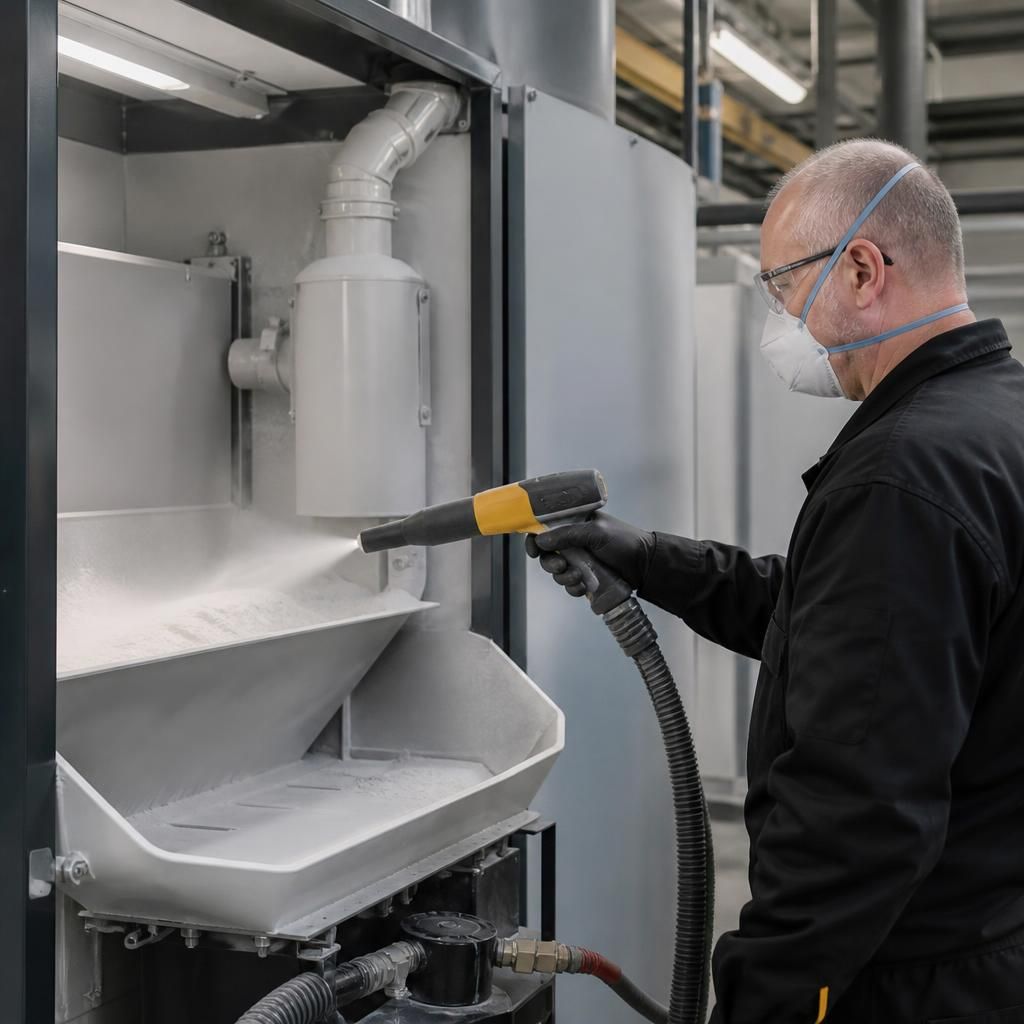
Powder recovery can reduce the need for virgin coating material. In a conveyor system, overspray can be captured by the booth’s recovery equipment and, where the powder specification and finish requirements allow, returned to the application process. This is most practical when colour changes are limited and reclaimed powder is kept separate from incompatible materials. Operators should assess recovered powder for contamination and consistency before reuse; unsuitable material must be managed as waste rather than reintroduced into production.