

How can conveyor powder coating systems be tailored to meet evolving industry standards and compliance requirements?
Conveyor powder coating systems can be tailored to evolving industry standards by combining adjustable process controls with suitable pretreatment, curing, extraction and material-handling arrangements. Monitoring critical parameters, maintaining documented procedures and selecting powders and equipment against the applicable technical, environmental and workplace requirements helps manufacturers demonstrate consistent, compliant finishing processes.
Conveyor powder coating systems can be tailored for changing standards by treating compliance as a managed production requirement rather than a one-off equipment specification. The system should be designed around the applicable product, workplace, machinery, environmental and customer requirements, with evidence showing that each critical stage remains controlled when powders, components, production volumes or regulations change.
Begin with a requirements matrix. A requirements matrix links each obligation to a design feature, operating control and record. It may cover:
- the required coating performance, appearance and thickness for each component;
- substrate preparation and surface cleanliness requirements;
- curing conditions specified by the powder manufacturer and the finished-product standard;
- operator exposure, ventilation and personal protective equipment controls;
- combustible-dust and ignition-source risks;
- electrical and machinery safeguarding requirements;
- waste, emissions and powder-recovery considerations; and
- customer-specific inspection, traceability and documentation requirements.
This approach makes gaps visible before equipment is modified. It also helps distinguish mandatory legal controls from voluntary standards, internal procedures and requirements imposed by a customer or sector.
Use modular controls rather than fixed assumptions. A system is easier to adapt when its recipes, alarms, interlocks, inspection points and data records can be changed in a controlled way. Separate settings can be established for different part geometries, substrates and coating materials, provided that each setting is verified before release to production. Access controls can restrict unauthorised changes, while revision histories show who approved a change and when it took effect.
Where a new powder, part or production rate is introduced, the change should be assessed for its effect on the complete process. For example, a heavier component may alter heat-up behaviour, while a different geometry may change coverage in recesses or Faraday areas. A material change may also affect recovery arrangements, cleaning intervals, waste classification or exposure controls. Compliance therefore depends on reviewing the interaction between the new requirement and the existing installation, not simply adding a new operating instruction.
Validate the process against defined acceptance criteria. Validation should establish that the line can repeatedly produce the required result under representative conditions. Depending on the specification, evidence may include coating thickness checks, adhesion testing, visual inspection, cure verification, corrosion testing or other performance tests. The appropriate test method and acceptance limit should come from the relevant technical specification, customer requirement or competent quality function rather than from an assumed industry average.
Validation is particularly important after changes to software, burners, airflow arrangements, conveyor speed, spray equipment, powder formulation or part loading. A documented requalification decision can show whether a full validation, a limited check or no additional testing is justified. This prevents both under-testing of significant changes and unnecessary disruption for minor adjustments.
Build safety compliance into the equipment design. Powder coating installations may involve hot surfaces, moving conveyors, electrical equipment, compressed air and airborne combustible powder. The risk assessment should consider foreseeable faults, cleaning activities, maintenance access and abnormal operating conditions as well as normal production. Depending on the installation and the substances used, requirements relating to hazardous substances, combustible atmospheres, machinery guarding, electrical safety and workplace exposure may apply. In the UK, assessments may need to consider frameworks such as COSHH, DSEAR and PUWER, with the exact application confirmed for the specific site and equipment.
Practical measures can include guarded nip points, emergency stops, access-door interlocks, suitable extraction, safe isolation arrangements and controls that prevent the process continuing when a critical protective function has failed. These features should be tested at defined intervals, with failed checks recorded and corrected before affected production is released.
Keep evidence suitable for audits and customer reviews. Compliance records should be clear enough to demonstrate what was required, how it was controlled and what happened when results fell outside the approved range. Useful records may include:
- approved process recipes and revision histories;
- powder technical data and safety information;
- equipment commissioning and validation records;
- calibration and verification records for measurement devices;
- maintenance, inspection and safety-device test records;
- batch or job traceability records;
- non-conformance reports and corrective actions; and
- training and authorisation records for relevant personnel.
Electronic records can support trend analysis, but they still need suitable access permissions, backup arrangements and retention rules. Paper records can also be effective if entries are legible, dated, attributable and protected from unauthorised alteration.
Review environmental and material changes as part of compliance management. Powder selection, overspray recovery and disposal arrangements should be reviewed when the coating material or production mix changes. Material safety information should be available to those who handle the powder, and storage, transfer and waste procedures should reflect the current products in use. Any requirement concerning emissions, waste handling or site permissions should be checked against the installation and the relevant local or national authority guidance.
Use planned review points. A compliance review should take place when legislation, customer specifications or powder documentation changes, and when there is a process deviation, equipment modification, incident or recurring defect. The review should identify affected documents, training, risk assessments, validation activities and maintenance instructions. This creates a controlled route for adapting the conveyor powder coating system while preserving product quality and worker protection.
For a Midlands manufacturer or fabricator assessing an existing line, the most useful starting point is a gap assessment against current customer specifications, site risk assessments and applicable UK requirements. A specialist coating provider can then help determine whether the appropriate response is a revised process recipe, additional verification, altered handling arrangements, new safety controls or a more substantial equipment modification.
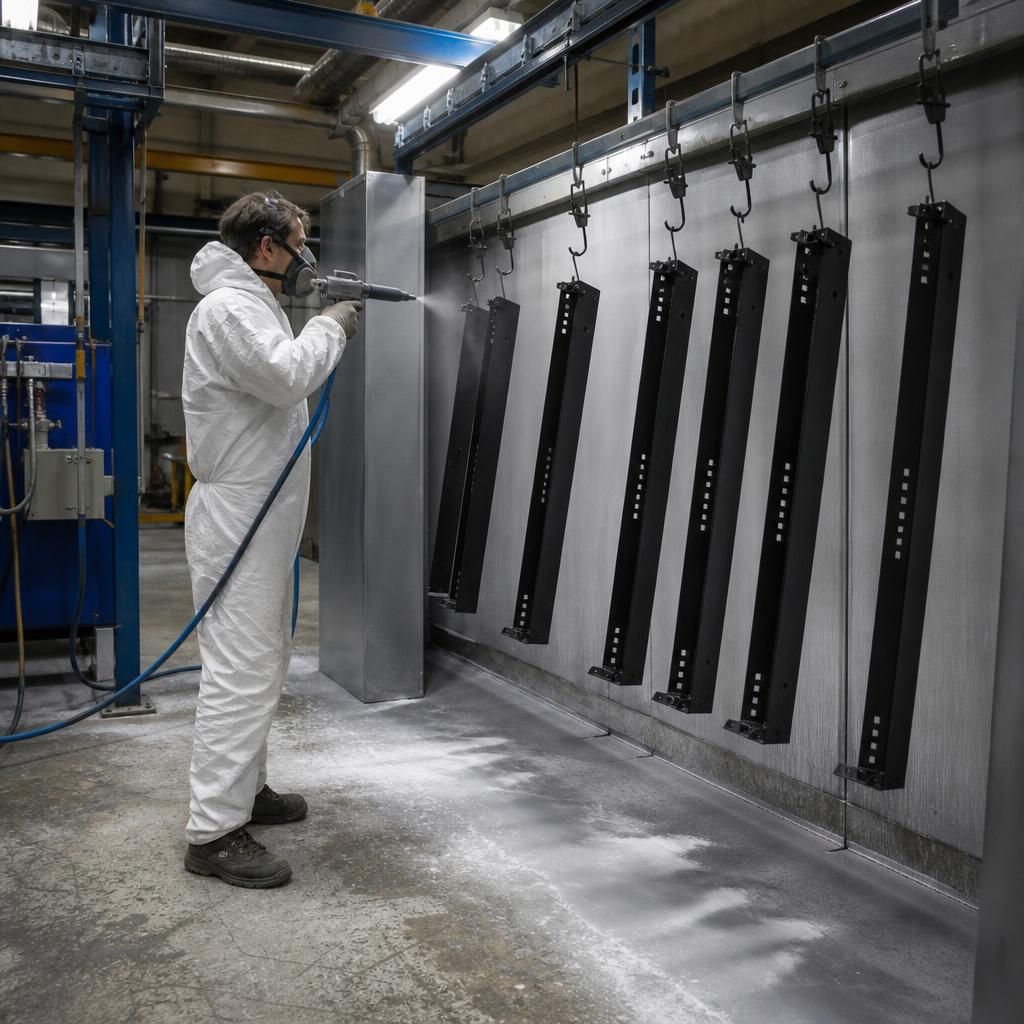
One important way to tailor a conveyor powder coating system is to control product changeovers between different powders, colours and performance specifications. Residual material in spray equipment, hoses, booths or recovery equipment can contaminate the next batch and affect its appearance or technical performance.
Changeover procedures should therefore define which components require cleaning, how recovered powder is handled and when reclaimed material must be excluded from a specification. Where products are not compatible, separate recovery paths or dedicated equipment may be more appropriate than relying on cleaning alone. The first components after a changeover can then receive a defined inspection before routine production continues. This provides a practical control when customer requirements, powder formulations or finish classifications change.
Discuss your conveyor powder coating compliance requirements
Discuss your conveyor powder coating compliance requirements with a specialist coating provider to identify the checks, process controls and documentation relevant to your components and production method. Share your current specification, coating materials and any known compliance gaps so the next steps can be assessed clearly.