

What industries benefit most from using textured black powder coat finishes?
Textured black powder coat finishes are particularly beneficial in construction, manufacturing, metal fabrication and automotive applications, where components need a durable, consistent surface finish. The textured surface also provides a practical appearance for equipment, frames, brackets, enclosures and other metal parts used in demanding industrial settings.
Textured black powder coat finishes are most valuable in industries that need metal components to combine a hard-wearing surface with a consistent, low-reflective appearance. The textured profile can help disguise minor surface marks, provide a practical finish for frequently handled items and create a uniform appearance across batches of fabricated parts.
Construction and building-related metalwork benefit where components are visible, handled or exposed to regular site use. Suitable applications can include support brackets, access equipment, framework, protective guards, fixings and fabricated architectural elements. Black is often selected where metalwork needs to coordinate with other building materials, while the texture gives the surface a less glossy and more functional appearance than a smooth finish.
For manufacturers of industrial equipment, the finish is useful on machine panels, equipment frames, housings, guards and ancillary parts. These components may be subject to contact during assembly, maintenance and transport. A textured surface can make light scuffs and handling marks less prominent, helping equipment retain a consistent appearance between production, installation and later servicing. It also provides a repeatable finish across separate components that are assembled into one product.
Metal fabrication businesses can use textured black powder coating for made-to-order items where appearance is part of the specification but the component still has an industrial purpose. Examples include fabricated frames, brackets, cabinets, rails, bases and protective structures. The finish is particularly appropriate when a customer wants a subdued surface that does not draw attention to minor variations in the underlying metal, provided the substrate has been prepared correctly before coating.
In the automotive sector, textured black finishes can suit brackets, under-body parts, housings, frames, guards and workshop or service equipment. These applications often require a coating that can tolerate regular handling and contribute to a uniform appearance across related parts. The choice must still take account of the component’s exposure to heat, fluids, abrasion and stone impact; a textured black finish should be specified alongside the required performance characteristics rather than selected for appearance alone.
Electrical and control equipment manufacturers may also benefit when enclosures, cabinets and mounting components need a durable, non-reflective finish. Textured black can help create visual consistency across panels and external housings, particularly where equipment is installed in plant rooms, workshops or other technical environments. Critical points such as earthing areas, mating faces, hinges, threads and sealing interfaces must be masked or otherwise managed so that coating does not interfere with assembly or electrical continuity.
The finish is generally most appropriate for parts with the following requirements:
- a hard-wearing surface for routine handling, installation or maintenance;
- a uniform appearance across repeated components or separate production batches;
- a low-gloss finish that reduces visible reflections;
- better concealment of minor visual marks than a highly smooth, glossy coating may provide;
- an industrial appearance suited to equipment, structural parts and fabricated metalwork.
Industry alone does not determine whether textured black powder coating is suitable. The metal type, component dimensions, operating temperature, exposure conditions, required film performance and intended cleaning methods also need to be assessed. Areas that require tight dimensional control, smooth sliding contact, precise electrical bonding or a specific chemical resistance may need masking, an alternative coating specification or a different surface treatment.
For B2B projects, the most reliable specification identifies the component’s working environment, the areas that must remain uncoated, the required visual standard and whether parts will be processed individually or in batches. This allows the coating system and preparation method to be matched to the demands of the relevant industry rather than treating textured black as a purely aesthetic choice.
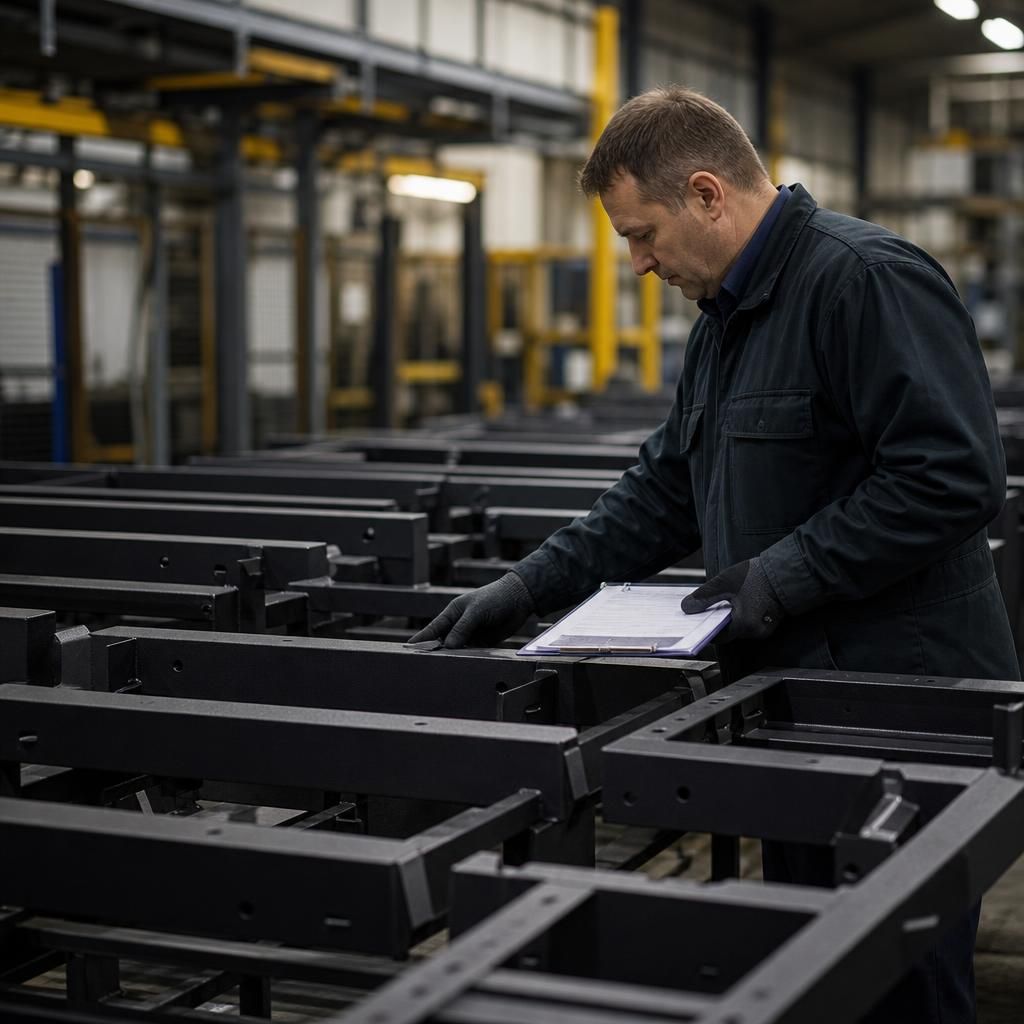
The strongest industrial benefit comes when a textured black finish forms part of a repeatable product specification rather than being selected for one isolated component. Manufacturers and fabricators can define the finish alongside substrate, surface preparation, masking and inspection requirements, making it easier to assess incoming parts consistently across different production runs or suppliers.
This approach is particularly useful for equipment ranges containing components with different shapes and fabrication methods. A clear specification should identify the required texture, gloss level, visible-face standard and any areas that must remain free from coating. It helps distinguish acceptable variation in the textured surface from defects that could affect assembly, appearance or service performance.