

What considerations should be made when selecting textured black powder coating for parts exposed to outdoor or corrosive environments?
Select a textured black powder coating by assessing the part’s exposure to moisture, salt, chemicals, UV and abrasion, then matching the powder chemistry, pretreatment and film specification to the substrate and corrosion risk. Also consider texture consistency, edge coverage, drainage and dimensional tolerances, and confirm that the proposed coating system is suitable for the intended environment and application process.
Selection should be based on the complete coating system and the part’s service conditions, rather than on the black colour or textured appearance alone. For outdoor or corrosive applications, assess the required service life, appearance expectations, maintenance arrangements, joint and fixing details, repair options, and the evidence available for the proposed coating specification.
Define the required performance. A component used outdoors may need a different specification from one installed in a sheltered location, even when both are exposed to the same general weather. Establish whether the finish is primarily required to resist corrosion, retain its appearance, withstand handling and impact, or tolerate contact with process contaminants. Where several requirements apply, they should be ranked so that the coating system is not selected on appearance at the expense of protection.
Consider the visual effect of the texture. Textured black finishes can reduce the visibility of minor surface variations and provide a distinctive low-reflective appearance, but texture also affects how dirt, salts and oily deposits are seen and removed. Agree the acceptable level of texture, gloss and colour uniformity before production. Parts that are viewed together should be assessed as a group, since differences in substrate, orientation, coating thickness or curing can produce visible variation between batches.
Review the part design before coating. Outdoor durability can be reduced by design features that hold water or contaminants against the metal. Closed sections, overlapping plates, deep recesses and tight joints may require drainage, venting or a change in assembly detail. Threads, bearing faces, electrical earth points and close-fitting interfaces may need to remain uncoated or be masked. These requirements should be identified on the drawing so that protection is not compromised during assembly or use.
Check compatibility with adjoining materials. Coated components are often assembled with fasteners, seals, plastics or other metals. Differences in thermal movement, contact between dissimilar metals and trapped moisture at interfaces can create localised corrosion even when the main coated surface remains intact. The specification should therefore identify contact areas, isolation requirements and any surfaces that need a separate treatment or controlled masking.
Allow for heat and dimensional change. Black surfaces can absorb significant solar heat, which may affect the temperature reached in service and the movement of the component or its surrounding materials. This matters for panels, covers, enclosures and assemblies with tight clearances. Coating thickness and the textured profile should also be considered where parts slide together, fit into machined recesses or rely on precise electrical contact.
Ask for relevant technical evidence. A suitable specification should be supported by product data describing the intended use, application limits, curing requirements and resistance characteristics. Depending on the component, useful evidence may include corrosion testing, adhesion results, weathering information and checks on colour or gloss retention. Test data should be interpreted in relation to the actual substrate, preparation method, part geometry and environment; a laboratory result does not automatically represent performance in every installation.
Plan quality control for production batches. Agree how appearance and coverage will be checked, including inspection areas, reference samples and acceptance criteria. Parts with deep profiles or concealed faces need particular attention because visual inspection may not reveal inconsistent coverage in difficult-to-see areas. Recording the powder specification, preparation route, cure conditions and inspection findings provides useful traceability if a coating issue is later investigated.
Include cleaning and maintenance in the decision. A textured finish should be compatible with the cleaning methods likely to be used on the finished part. Abrasive pads, aggressive chemicals or prolonged deposits of road salt and industrial pollution can affect the surface over time. A practical maintenance specification should state which cleaning methods are suitable, which substances should be avoided and how damage or corrosion should be reported before it spreads.
Consider future repairs. Damage from impact, drilling, welding or installation may expose bare metal after coating. Repairs to a textured black finish can be more noticeable than repairs to a smooth surface, and an unsuitable touch-up product may differ in texture, sheen or weathering behaviour. Establish whether damaged areas will be repaired on site or returned for treatment, and specify how repaired sections will be prepared and blended with the surrounding finish.
For a part exposed to outdoor or corrosive conditions, the most reliable selection process is to document the environment, component design, appearance requirements, assembly interfaces, maintenance method and verification requirements together. That information gives the coating specialist enough context to recommend a textured black system that is technically appropriate for the component rather than choosing solely by colour or sample appearance.
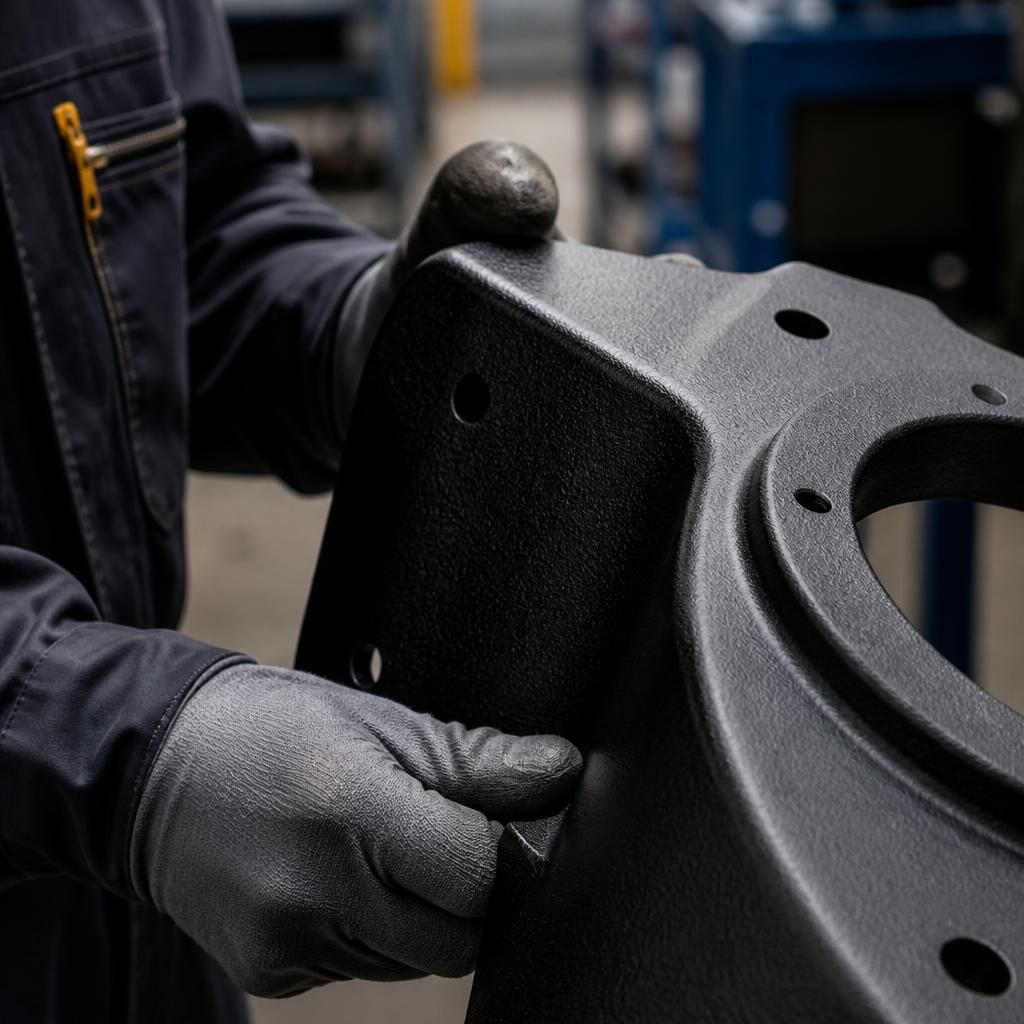
The substrate beneath a textured black powder coat can influence outdoor performance as much as the powder itself. Steel, galvanised steel, aluminium and cast components each present different preparation and adhesion requirements, so the coating specification should identify the base metal before the finish is selected.
Porous castings may release trapped air or moisture during curing, causing pinholes or blistering, while galvanised surfaces can retain treatments or contaminants that interfere with adhesion. Aluminium may also require a preparation route suited to its oxide layer. These risks should be assessed during sample preparation, with particular attention to welds, cast surfaces and areas where corrosion has already begun. A finish that appears suitable on a smooth test panel may not perform in the same way on a more complex or porous component.
Discuss Your Textured Black Powder Coating Requirements
Discuss your component’s substrate, exposure conditions and design requirements with a powder coating specialist before selecting the textured black finish. Providing drawings, samples and any relevant performance criteria can help establish a suitable coating specification for your parts.