

How does textured black powder coating improve the longevity and performance of metal components used in high-stress environments?
Textured black powder coating improves the longevity of metal components in high-stress environments by forming a tough, cured finish that resists abrasion, impact and corrosion. Its textured surface can also help disguise minor marks while maintaining a consistent protective finish, supporting reliable performance where components face demanding use.
In high-stress applications, textured black powder coating improves component performance by providing a carefully bonded, uniformly cured surface that supports the base metal during repeated mechanical and environmental exposure. The benefit is not simply the black appearance: the coating system, surface preparation, film build and curing conditions all influence how well a finished part retains its protective function in service.
A textured finish is formed by the formulation of the powder and its behaviour during curing. This creates a controlled surface profile rather than a completely smooth film. On items such as brackets, frames, guards, housings and fabricated assemblies, that profile can provide useful visual and handling characteristics. It can make light scuffs and minor surface irregularities less conspicuous, helping the component maintain a consistent appearance between inspections. It may also offer a less slippery feel on suitable non-contact surfaces, although it should not be treated as a substitute for a separately engineered grip or anti-slip system.
Longevity depends heavily on the bond between the coating and the substrate. Oils, mill scale, rust, weld residues and other contaminants can prevent proper adhesion, leaving weak areas that may lift or deteriorate under service conditions. Appropriate cleaning and preparation create a sound surface for the powder to attach to. This is particularly important around welds, edges, recesses and joints, where contamination or uneven preparation can produce localised coating weaknesses.
The cured film also helps isolate the metal from moisture and other contaminants that could initiate deterioration at the surface. In demanding locations, performance therefore depends on selecting a coating formulation suited to the actual exposure rather than choosing black powder coat by colour alone. Outdoor equipment, plant components and parts exposed to chemicals may require different levels of resistance from items used in a controlled indoor environment. The surrounding atmosphere, cleaning regime, operating temperature and contact with other materials should all be considered during specification.
Correct film formation contributes to predictable performance across the whole component. Insufficient coverage can leave vulnerable areas, while excessive or uneven application may affect fit, appearance or the behaviour of mating parts. Geometry is relevant too: sharp edges, internal corners and deep recesses can be more difficult to coat consistently than broad, accessible faces. Reviewing the design before production can identify areas that need altered edge treatment, masking or a different coating approach.
High-stress metal components are often exposed to repeated loading, vibration and handling. Powder coating does not increase the structural strength of the underlying metal, but a sound finish can help preserve the condition of the surface on which that structure depends. Maintaining coating continuity reduces the opportunity for local surface damage to develop into a wider maintenance issue. The coating specification must still be compatible with movement, joint design and any areas where metal surfaces are deliberately left exposed for electrical contact or assembly.
Temperature is another consideration. The service temperature should be compared with the limits of the selected powder system, particularly where components are close to heat sources or experience repeated heating and cooling. A coating suitable for ordinary ambient conditions may not be appropriate for sustained elevated temperatures. Thermal movement between dissimilar materials, together with fast temperature changes, can also place additional demands on adhesion and the surrounding component design.
For reliable results, the specification should cover more than colour and texture. It should identify:
- the metal substrate and its condition before treatment;
- the required level of surface preparation;
- the operating environment, including moisture, chemicals, heat and cleaning methods;
- areas requiring masking, electrical continuity or close dimensional control;
- the required appearance and acceptable texture variation; and
- inspection requirements for coverage, adhesion, cure and visible defects.
Inspection after coating is especially useful for components that will be difficult to access once installed. Checking edges, corners, recesses, fixing points and masked areas can identify issues before assembly. Where parts are produced in batches, using consistent preparation, application and curing controls helps maintain comparable performance from one production run to the next.
Maintenance remains part of the service life of a coated component. Removing deposits with a suitable cleaning method prevents contaminants from remaining on the surface, while harsh chemicals, unsuitable tools and aggressive mechanical cleaning can shorten the life of the finish. Any exposed substrate or local coating damage should be assessed and dealt with in accordance with the maintenance specification rather than simply covered without addressing the cause.
For manufacturers and fabricators, the practical value of textured black powder coating in high-stress environments is therefore its contribution to surface protection, consistent condition and manageable maintenance when the complete system is correctly specified. The best result comes from matching the powder coating to the metal, design, operating conditions and production controls, rather than relying on texture or colour alone.
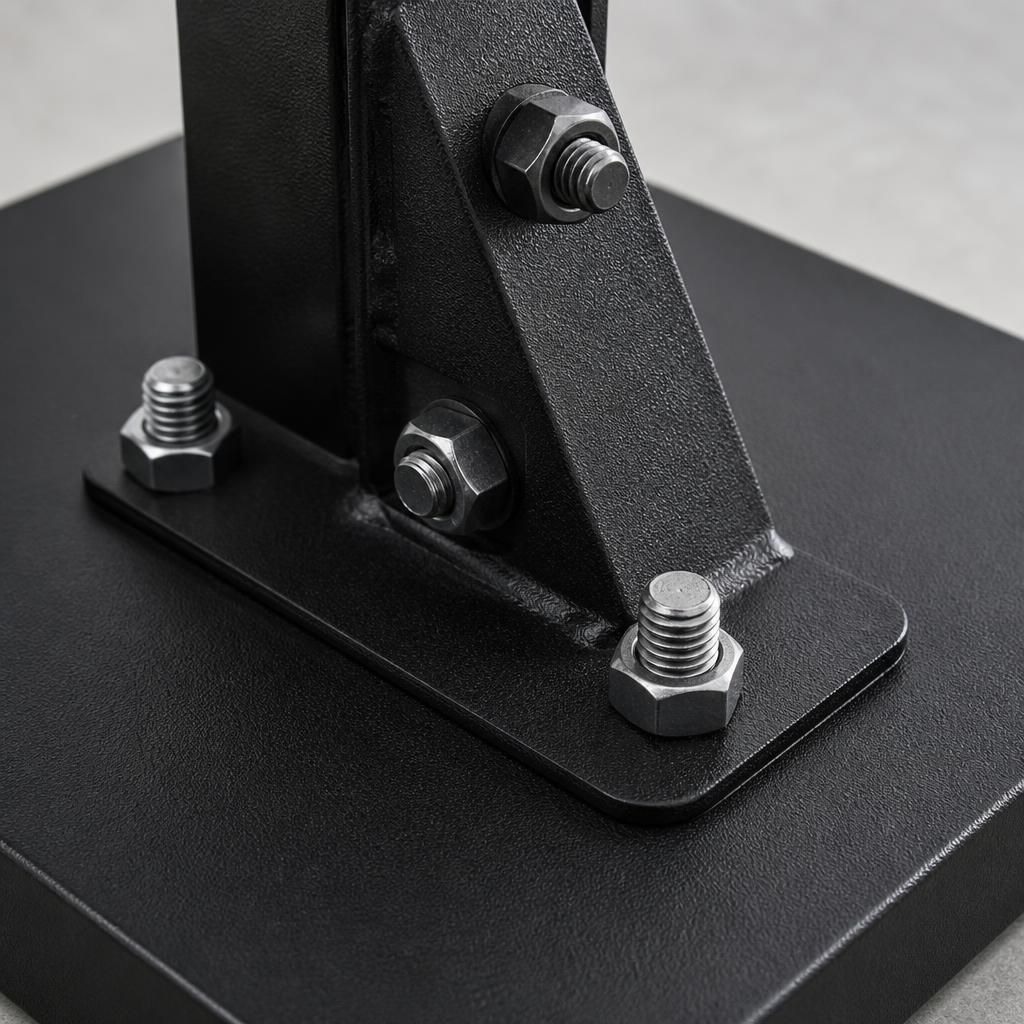
Textured black powder coating can help protect high-stress components where dissimilar metals are joined by acting as a barrier between the metal surface and moisture. This can reduce the opportunity for galvanic corrosion, in which contact between different metals and an electrolyte accelerates deterioration of the less noble metal.
The protection depends on continuous coverage and suitable joint design. Threads, earth points, machined faces and other areas requiring electrical continuity may need masking or controlled removal of the coating. Coating should therefore be considered part of the corrosion-control specification, alongside compatible materials, drainage and appropriate fasteners, rather than as a standalone solution.
Discuss textured black powder coating for high-stress components
Discuss your component’s substrate, operating conditions and design requirements with the powder-coating.co.uk team to determine whether a textured black powder coating is suitable. You can also ask about preparing parts for coating and arranging collection or delivery across the Midlands.