

How can textured black powder coating enhance the durability of metal components?
Textured black powder coating enhances the durability of metal components by forming a strongly bonded, protective finish that resists abrasion, impacts, chipping and everyday wear. Its textured surface can also help disguise minor scuffs, while the coating provides a consistent barrier against moisture and other environmental exposure when the metal has been correctly prepared.
Textured black powder coating enhances durability mainly by protecting the metal surface from the conditions that cause premature deterioration. Once correctly specified, applied and cured, the coating creates a continuous finish that separates the substrate from moisture, oxygen, handling contaminants and many routine industrial exposures. The texture is primarily a surface and appearance characteristic; the formulation, pretreatment and curing process determine much of the coating’s protective performance.
One important benefit is improved resistance to corrosion. Bare steel and other metals can oxidise when water and air reach the surface, particularly around edges, joints, fixings and areas where contamination collects. Powder coating provides a barrier that limits this contact. However, it cannot compensate for inadequate preparation. Degreasing, removal of rust and suitable chemical pretreatment are necessary to promote adhesion and reduce the risk of corrosion developing beneath the coating.
The finish can also help components withstand common industrial exposures. Depending on the powder formulation selected, it may provide resistance to oils, cleaning agents, mild chemicals and pollutants encountered during manufacture, storage or use. The correct specification depends on the actual exposure: a component used indoors in a controlled environment has different requirements from one exposed to road salt, persistent damp, industrial chemicals or outdoor weather.
For outdoor metalwork, the coating system should be assessed for resistance to ultraviolet exposure and weathering as well as physical wear. Black finishes can absorb more solar heat than lighter colours, so the expected operating temperature and any temperature cycling should be considered during specification. A suitable product and properly cured film help maintain the protective layer, but no powder coating should be treated as universally resistant to every chemical, temperature or atmosphere.
Durability also depends on the design of the component. Sharp edges, narrow recesses, weld spatter, blind corners and areas that retain water can make it difficult to achieve a consistent coating. Drainage, accessible surfaces and appropriate edge preparation reduce weak points in the finished system. Welds should be clean and free from residues, while threaded areas, electrical contact points and close-tolerance surfaces may need masking or other treatment to prevent functional problems.
Correct curing is equally important. Powder particles must reach the specified cure conditions so that they flow, cross-link and develop their intended properties. Under-curing can leave the film weaker or more vulnerable to chemicals, while excessive heat can affect the finish or the substrate. Application should therefore take account of the metal’s thickness and thermal behaviour rather than relying only on oven temperature.
For manufacturers and fabricators, the practical durability assessment should include:
- the base metal and its susceptibility to corrosion;
- the level of moisture, salt, chemicals, sunlight and heat in service;
- the likely contact, cleaning and handling methods;
- the component’s geometry, including edges, recesses and drainage points;
- the required appearance, texture and acceptable film build; and
- any areas that must remain uncoated for assembly, earthing or dimensional reasons.
Maintenance still has a role after coating. Removing deposits with an appropriate, non-abrasive cleaning method limits the time that contaminants remain against the surface. Deep scratches, exposed edges and damage around fixings should be inspected because a local break in the film can allow corrosion to develop at the defect. Harsh solvents, aggressive abrasives and unsuitable cleaning equipment may damage the finish even when the original coating was correctly applied.
Textured black powder coating therefore improves the service life of metal components through a combination of barrier protection, appropriate chemical and weather resistance, sound component preparation and controlled application. It does not strengthen the metal itself or remove the need for suitable design and maintenance. A coating specialist can match the powder and preparation system to the component’s environment, production requirements and intended use.
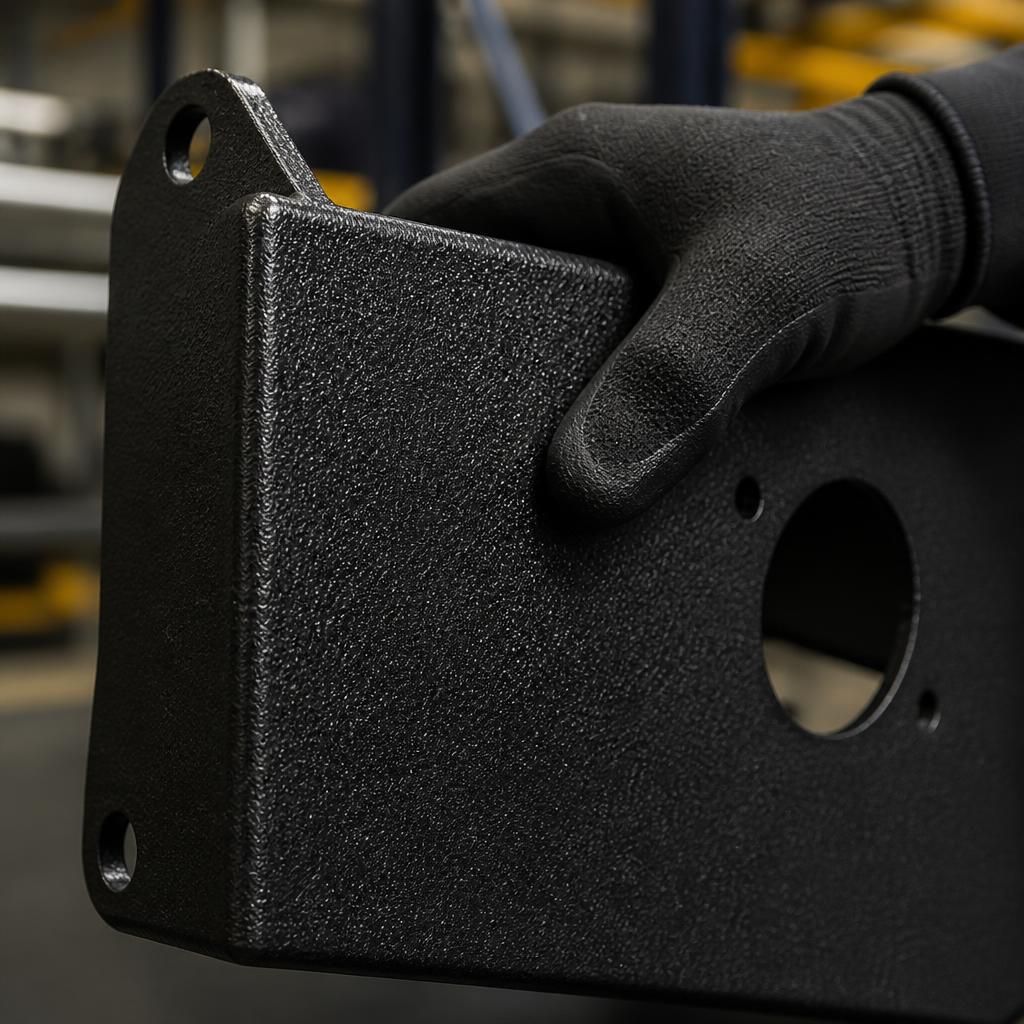
A textured black powder-coated surface can provide useful grip on components that are handled, positioned or secured during assembly and use. The raised profile increases surface friction compared with a smooth finish, which can help reduce sliding and minor movement where the component’s design and operating conditions allow. This may lower the likelihood of incidental knocks caused by parts shifting against adjacent equipment, although the coating does not replace mechanical fixings or other safety measures.
This benefit is most relevant to equipment housings, brackets, guards and fabricated parts that are routinely touched or repositioned. The texture level should be selected carefully: a coarse profile may provide more grip but can be less suitable for close-fitting assemblies or surfaces that require frequent cleaning. The coating specification therefore needs to balance tactile performance with the component’s tolerances, handling method and end-use environment.