

What makes polyester coating ideal for stainless steel applications?
Polyester coating is ideal for stainless steel applications because it forms a tough, uniform finish that withstands weathering, handling and everyday industrial use. When the stainless steel is correctly prepared and the powder is properly cured, it also provides a consistent black or coloured surface while preserving the component’s underlying strength.
Polyester coating is well suited to stainless steel because it combines strong outdoor colour stability with a controlled decorative finish and compatibility with the preparation and curing methods used for metal components. It is particularly appropriate when stainless steel needs a black surface for appearance, product identification, architectural coordination or reduced reflectivity without changing the properties of the underlying metal.
A key advantage is polyester’s resistance to ultraviolet exposure. Unlike coatings intended mainly for internal use, exterior-grade polyester formulations are designed to retain their colour and surface appearance when exposed to daylight and changing weather conditions. This makes them a practical choice for stainless steel used in external equipment, construction components, architectural metalwork and industrial assemblies where visual consistency matters over the service life of the part.
Polyester powder also provides flexibility in the appearance of the finished component. The system can be specified in different black shades, gloss levels and textures, allowing the coating to match surrounding metalwork or fulfil a particular design requirement. A controlled powder application produces an even visual effect across suitable surfaces, including components with formed sections, edges and profiles, provided the part is correctly prepared and the coating thickness is managed appropriately.
Stainless steel requires careful preparation because its naturally passive surface can make coating adhesion more demanding than it is on some other metals. Oils, fabrication residues, handling marks and embedded contaminants must be removed before coating. Depending on the grade, condition and intended use of the component, the preparation process may include thorough cleaning, mechanical keying or a suitable chemical pre-treatment. These steps give the polyester coating a clean, receptive surface and reduce the risk of defects such as poor adhesion, lifting or visible contamination.
The powder is applied as dry particles and then heated so that it melts, flows and cures into a continuous film. Correct curing is important because insufficient or excessive heat can affect the coating’s final properties and appearance. Stainless steel components may also vary in thickness and shape, so the coating process needs to account for how quickly different sections reach the required curing condition. This is especially relevant for batch work, where consistent preparation and process control help maintain an even result from one component to the next.
Polyester is generally a more suitable choice for exposed stainless steel than an epoxy-only system because epoxy coatings can lose their appearance through ultraviolet degradation when used outdoors. Polyester is not a universal solution for every environment, however. The specification should take account of continuous operating temperature, contact with solvents or aggressive chemicals, abrasion, sharp edges, joint areas and the required level of corrosion protection. Where conditions are unusually severe, the coating system and preparation standard may need to be selected specifically for that service environment.
- Outdoor suitability: polyester is designed to provide better resistance to sunlight and weathering than coatings intended solely for interior use.
- Decorative control: black finishes can be selected by shade, gloss and texture to suit functional or architectural requirements.
- Substrate compatibility: when stainless steel is cleaned and keyed correctly, the powder can form a consistent coating over the prepared surface.
- Process adaptability: powder application is suitable for individual components and repeat batches, subject to the part’s size, geometry and curing requirements.
- Material preservation: the coating changes the external appearance and surface protection of the component without replacing the stainless steel substrate or its inherent mechanical properties.
For these reasons, polyester is often selected where a stainless steel component needs a stable black finish for external or industrial use. The best result depends not only on the resin type but also on the stainless steel grade, surface condition, preparation method, powder specification and curing process. These factors should be assessed together rather than choosing a polyester coating solely because the component is made from stainless steel.
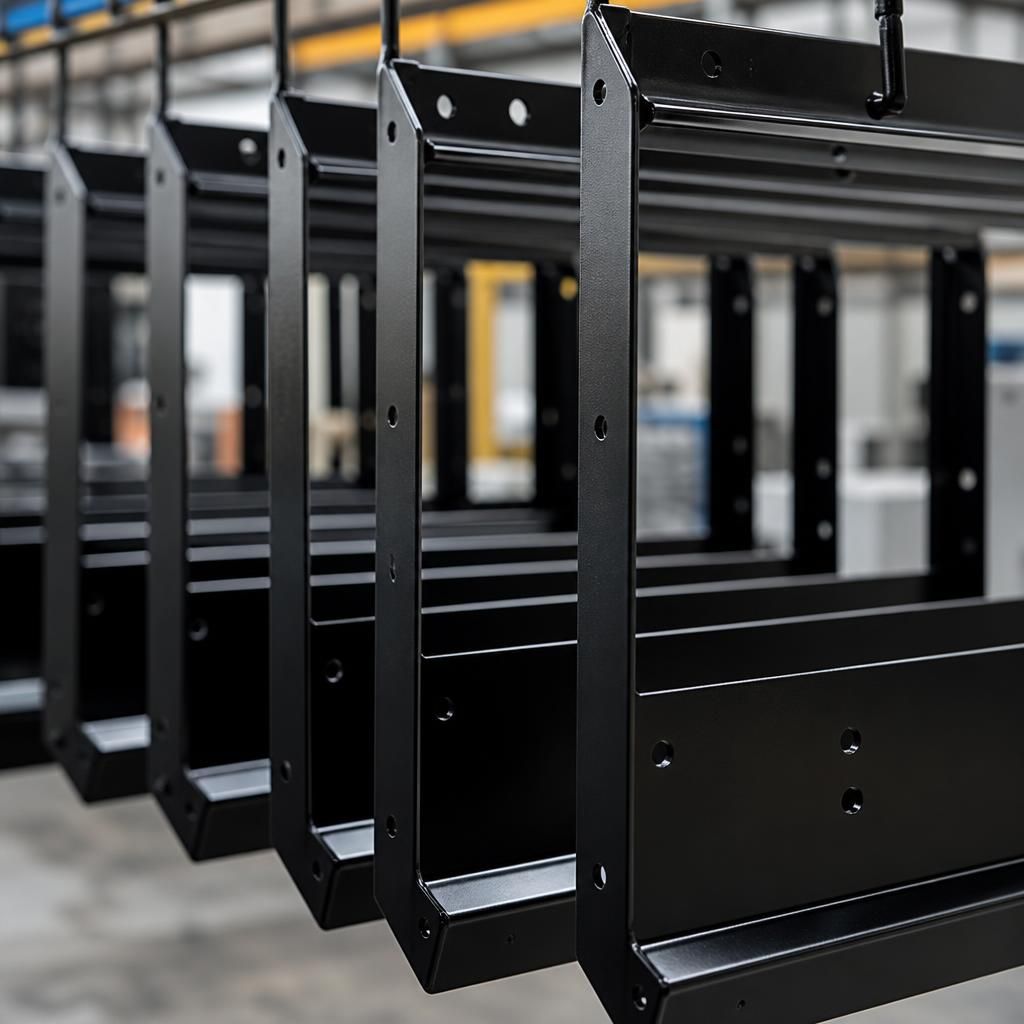
Polyester coating is particularly effective when a stainless steel component needs a black finish that remains visually consistent across repeated production batches. Because the coating is applied as powder and fused into a continuous film, each correctly prepared component can be assessed against the same requirements for coverage, finish and cure. This supports repeatable results for manufacturers and fabricators producing matching parts or assemblies.
The specification still needs to reflect the component’s actual working conditions. Areas exposed to frequent contact, abrasion, solvents or high temperatures may require a different coating approach from a purely decorative application. Polyester is therefore ideal when its outdoor durability, appearance and service resistance align with the part’s environment, rather than simply because the substrate is stainless steel.
Discuss your stainless steel polyester coating requirements
Discuss your stainless steel polyester coating requirements with the team, providing details of the component’s grade, size, geometry, operating environment and required black finish. This allows the coating specification and preparation approach to be considered against the part’s intended application.