

What are the key benefits of using polyester coating for metal, specifically for stainless steel black finishes?
Polyester coating gives stainless steel a hard, uniform black finish that improves resistance to abrasion, moisture and everyday handling while providing a consistent decorative appearance. Applied with suitable preparation, it can also add a protective barrier against surface contamination and help maintain the component’s finish in demanding industrial environments.
Polyester coating is a powder-based finish that forms a continuous polymer film on stainless steel after curing. For black stainless steel finishes, its main benefits are dependable colour coverage, resistance to weathering and general industrial use, a broad choice of surface appearances, and a repeatable finish across batches of components.
Reliable black colour and coverage: Polyester powder can produce an even black finish over correctly prepared stainless steel, including components with varied shapes, edges and profiles. The coating is applied as a dry powder and then cured to form a consistent film, helping reduce visible variation between parts processed under the same specification. This is particularly useful where several components must match within an assembly or product range.
Resistance to outdoor exposure: Polyester formulations are commonly selected for metalwork that may encounter sunlight, rain and changing temperatures. The coating can help the black finish retain its visual appearance more effectively than finishes intended only for sheltered indoor use. The appropriate grade still depends on the environment, including the level of ultraviolet exposure, pollution and chemical contact.
Protection of the stainless steel surface: Stainless steel already provides useful corrosion resistance, but its performance can be affected by contamination, fabrication residues, embedded iron particles and unsuitable handling. A correctly applied polyester layer separates the substrate from many routine environmental influences. It should be regarded as an additional protective finish rather than a substitute for suitable stainless-steel selection, cleaning and preparation.
Choice of appearance: Black polyester coatings are available in different levels of gloss and texture, allowing the finish to be specified according to the component’s function and design. A lower-gloss or textured surface can reduce the prominence of minor handling marks, while a smoother finish may be preferred where a cleaner, more reflective appearance is required. The specification should identify the intended sheen and texture rather than relying on the general description “black”.
Resistance suited to industrial components: Once cured, polyester provides a stable finish for many fabricated and manufactured metal parts. It can withstand the ordinary contact, cleaning and handling associated with industrial equipment, architectural metalwork and vehicle-related components, provided the coating grade and film build match the service conditions. Where the part will face strong solvents, elevated temperatures or aggressive chemicals, those exposures should be assessed before the coating is selected.
Consistent production results: Powder coating is well suited to repeat work because the process can be controlled through preparation, application and curing parameters. Consistent pretreatment, powder application, oven conditions and inspection are important to achieving comparable results from one batch to the next. This makes polyester a practical option when stainless components need a defined black finish across a production run rather than an individually variable hand-applied coating.
Efficient use of coating material: Powder is applied directly to the component without the solvent content associated with traditional liquid paints. Overspray may be collected in suitable systems, subject to the equipment and powder being used. This can support a controlled coating process and reduce unnecessary material waste, although the overall environmental performance also depends on pretreatment, curing energy, powder recovery and waste management.
Suitable for varied component designs: Polyester powder can be used on many stainless-steel items, including fabricated panels, brackets, enclosures, frames and other metal components. The method is adaptable to different sizes and geometries, but recessed areas, sharp edges, welds and joints need particular attention during preparation and application. Design details that restrict powder access or create poor drainage can affect the final result and should be considered before coating.
Practical maintenance: A properly specified black polyester finish is generally maintained through routine removal of dust, deposits and other surface contamination using cleaning methods compatible with the coating. Abrasive pads, harsh chemicals and unsuitable solvents can damage the film or change its appearance, so cleaning instructions should be agreed for the component’s operating environment. Prompt removal of corrosive deposits is also sensible where parts are exposed to industrial pollutants or coastal conditions.
The benefits depend on more than the polyester powder itself. Stainless steel must be degreased and prepared so that residues do not interfere with adhesion, and the selected system must be compatible with the substrate and intended exposure. Application control is equally important: insufficient curing can leave the film below its designed performance, while poor coverage or contamination can create weaknesses. For that reason, the coating specification should cover the stainless-steel grade, preparation method, polyester formulation, colour and sheen, expected environment, film requirements and inspection criteria.
For manufacturers and fabricators, the principal value of polyester coating for black stainless steel is the combination of a controlled appearance with practical protection and repeatable processing. It is most effective when the finish is selected according to the component’s exposure and applied by a coater able to manage stainless-steel preparation, powder application and curing as one connected process.
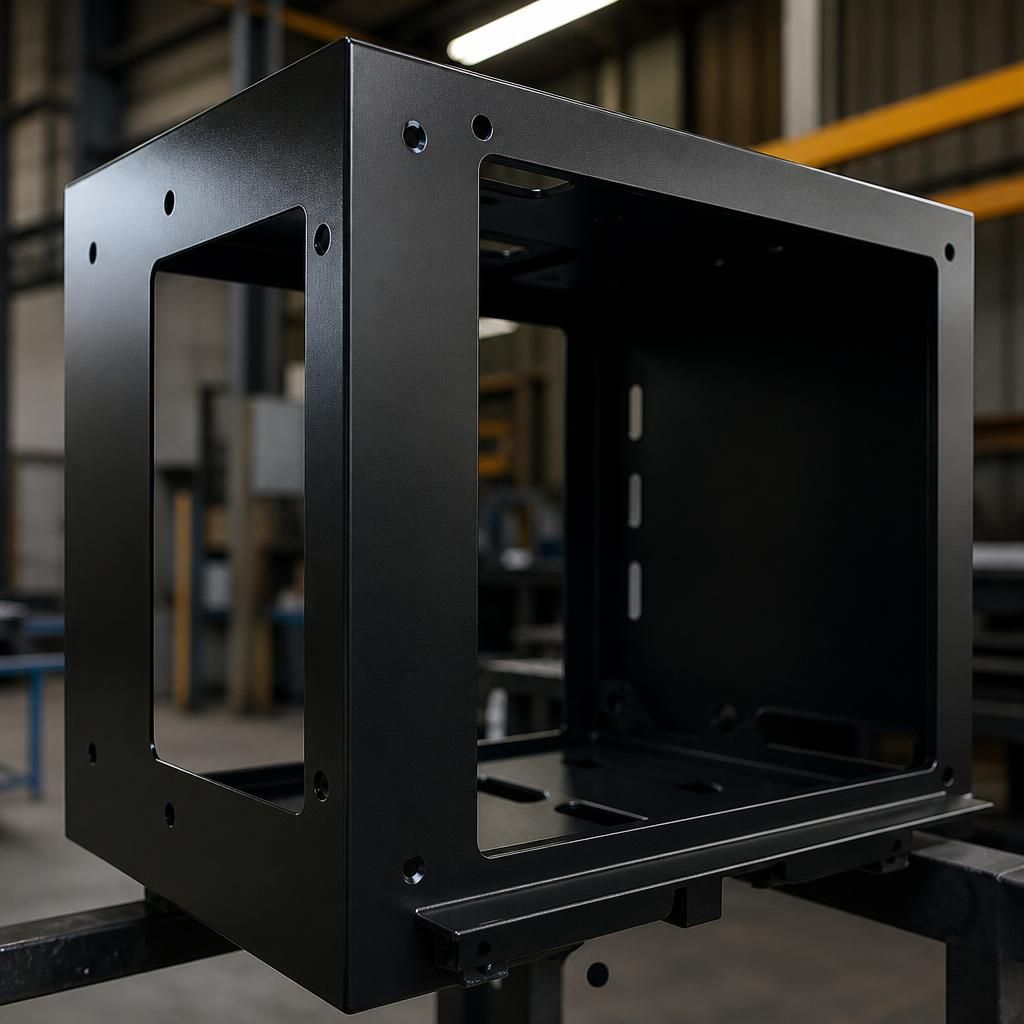
Once cured, polyester coating forms an electrically insulating layer as well as a black protective finish. This can be useful on stainless-steel enclosures, brackets and fabricated components where the coating is intended to separate the metal surface from adjacent parts or reduce unintended electrical contact.
Electrical requirements must be included in the coating specification. Earthing points, threaded interfaces, hinges and other contact areas may need masking before application so that the finished component retains the required conductivity and fit. Defining these areas in advance helps preserve the visual benefits of the black finish without affecting the component’s electrical or mechanical function.
Discuss Your Black Stainless Steel Polyester Coating Requirements
Discuss your stainless steel components, intended environment and black polyester finish requirements with our Midlands powder-coating specialists. We can help identify the relevant coating specification and collection or delivery arrangements for your project.