

How is the stainless steel black coating applied to ensure durability?
Stainless steel black coating is applied by thoroughly cleaning and preparing the surface, applying powder electrostatically, then curing it in a controlled oven so the coating forms a firmly bonded, uniform finish. Careful preparation, correct film coverage and accurate curing are essential for achieving durable protection against wear, corrosion and handling.
Durability is achieved by controlling the entire coating specification, not simply by applying a black finish to stainless steel. The stainless grade, component design, required appearance, operating environment and intended level of wear must all be considered so that the coating bonds reliably and develops the required mechanical and chemical resistance.
Stainless steel requires careful adhesion control. Its passive chromium-rich surface helps resist corrosion, but it can also make it more difficult for a coating to form a dependable bond if the surface condition is not suitable. The preparation method therefore needs to be appropriate to the particular stainless steel component, including its grade, previous use and any residues left by fabrication, polishing, handling or storage. Weld areas, folded sections and areas around fixings deserve particular attention because they may behave differently from the surrounding metal.
Component design also affects the final result. Sharp edges can receive less coating coverage than broad, accessible faces, while recesses and enclosed sections can be harder to coat consistently. Where appropriate, edges may need suitable treatment before coating, and the specification should identify surfaces that must remain uncoated. Threads, bearing faces, electrical contact points, locating surfaces and drainage openings are commonly masked or protected. Correct masking prevents unwanted build-up that could interfere with assembly or function.
Consistent film coverage is another key requirement. The coating should be applied to the specified thickness across the relevant surfaces rather than relying on a heavy layer to conceal imperfections. Excessive build can affect appearance, fit and flexibility, whereas insufficient coverage may reduce resistance to abrasion, moisture and chemicals. Geometry, part orientation and the location of edges or recesses should be considered when deciding how the component is presented during application.
Black finishes make variations particularly visible. Uneven coverage, surface marks, inclusions, texture differences and gloss variation can be more apparent on a dark surface than on a lighter one. A controlled specification should therefore define the required colour, gloss level, texture and acceptable visual characteristics before production begins. Components from the same batch should be handled and processed consistently where a uniform appearance across an assembly is important.
Curing must be assessed by the temperature reached by the metal, not only by the temperature of the oven air. Stainless steel parts vary in mass, shape and thermal behaviour, so heavier sections and lighter sections may reach the required curing condition at different rates. The coating system’s technical requirements should determine the appropriate cure schedule. Under-curing can leave the film with inadequate hardness or chemical resistance, while excessive heat exposure can affect the finish or the substrate. Production checks should confirm that the selected cycle is suitable for the actual component rather than an unrelated test piece.
Quality checks should be proportionate to the component’s use. They may include:
- visual inspection for uniform colour, gloss, texture, coverage and surface defects;
- film-thickness checks at representative locations, including areas where geometry may affect deposition;
- adhesion assessment where the application specification requires it;
- checks that masked areas, threads and contact surfaces remain usable;
- confirmation that the finish has developed the required cure and hardness; and
- additional resistance testing where the component will face abrasion, moisture, chemicals, outdoor exposure or elevated service demands.
Handling after coating is part of durability control. Stainless steel components should be supported and packed so that edges and visible faces are not rubbed against one another or contaminated before installation. Contact with unsuitable materials can mark a black finish, and damage to an edge or fixing area may provide a route for moisture to reach the substrate. Installation practices should therefore avoid dragging, impact and unnecessary contact with coated surfaces.
For industrial work, the most reliable approach is to agree the coating system and acceptance criteria before production. A coating provider can then review the stainless steel grade, component drawings, masking points, batch size, service environment and inspection requirements. This prevents appearance, fit and performance expectations from being left to interpretation and helps ensure that the applied finish is appropriate for the component’s actual working conditions.
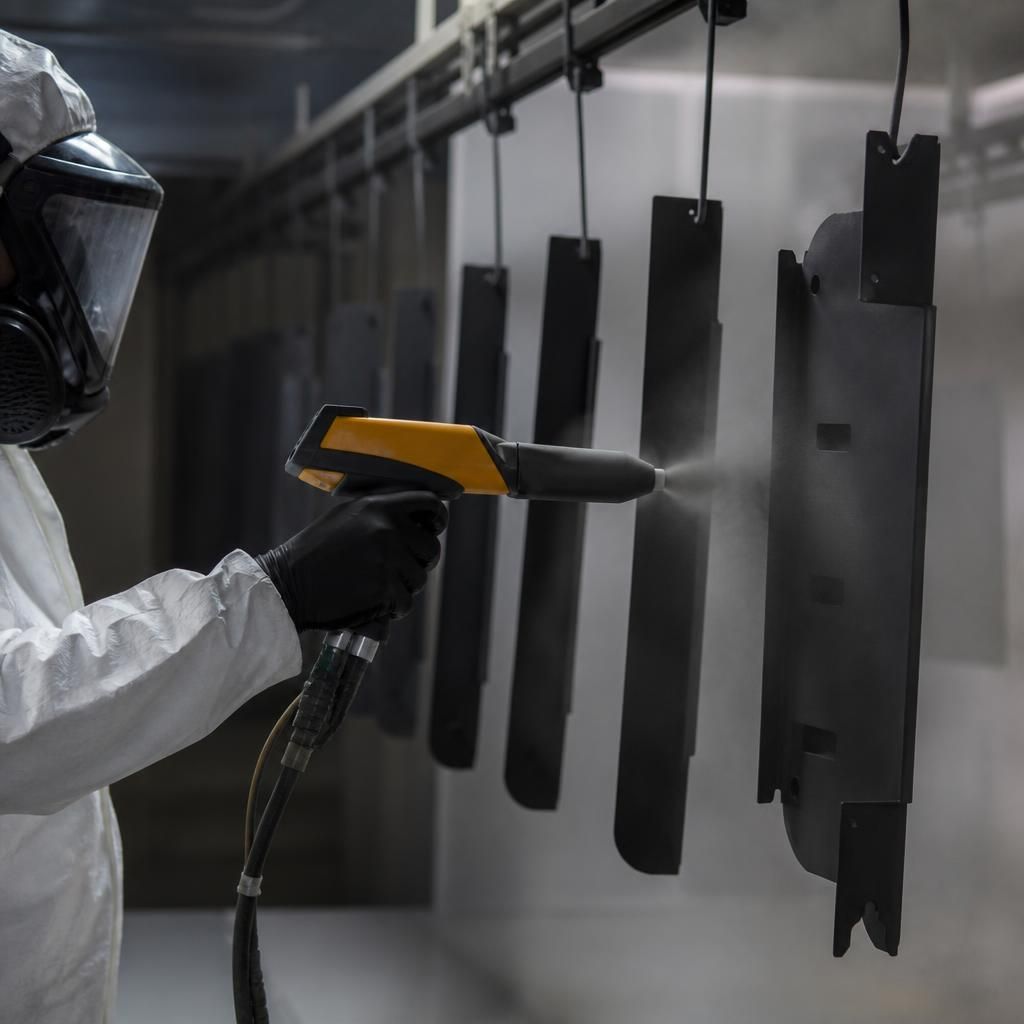
Electrostatic application helps the black powder form an even coating on stainless steel. The component is connected to earth while the powder particles are given an electrical charge as they leave the spray gun. The charged particles are attracted to the grounded metal and remain on the surface until curing. Reliable earthing is essential; poor contact can reduce powder transfer and contribute to an inconsistent finish.
The applicator also adjusts the spray equipment to suit the component’s shape and the selected powder system. Gun position, movement, powder flow and electrical settings are controlled together, with particular care around corners, recesses and complex profiles. This controlled deposition gives the curing stage a consistent layer to bond, helping the finished black coating resist normal handling and service conditions.