

What materials are suitable for a shiny black powder coat finish?
A shiny black powder coat is suitable for most electrically conductive metal substrates, including mild steel, stainless steel and aluminium. Galvanised or zinc-coated steel can also be coated, provided the surface is correctly prepared to manage its existing finish and promote adhesion.
The most suitable materials for a shiny black powder coat are clean, heat-tolerant, electrically conductive metals with a surface that can be prepared thoroughly. Beyond the commonly coated structural and engineering metals, copper, brass, cast iron and some zinc-based castings may also be suitable, but each requires its own preparation and curing considerations.
Copper and brass: These metals can accept powder coating, although their surfaces must be free from tarnish, grease, machining residue and oxidation. Copper alloys can also react with unsuitable pretreatment chemicals, so the preparation system needs to match the alloy. Masking is important where electrical contact, earthing or dimensional accuracy must be retained.
Cast iron: Cast iron is generally coatable, but its porous structure can retain oil, moisture or gases. These contaminants may be released during curing and cause pinholes, bubbling or loss of adhesion. Degreasing, abrasive preparation and, where appropriate, preheating or outgassing are used to reduce this risk. Rust, scale and casting residue must be removed before coating.
Zinc-based castings: Die-cast zinc components can often be powder coated, but they need careful cleaning and a compatible pretreatment. Their relatively low melting point and tendency to contain trapped gases mean that the curing cycle must be controlled. Small test pieces or a representative sample batch can help confirm that the finish develops correctly without blistering or distortion.
Specialist metal substrates: Materials such as titanium, magnesium alloys and other less frequently coated metals may be technically possible, but suitability depends on the grade, component design, surface condition and required cure temperature. These substrates should be assessed individually rather than treated as equivalent to conventional fabrication metals.
Material selection is only one part of the assessment. The component should also be checked for:
- Electrical conductivity: The powder is applied electrostatically, so the part must be able to carry an electrical charge or have a suitable conductive route through its racking points.
- Temperature tolerance: The substrate, inserts, seals and bonded parts must withstand the specified oven cycle without softening, deforming or releasing contaminants.
- Surface condition: Oil, rust, mill scale, oxidation, weld residue and previous coatings can prevent adhesion or create visible defects in a high-gloss black finish.
- Porosity and trapped cavities: Hollow sections, castings and enclosed fabrications may release air or contamination during heating, leading to pinholes or blistering.
- Design and masking requirements: Threads, bearing seats, earth points and close-tolerance faces may need masking before coating. Drainage and vent holes can also be important for hollow components.
A shiny black finish tends to reveal surface imperfections more clearly than a textured or lower-sheen coating. Scratches, weld spatter, grinding marks, uneven edges and small craters can remain visible after application, so the required appearance should influence the preparation specification. Where a smooth reflective appearance is required, fabricated surfaces normally need to be finished consistently before pretreatment.
The powder formulation and curing schedule must also suit the substrate. A finish intended for a thick, heat-stable fabricated part may not be appropriate for a thin casting or a component containing heat-sensitive inserts. Coating thickness, edge coverage, recesses and the risk of outgassing should be reviewed alongside the metal itself.
For a production batch, the practical approach is to identify the exact alloy or substrate, disclose any previous treatment, remove components that must not be coated, and agree the required gloss, masking and dimensional tolerances in advance. A trial component can be useful where the material is porous, unusually thin, chemically reactive or difficult to prepare. This confirms adhesion and appearance before the full batch is processed.
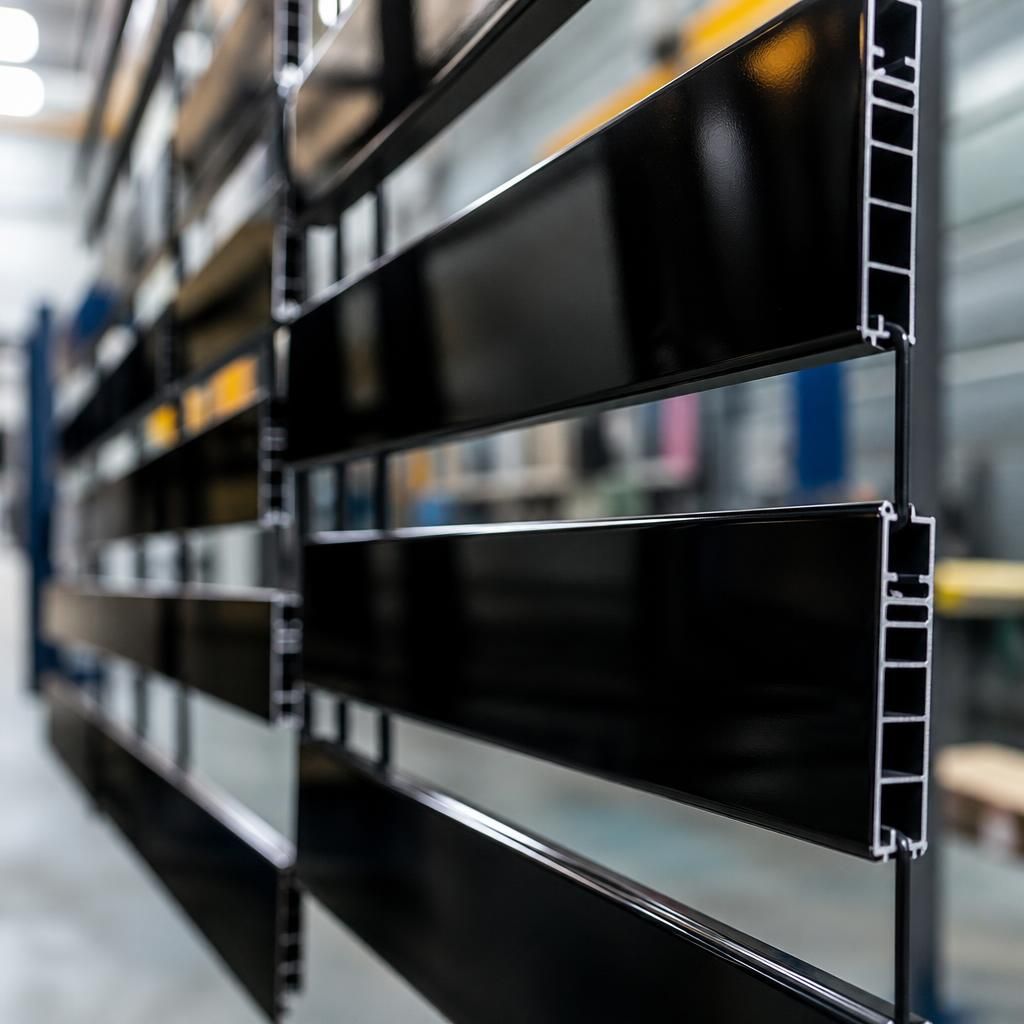
Aluminium is well suited to a shiny black powder coat, particularly for fabricated panels, housings, trims and other components where low weight is important. Its natural oxide layer must be treated as part of the preparation process, because it can interfere with consistent adhesion if the surface is not conditioned correctly.
The specific aluminium alloy also matters. Different alloy compositions and fabrication methods can affect how the surface reacts during pretreatment and how evenly the coating develops. Thin sections and assemblies with dissimilar metals should be reviewed before processing, as heat exposure and movement during curing may affect alignment or appearance. A representative sample is sensible where the alloy, construction method or required gloss level is unusual.